Hyundai Ioniq 9 Performance review
Hyundai's electric offensive shows no signs of slowing down, the Korean company determined to become a name to be reckoned with in the rapidly changing landscape. The brand's lineup now covers virtually all key segments and provides quality at a great price with little compromises, which explains its rapidly growing market share. The latest addition to the electric range is the Ioniq 9, which targets the most lucrative segment of full-size SUVs, and we now have it with us for a review.
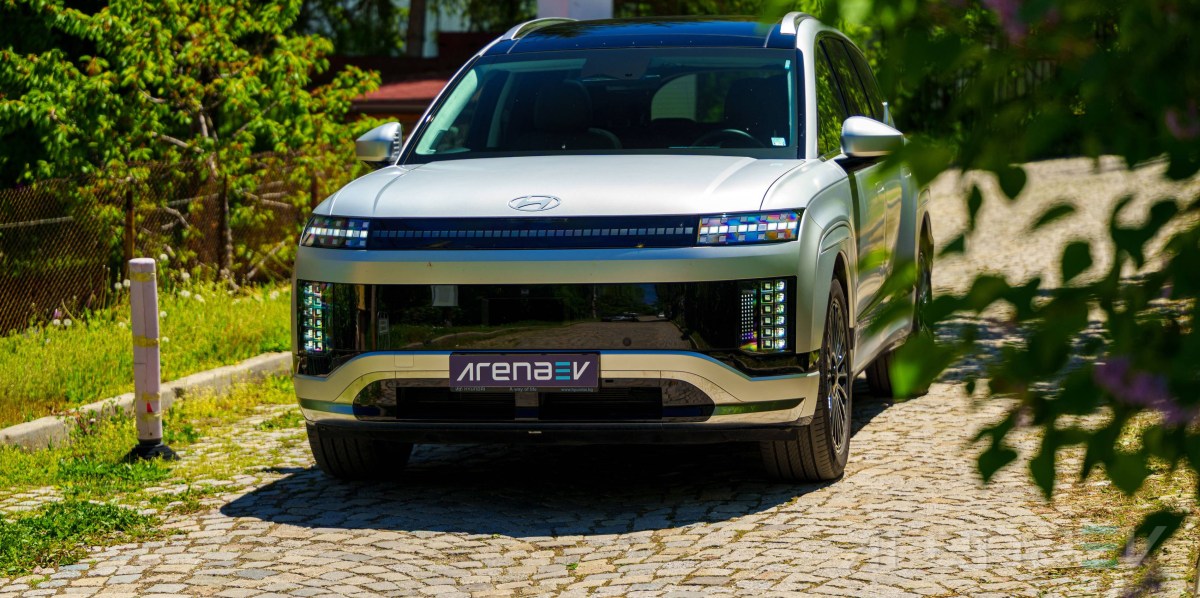
Table of Contents:
- Exterior
- Interior
- Storage & practicalities
- Driving experience
- Ride comfort
- Tech features
- Cabin noise
- Acceleration and braking
- Consumption
- Charging speed
- Competition
- Verdict
We'll be testing the Hyundai Ioniq 9 Performance and assess how well the model fits into the needs of a full-size SUV customer. The model comes with AWD, generous 422 hp and 516 lb-ft output and two seat configuration - fitting six or seven seat passengers. The test car had the Caligraphy trim package with six seats, which is the highest available and comes packed with everything the Ioniq 9 can offer. The only thing missing from it are camera side mirrors.
In most markets the Ioniq 9 starts from just under $82,000, and even a fully tricked-out model such as our stay below $105,000.
Тhe Hyundai Ioniq 9 is thus one of the strongest value propositions in its segment. The key question, however, is how well it measures up against an increasingly capable field of rivals.
Hyundai Ioniq 9 Performance 2025 -
- Dimensions: 199.2 inches x 78 inches x 70.5 inches, 123.2 inches wheelbase.
- Drivetrain tested: Performance - AWD 320 kW (422 hp), 516 lb-ft, 106.3 kWh usable battery capacity, 110.3 kWh total battery capacity
- Other drivetrains: LR RWD - RWD 160 kW (215 hp), 258 lb-ft, 106.3 kWh usable battery capacity, 110.3 kWh total battery capacity
- Charging: 350 kW CCS; 10-80% in 24 min
- Range: 373 miles WLTP, 311 miles EPA
- Weight: 5,754 lb unladen, 7,319 lb gross
- Other features: Massaging seats, Captain’s chairs, UV sterilization, Camera mirrors, OTA updates.
Exterior
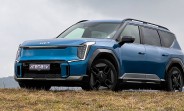
Large SUVs often place practicality ahead of styling, and the Hyundai Ioniq 9 is no exception. While it is unlikely to be described as beautiful, its design is distinctive and purposeful.
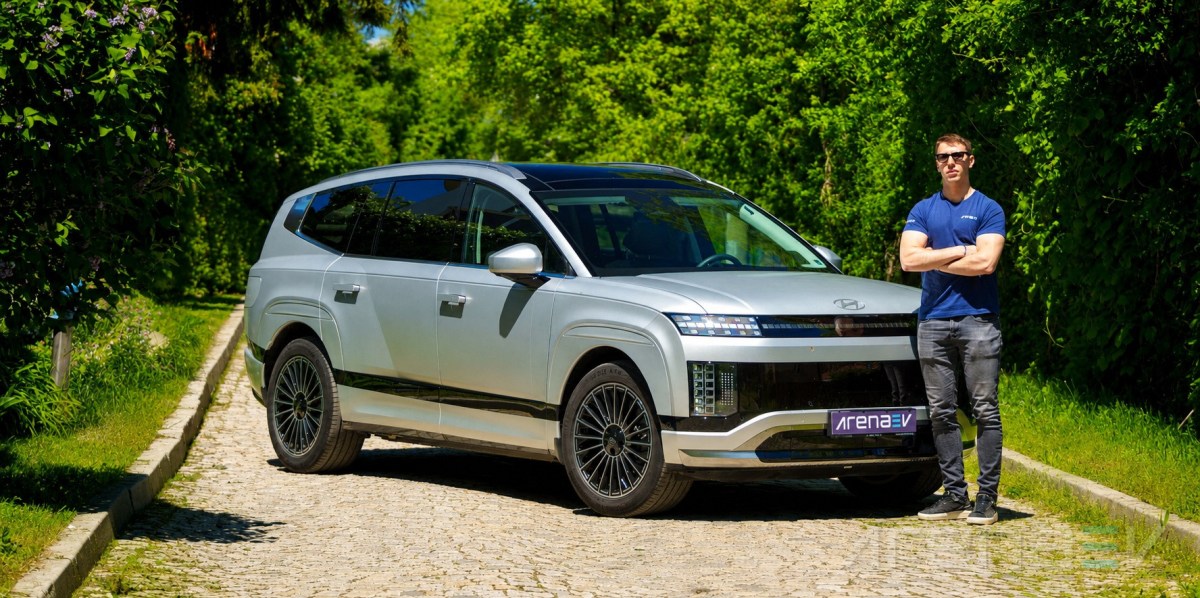
The front is dominated by a full-width LED bar, while the main headlights are positioned lower within the bumper. A massive black trim element connects the headlights, giving the Ioniq 9 a more assertive and imposing presence.
Active aerodynamic flaps integrated into the lower bumper open when additional cooling is required for the battery or climate control systems and close when not needed to improve efficiency.
The front end's gigantic proportions mean you'll smash a significant number of bugs during highway drives, which can be seen in the photos taken after just a few kilometers on the highway.

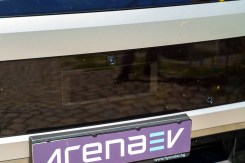
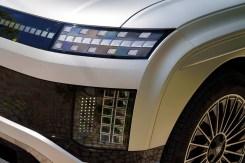
Hyundai Ioniq 9 Performance front end
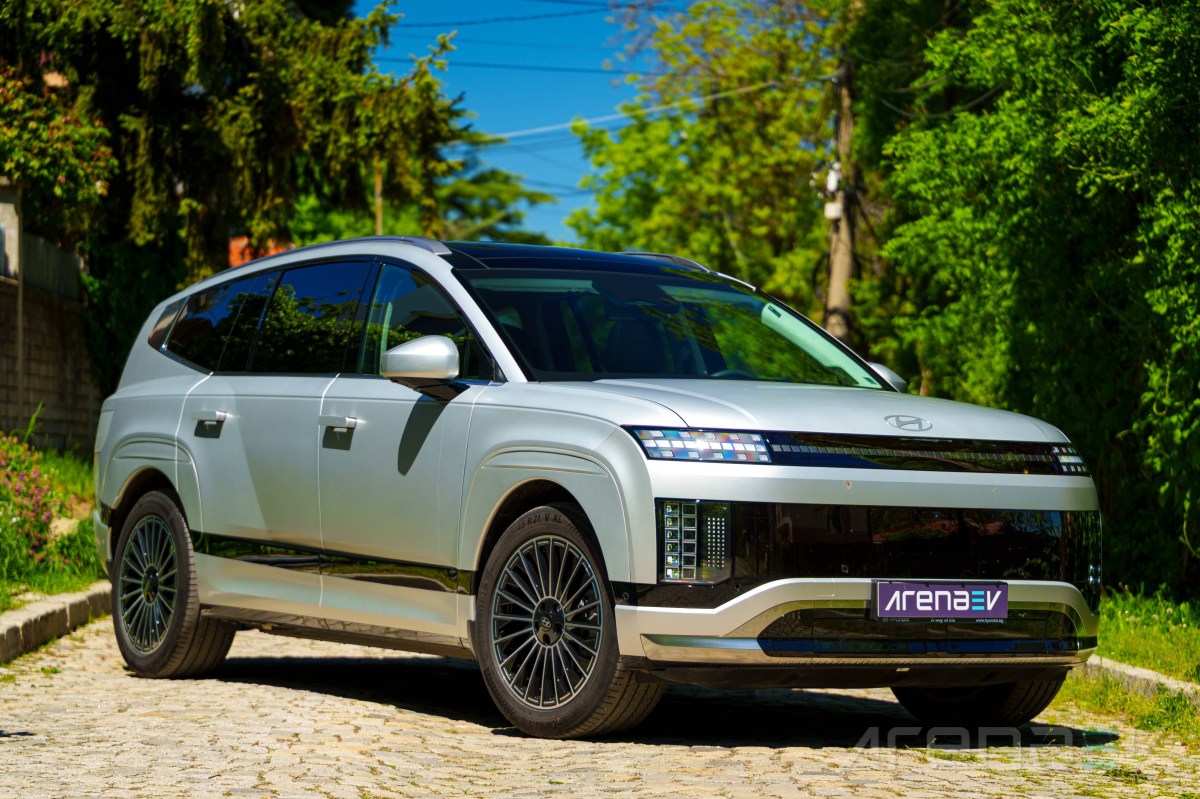
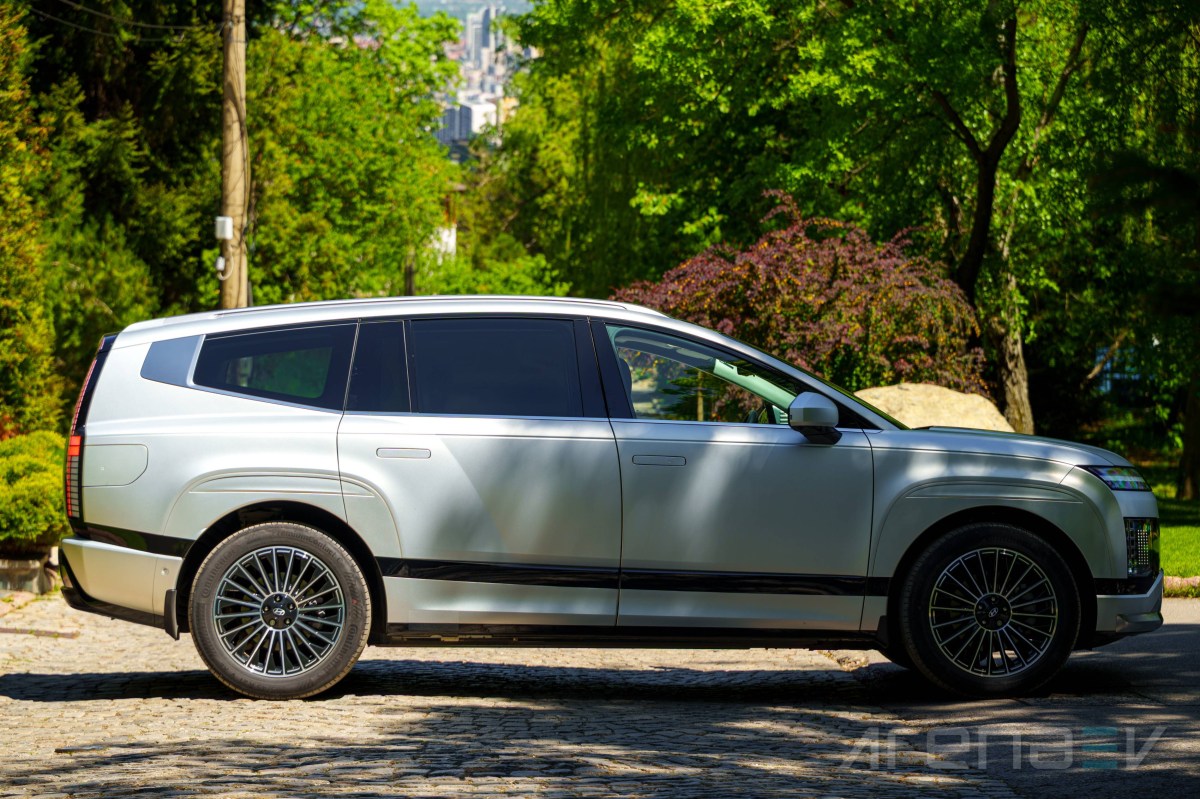
The profile is arguably the most distinctive part of the Hyundai Ioniq 9. It blends traditional SUV cues with elements more commonly associated with a minivan, resulting in a silhouette unlike anything else in the segment.
The large battery pack mounted low within the chassis gives the side skirts a particularly low appearance, while the tall glasshouse contributes to an unmistakably minivan-inspired look. At the same time, the minimal use of black body cladding goes against the ruggedness typically expected of a large SUV.
The wheel arches are accented by unusual trim elements that feel somewhat out of place within the overall design. Theey go agains the otherwise clean and refined looks of the sides, and their purpose is not immediately apparent, making them one of the more questionable styling decisions on the Ioniq 9.
You can opt for camera-based side mirrors instead of conventional units. In addition to the futuristic appearance, they are designed to reduce drag, which will lead to a slight increase in driving range. The system displays a live camera feed on interior screens, though the technology is not without its shortcomings.
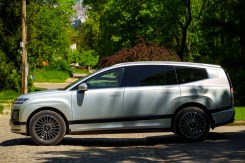
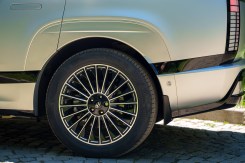

Hyundai Ioniq 9 Performance side profile
The popping-out door handles don't help with the practicality but should marginally boost efficiency. Thankfully, they extend automatically as soon as you approach your Ioniq 9 and become flush with the body once the vehicle is in motion or is locked.
Our test model comes with 21" wheels - the largest and least efficient available. They have 285/45 tires on them - that kind of width won't help with rolling resistance either but they are still fat enough to enable wonderful ride comfort - we'll get back to that in a bit.
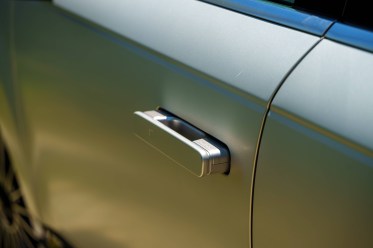
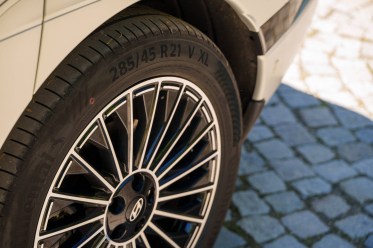
Hyundai Ioniq 9 Performance door handles and wheels
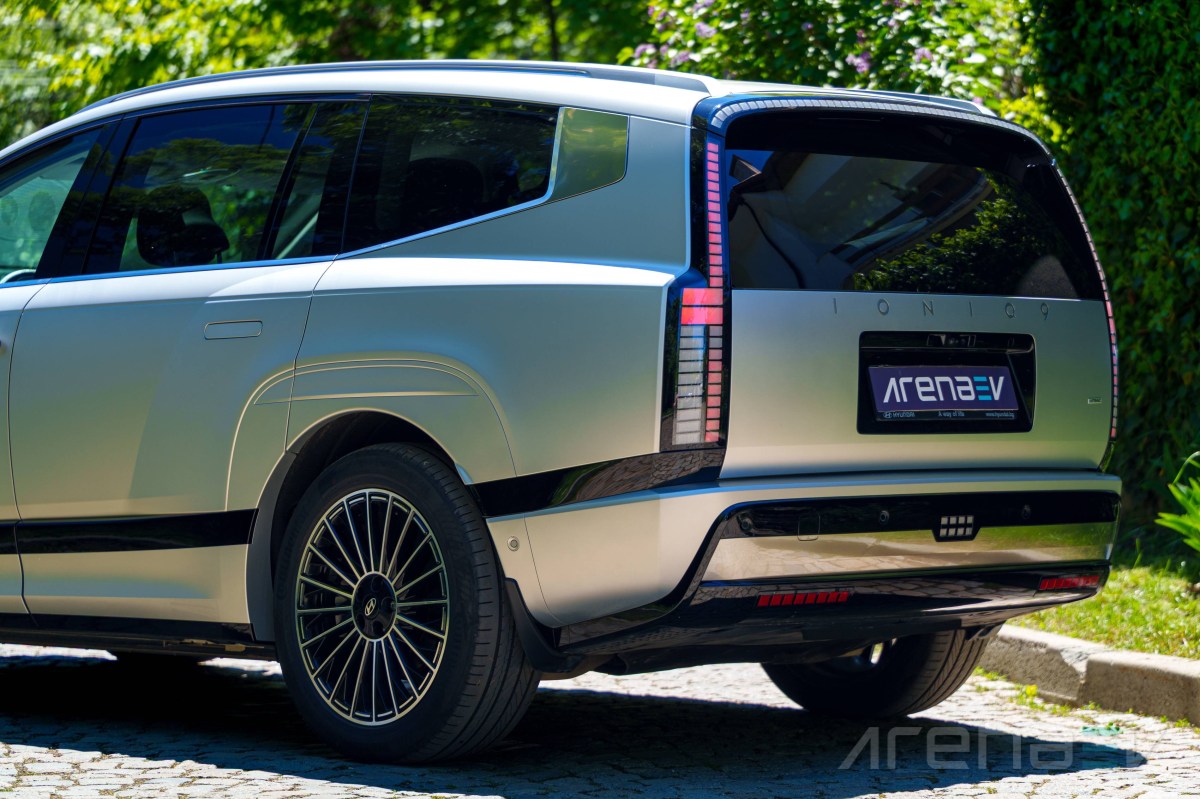
The rear design of the Hyundai Ioniq 9 is very imposing. A pixelated LED light bar frames the entire tailgate, creating a distinctive halo effect. It also incorporates most major rear lighting functions, including the third brake light, resulting in a cohesive and highly recognizable light signature.
It is a fresh interpretation of the increasingly common full width light bar trend, helping the Ioniq 9 stand out while maintaining a contemporary appearance. Even the reversing light, unusually positioned directly beneath the license plate, adopts the same pixel-themed design.
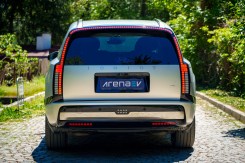
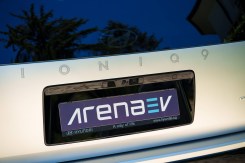
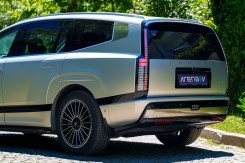
Hyundai Ioniq 9 Performance rear end
Interior
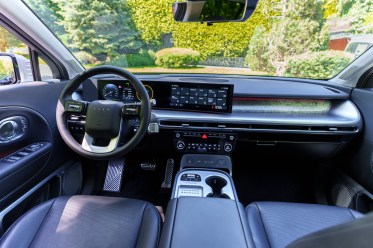
The cabin is where the Hyundai Ioniq 9 truly excels. Designed with passenger comfort in mind, it delivers an impressively spacious and relaxing environment that suits its role as a family-focused flagship.
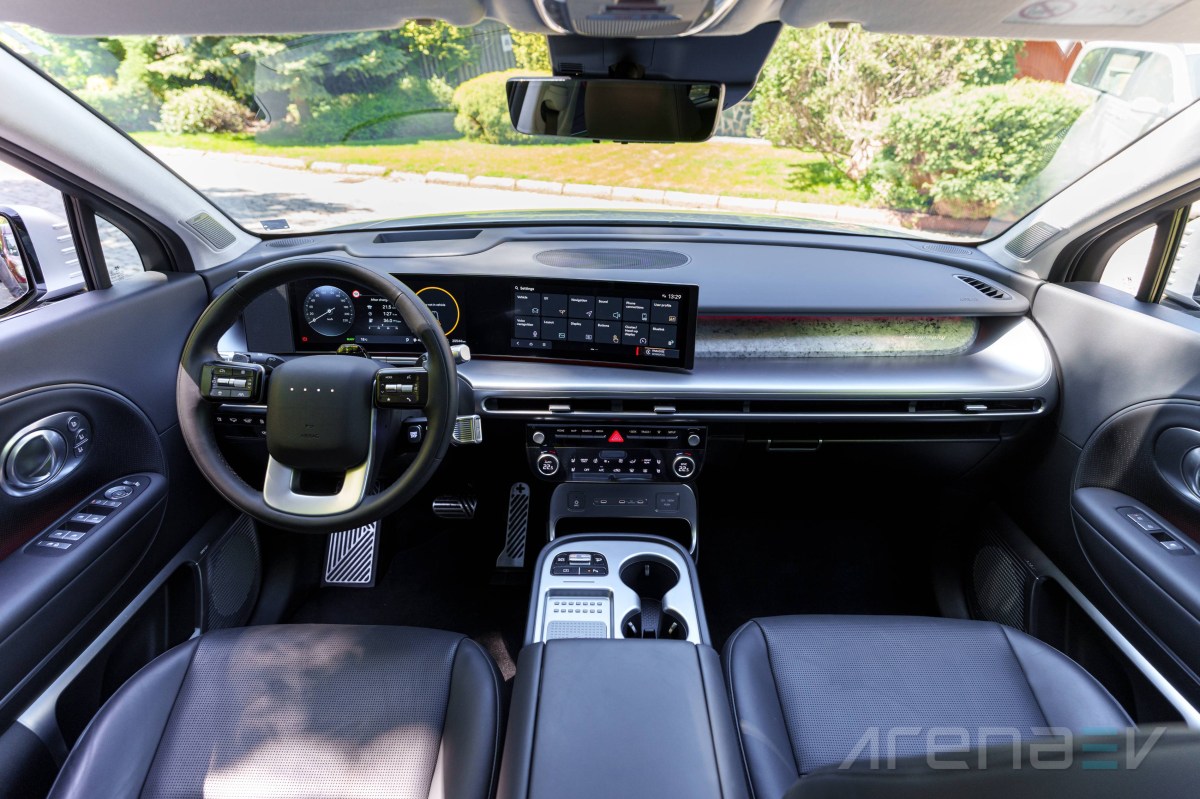
Material quality is generally very good, with soft-touch surfaces and an upscale feel throughout the interior. While Hyundai does not quite match the level of craftsmanship found in premium offerings from brands such as BMW or Mercedes-Benz, the difference in pricing is far greater than the difference in quality.
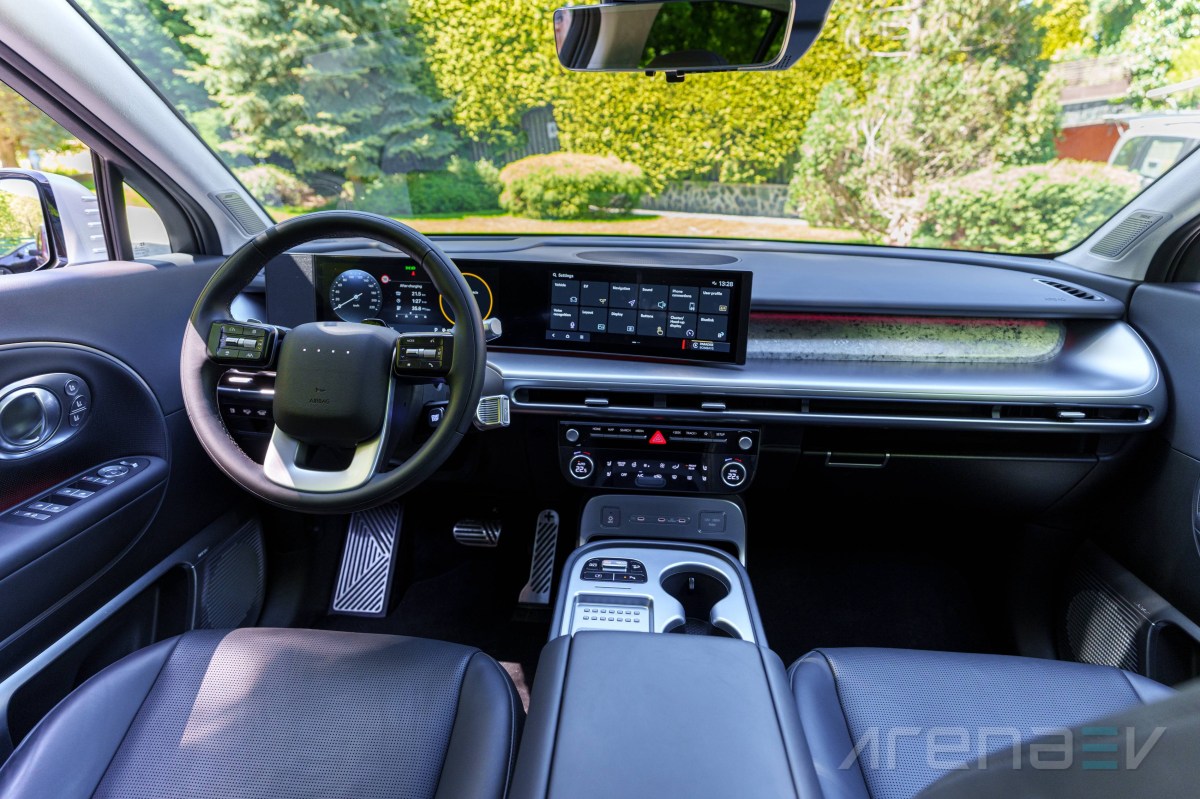
Upon entering the cabin, you are greeted by a familiar steering wheel shared with most of Hyundai’s latest models. The four dots at its center represent the letter "H" in Morse code and can illuminate to indicate the vehicle’s charging status.
The stalks mounted behind the steering wheel are substantial and feel solid in operation, boosting the overall sense of high quality. One less intuitive element is the start and stop button, which is integrated into the gear selector. Its position behind the steering wheel makes it somewhat awkward to access at first and requires a period of familiarization.
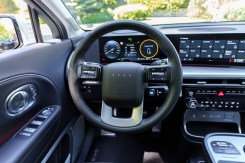
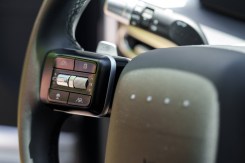
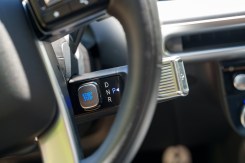
Hyundai Ioniq 9 Performance steering wheel
The driver's display is once again familiar from other Hyundai models. It works well and provides some personalization, although many rivals offer far greater freedom and selection of layouts.
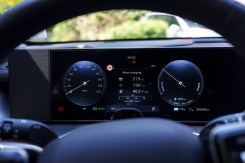
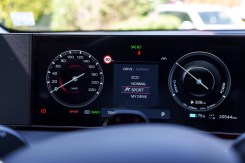
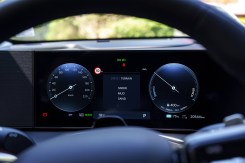
Hyundai Ioniq 9 Performance gauge cluster display
The central infotainment display is a seamless continuation of the driver's instrument panel and slightly curves toward the driver. Like several other elements in the cabin, it is directly borrowed from other Hyundai models, and runs the same software. While this approach ensures a polished and user-friendly experience, it also reduces some of the exclusivity one might expect from a flagship model such as the Hyundai Ioniq 9.
That said, sharing major components across multiple models helps keep costs under control and contributes to the Ioniq 9's great value proposition. In today’s market, that trade off is likely to be a sensible compromise for many buyers.
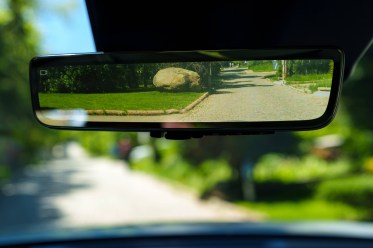
One thing not many vehicles in general offer is the rear-view camera mirror. It transforms the regular mirror into a display with the press of a button. This can be useful if you’re carrying lots of people or larger items and your view through the rear window is obstructed, although the image is zoomed so you still won't see everything going on behind the Ioniq 9.
The dashboard on the passenger side is decorated with faux forged carbon, which looks somewhat awkwardly in an SUV of this size. It prominently carries the "Calligraphy" label to signify the highest possible trim was ordered.
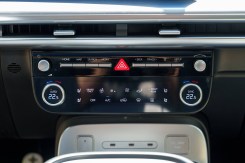
Two control panels are stacked in the center of the dashboard, letting you control a wide range of functions through physical buttons. Thankfully Hyundai continues to offer dedicated controls for frequently used features rather than burying everything within touchscreen menus. It is a decision that prioritizes usability and one that deserves praise.
Beneath these controls is a large storage area housing three USB-C ports and a 12 volt outlet, ensuring ample charging options for your devices during long journeys.
The same area also features a dedicated compartment capable of sterilizing small personal items such as glasses. It is an a rare and advanced feature that adds another layer of everyday convenience.
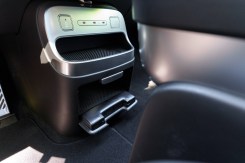
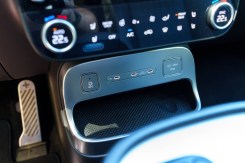
Hyundai Ioniq 9 Performance lower dash
The center console itself can slide along the floor of the Hyundai Ioniq 9, allowing occupants to adjust the available space between the front and rear rows. It can even facilitate movement between rows when necessary.
The upper section of the console features a rotary drive mode selector, surrounded by shortcut buttons for camera views, parking assistance, auto hold and hill descent control. Two large cup holders and a wireless charging pad complete the setup.
Storage is plentiful. Beneath the armrest sits a deep compartment so large that Hyundai has divided it into two levels from the factory. Adding to its versatility, the armrest can be opened from both the front and rear, allowing easy access for passengers in either row.
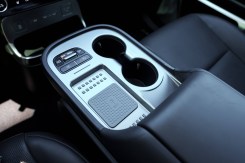
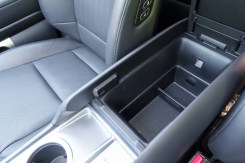
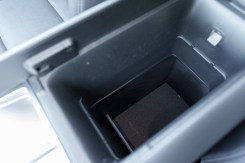
Hyundai Ioniq 9 Performance center console
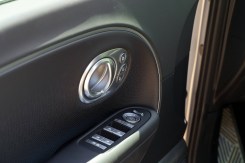
The design of the door panels in the Hyundai Ioniq 9 varies significantly depending on the chosen mirror configuration. Models equipped with camera-based side mirrors feature large interior displays mounted beneath the window line, while our test vehicle uses conventional mirrors and therefore retains a more traditional layout with just the standard window controls integrated into the doors.
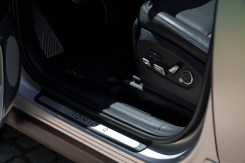
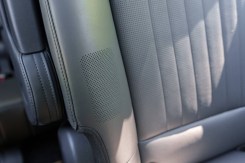
The seats are anything but conventional. In addition to delivering excellent comfort, they incorporate speakers within the seat structure itself, further enhancing the audio experience. Combined with the high quality sound system, the result is a rich and immersive listening environment.
Hyundai Ioniq 9 Performance seats
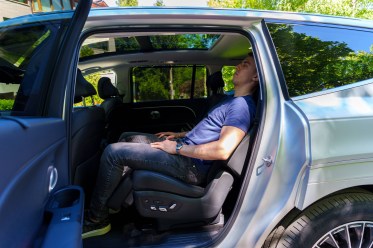
The seats in the first and second rows can recline to near flat positions, creating a lounge-like atmosphere for relaxation during breaks or charging stops. Depending on the configuration, the second row can also feature swivel seats that face the third row, or a conventional bench arrangement that increases passenger capacity.
An amazing feature that seems to be going away from more and more modern cars is the opening panoramic sunroof, which in the case of the Ioniq 9 is absolutely huge. This solution is much better and practical than the modern fully glass roofs that can never darken as much as the hard cover of the Ioniq 9.
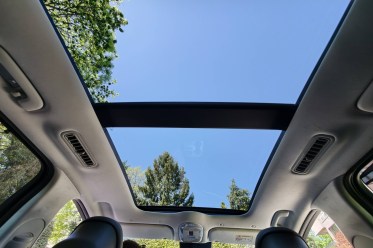
Hyundai Ioniq 9 Performance interior amenities
The second row of seats are amazing and offer more amenities than some executive sedans. There is a separate climate control unit, including heated and cooled rear seats. The aforementioned center console hides a large storage area. The cup holders in the door cards are another clever integration, whereas the sun blinds provide extra shade when needed.
One interesting omission is the lack of rear passenger displays. They aren't available even as an option and having them is a big benefit for families to keep the children occupied on longer drives. Universal holders for tablets exist, but built-in display just look much better.
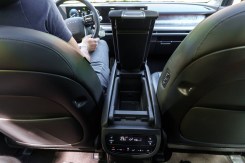
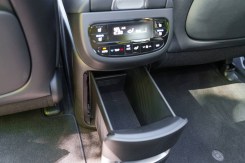
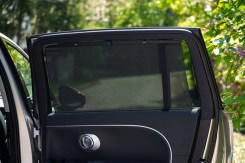
Hyundai Ioniq 9 Performance rear amenities
As for space in the rear, our 1.95 m (6’4”) tall reviewer fits with space left to spare behind his own driving position. Head and knee room is plentiful and thanks to the captain chair configuration you'll never be squashed by a middle passenger either.


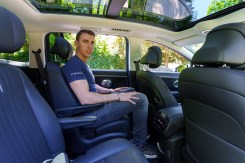
Hyundai Ioniq 9 Performance second row space
The third row is usually a place of compromise that is primarily used for children with minimal comfort. This is absolutely not true for the Hyundai Ioniq 9, which offers enough room for our reviewer to confortably sit behind two seats also configured for his size.
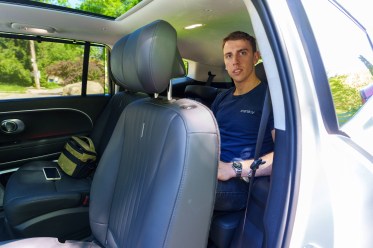
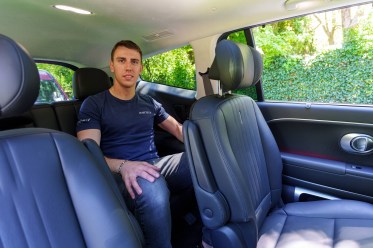
Hyundai Ioniq 9 Performance third row space
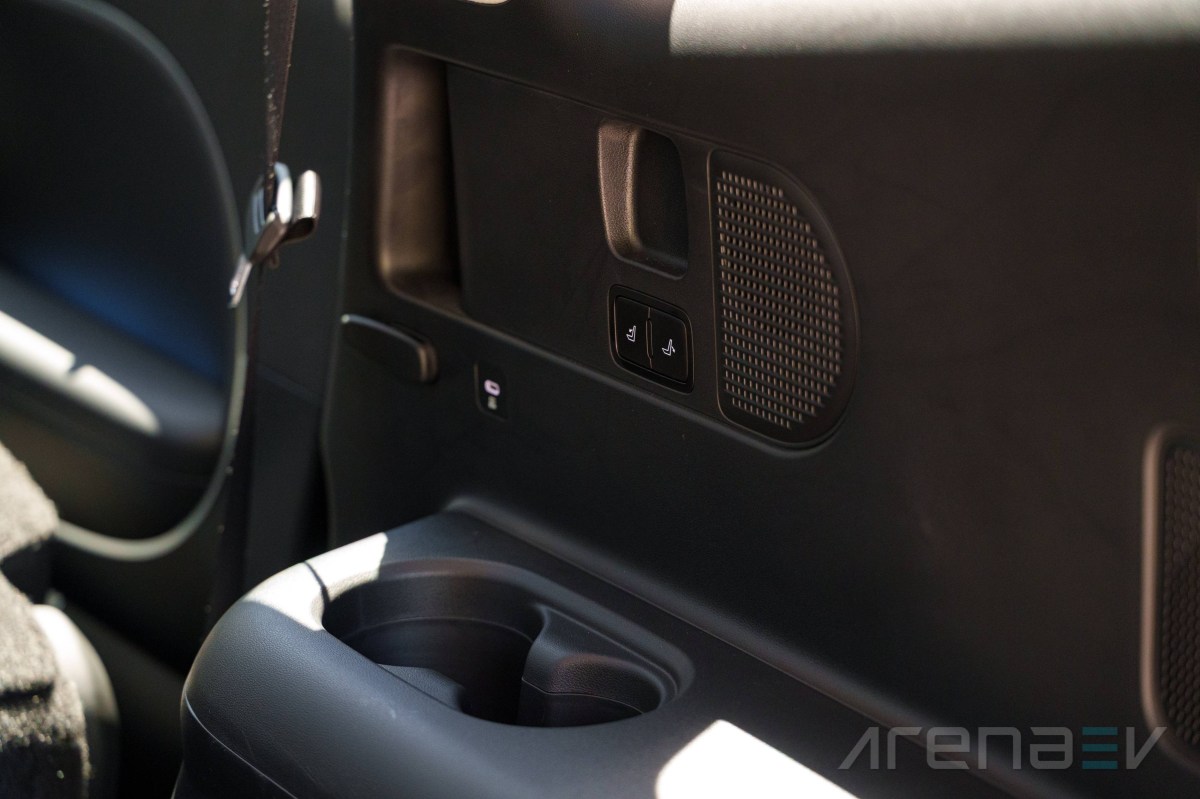
The passengers in the third row can even fold the second row seats electronically from the back, adding a fantastic layer of luxury. The two cup holders on each side showcase that the rear passengers were not neglected when it comes to amenities, either.
Storage & practicalities
The cargo area of the Hyundai Ioniq 9 remains practical across a variety of seating configurations, offering a high degree of versatility for different needs. However, with all seats in use, luggage capacity is limited to 11.9 ft³. While sufficient for everyday errands or shorter trips, this figure means that fully occupied long-distance journeys will require careful packing.
When the third row gets folded, you get up to 32.1 ft³ of storage space, which is enormous.The process is made particularly convenient thanks to the electrically operated seat controls, which allow the seats to be lowered at the touch of a button. This eliminates the need to move around the vehicle and fold each seat manually, making it quick and effortless to switch between passenger and cargo carrying duties.
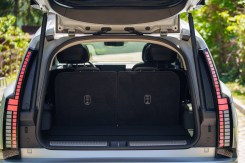
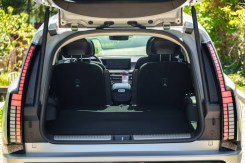
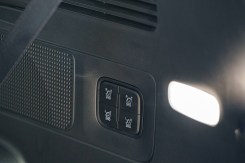
Hyundai Ioniq 9 Performance storage area
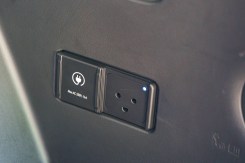
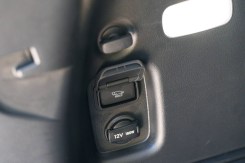
In the cargo area, a household style 220V outlet is complemented by a traditional 12V socket, making it easy to power accessories and equipment on the go. Additional convenience comes from two USB-C ports located beside the third row cup holders, ensuring passengers and devices remain charged even at the rear of the cabin.
Folding the second and third rows of seats elevates practicality to new levels with the mesmerizing 85.4 ft³ of cargo space. This allows transportation of huge items like fridges with ease and the boxy shape allows for all of this space to be used up efficiently.
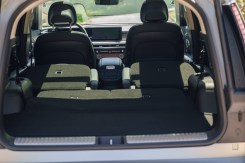
Hyundai Ioniq 9 Performance all seats folded
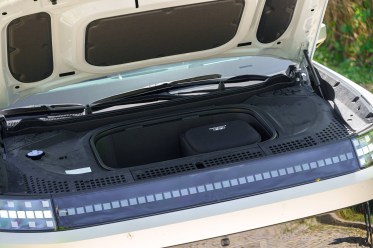
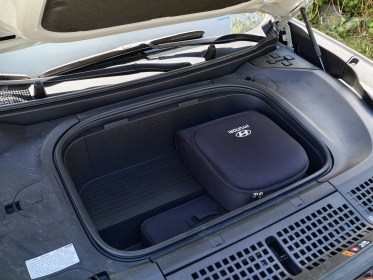
Another feature that enhances practicality is the frunk (front trunk). It becomes particularly useful when all seating positions are occupied and rear cargo space is limited. The compartment is large enough to accommodate a small suitcase or several backpacks, providing valuable additional storage capacity when needed in the Hyundai Ioniq 9.
Hyundai Ioniq 9 Performance frunk
Driving experience
"Substantial”" is perhaps the best way to describe how the Hyundai Ioniq 9 feels on the road. Its size and weight are apparent from the moment you get behind the wheel, giving the vehicle a strong sense of presence on the road.
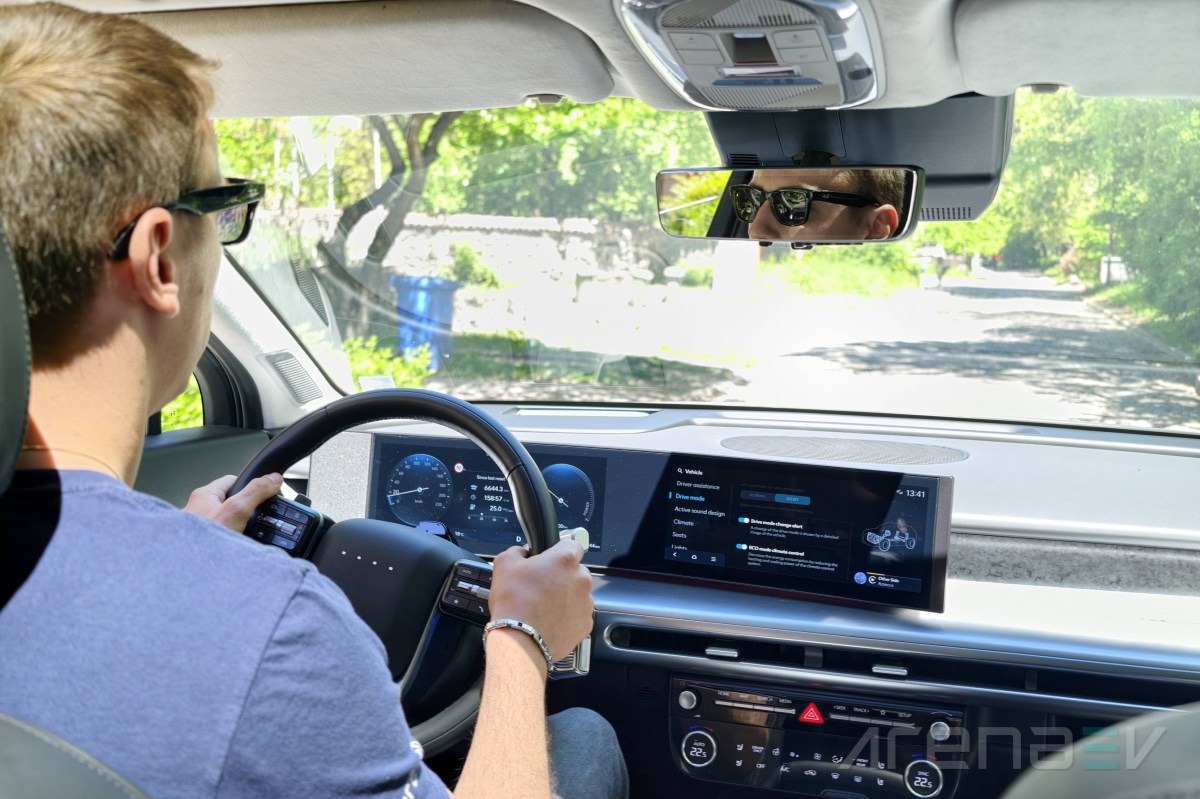
Despite its dimensions, the Ioniq 9 is remarkably easy to operate and requires no special adaptation from the driver. The controls are intuitive and the vehicle feels approachable in everyday use. The main consideration is simply respecting the laws of physics, as the considerable mass inevitably influences how the vehicle responds once underway.
Although it carries the "Performance" designation, the Hyundai Ioniq 9 Performance earns its title primarily through straight line acceleration. Beyond that, its driving character is firmly focused on comfort, with light steering, subtle ride and predictable handling.
This approach suits the vehicle perfectly. Given its size and purpose, the Ioniq 9 was never intended for sporty driving. Instead, it prioritizes refinement and ease of use, while still delivering strong performance when required. The result is a vehicle that combines effortless acceleration with the comfort expected of a long distance family cruiser.
When driving at higher speeds the steering weighs up, providing you with greater confidence behind the wheel. The considerable size and mass of the Hyundai Ioniq 9 ensure a strong sense of stability in a wide range of conditions, helping occupants feel secure and well protected.
Regenerative braking allows full one-pedal driving but the intensity of the brakes is rather weak, resulting in longer stopping times without using the brake pedal. On the other hand, this makes driving longer non-highway journeys more enjoyable as you rarely have to touch the brakes and even use the navigation-based recuperation to have it work as smoothly as possible for the situation.
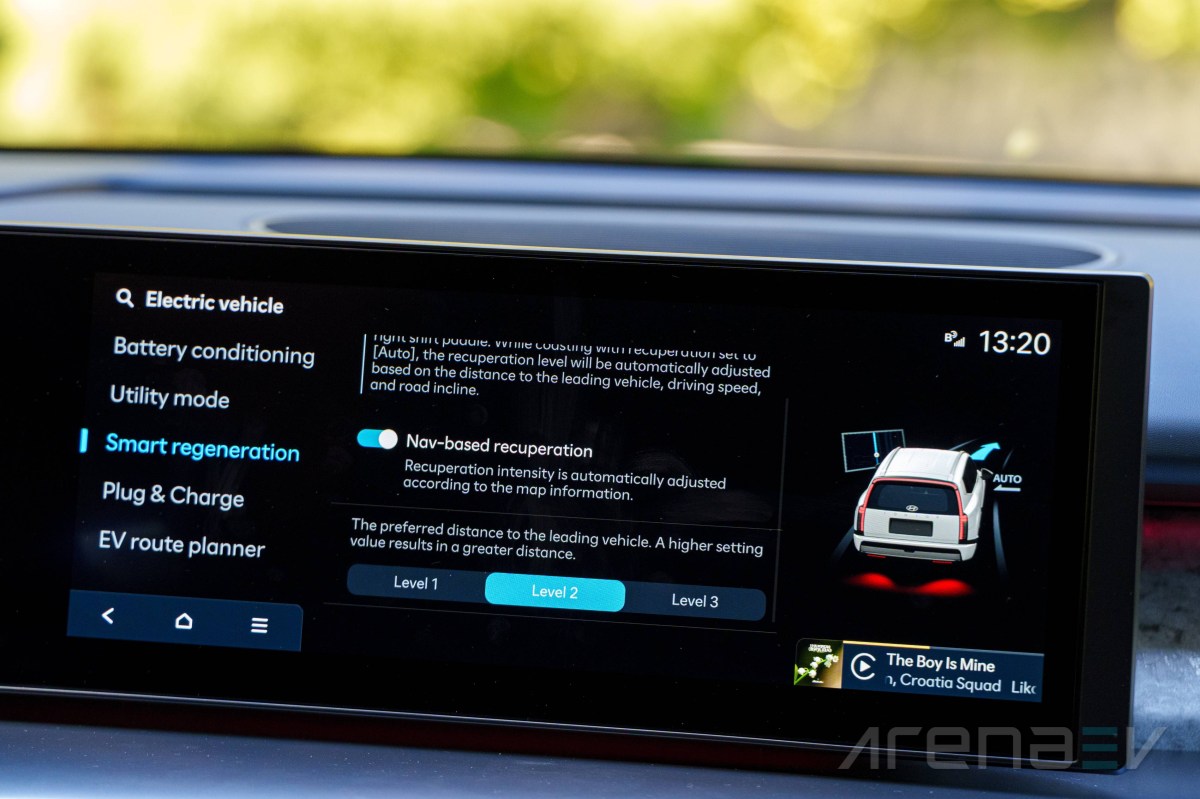
When it comes to driver assistance systems, Hyundai's implementation can feel more intrusive than that of many rivals. While European regulations require several of these features to be activated by default at the start of every journey, many manufacturers have responded by providing quick access shortcuts for frequently adjusted settings.
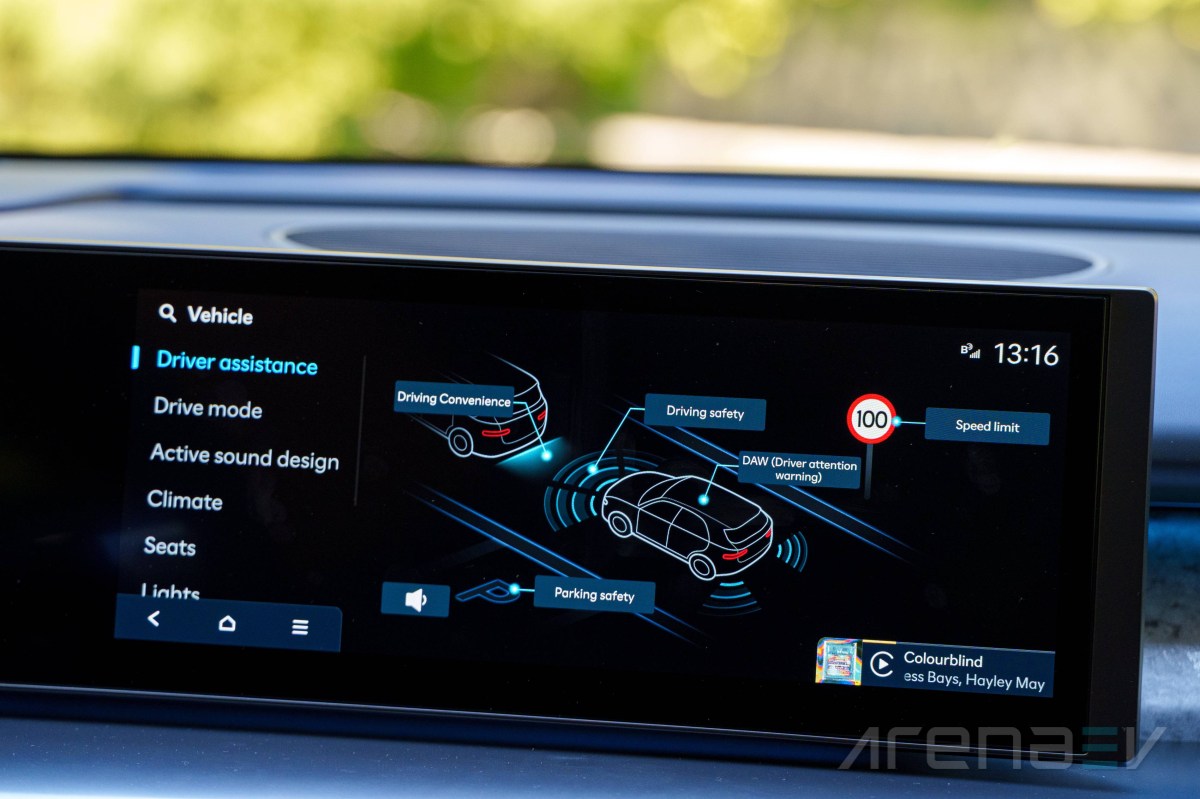
In the Hyundai Ioniq 9, disabling or adjusting these systems often requires navigating through multiple sub-menus within the vehicle settings. Even functions that might logically be grouped together are sometimes located in separate submenus, making what should be a straightforward process more time consuming than necessary.
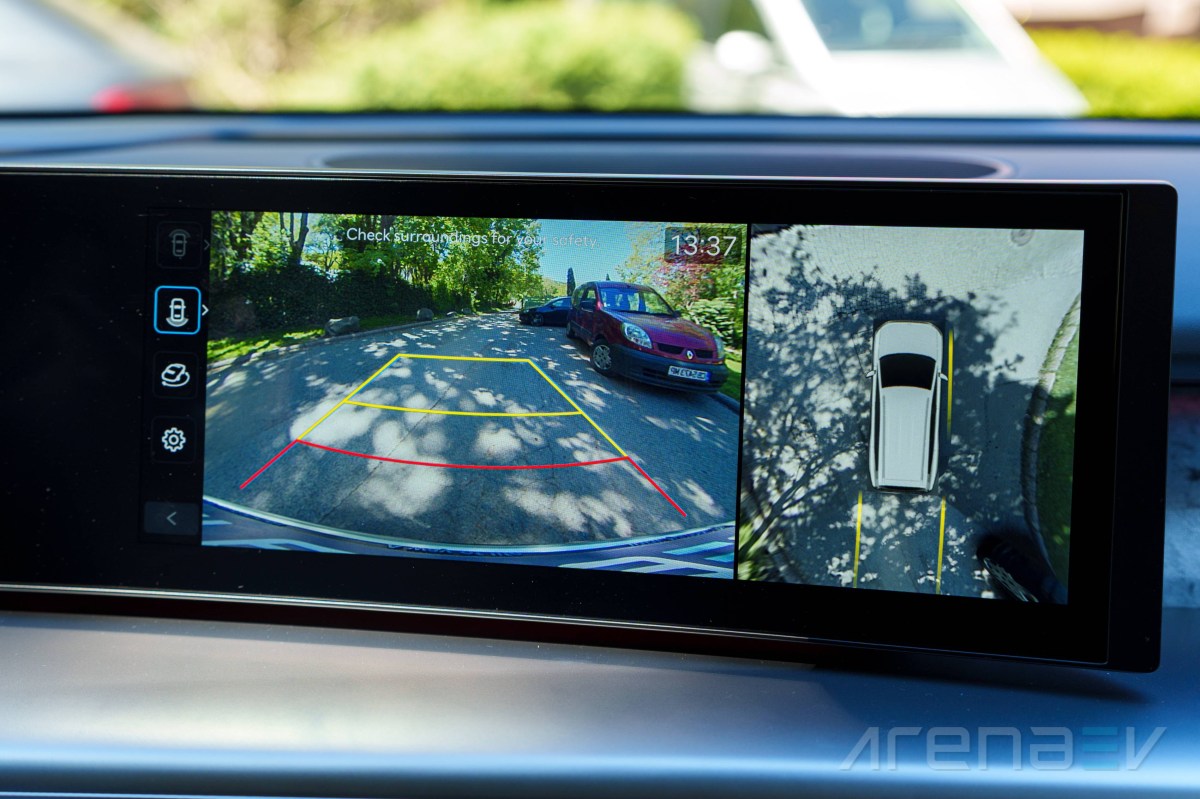
The camera system is a vital accessory that makes maneuvering this behemoth much easier. The image quality is great and allows for great precision while parking or squeezing through tight spots.
Ride comfort
As expected, the Hyundai Ioniq 9 delivers an exceptionally comfortable ride. It absorbs bumps, potholes and rough road surfaces with impressive composure, keeping occupants well insulated from disturbances. The suspension is tuned in favor of comfort, resulting in a smooth and relaxing driving experience, even though our test model comes with the biggest possible wheels.
Tech features
If you have experienced Hyundai vehicles in the past few years you will find the multimedia familiar.
The home screen is configurable and includes two shortcuts per page.
The drop-down menu can be accessed at any point and menu and reveals further shortcuts and settings, which are also configurable to allow quick access at any time.
Among the more interesting convenience features offered by the Hyundai Ioniq 9 are Voice Memo and Passenger Talk. The former allows occupants to record notes and ideas while on the move and play them back later.
Passenger Talk is particularly useful in a vehicle of this size. It amplifies the voices of front row occupants through the audio system, making it easier to communicate with passengers seated in the third row without needing to raise your voice.
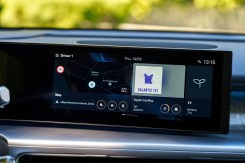
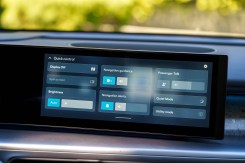
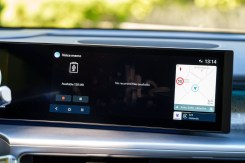
Hyundai Ioniq 9 home screens
For added convenience, the Hyundai Ioniq 9 allows the driver or front passenger to control the rear seats directly through the infotainment system. This makes it possible to fold or unfold the seats remotely, a feature that can be particularly helpful when assisting children, elderly passengers or anyone who may have difficulty operating the seats on their own.
There are two pages of menus to hold all the capabilities of the Ioniq 9, carefully arranged for convenient access.
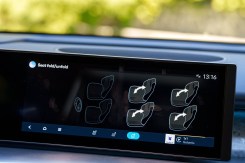
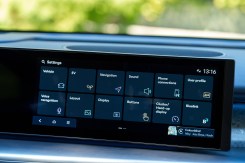
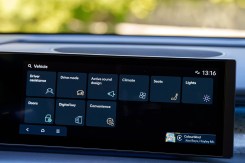
Crucial controls and menus
There are many settings like the brake feel, driving sound, drive mode related settings and other, which require delving deep into the menus and adjusting them to your liking.
Utility mode will allow you to spend long periods of time with the vehicle operating but incapable of driving. This allows you to use its functions without having the powertrain ready at all time, which is ideal for camping or sleeping inside.
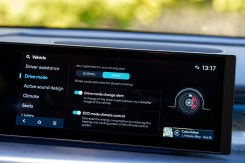
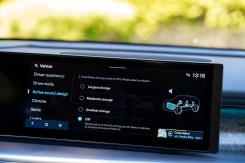
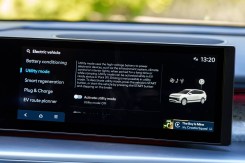
Interesting settings inside
The navigation system works well and suggests charging stops if needed. More impressively, you can set personal preferences about levels of battery you don't want to go below or how much you want to have at the end of the journey.
A wide selection of games is also available and can be enjoyed while the Ioniq 9 is not in motion.
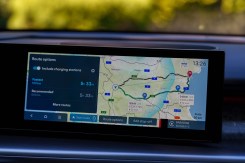
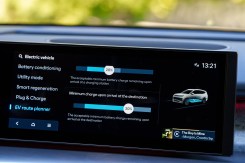
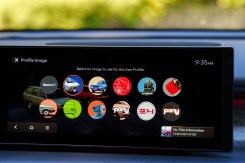
Navigation and games
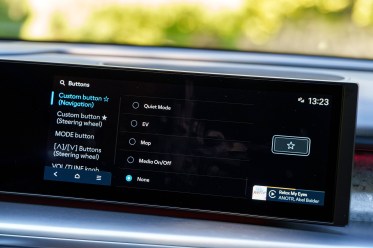
One custom button is located on the steering wheel and one on the row beneath the multimedia screen. They can be programmed to lead to a setting you frequently use and don’t want to tap multiple times every time you need it.
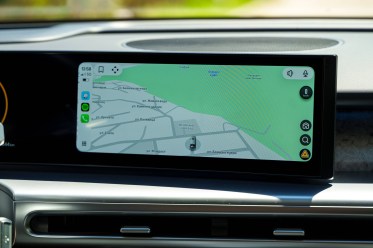
Apple CarPlay and Android Auto can be either used wirelessly or wired, both of which work seamlessly.
Useful capabilities
Cabin noise
The Hyundai Ioniq 9 is one of the quietest vehicles we've ever tested. It insulates its passengers from the ambient world perfectly and doesn't allow any sounds to disturb the serenity inside the cabin. Not only is it quiet when stationary but it also keeps that characteristic as speeds increase and even transcend beyond regular highway speeds.
Cabin noise test results
- 37 mph
- 56 mph
- 81 mph
 Mercedes-Benz EQS SUV 580 4Matic
Hyundai Ioniq 9 Performance
Mercedes-Benz EQS SUV 580 4Matic
Hyundai Ioniq 9 Performance
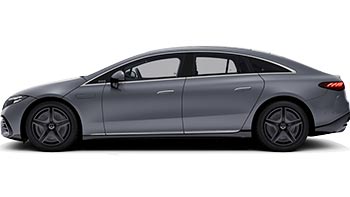
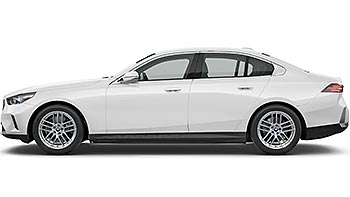
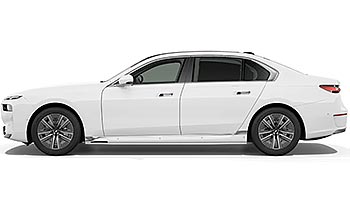
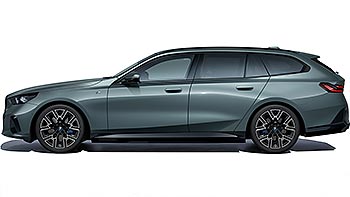 BMW i5 M60 Touring
 BMW iX3 50 xDrive (Summer tires 21")

 Kia EV9 99.8 kWh AWD
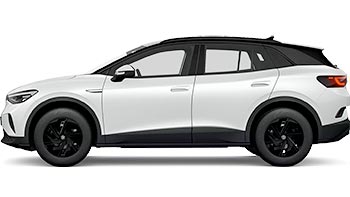
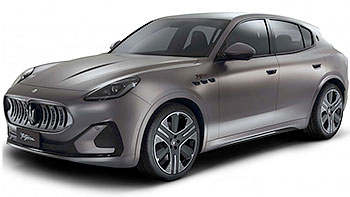
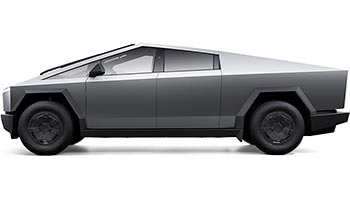 Tesla Cybertruck Cyberbeast
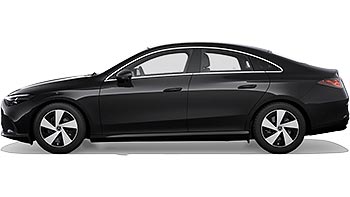
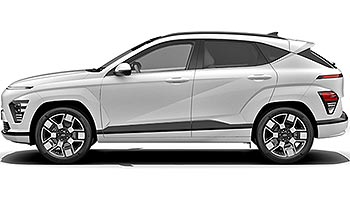
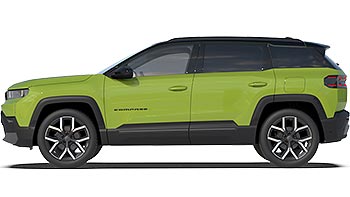
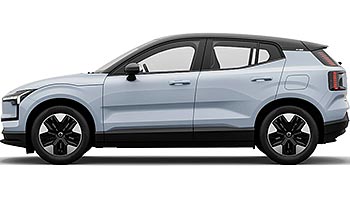
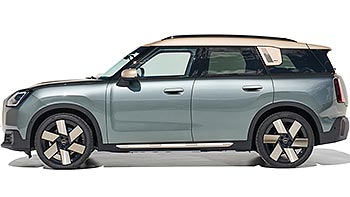
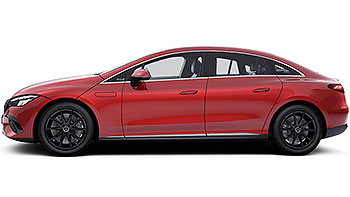
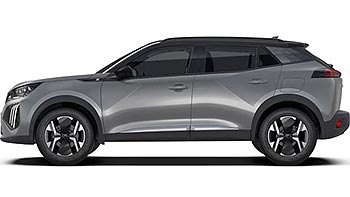
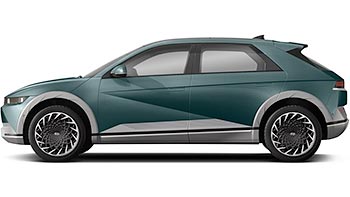
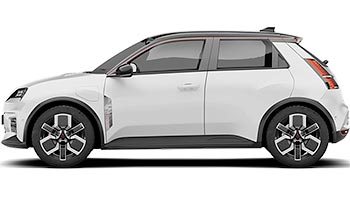
 Mercedes-Benz GLB 350 4Matic
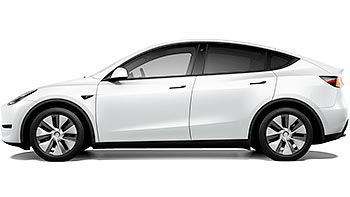
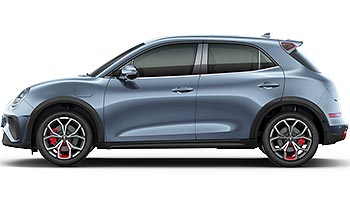
Sound level tests are carried out with a specialized sound level meter placed in the car's cupholders. The test is conducted with air conditioning and radio off and while maintaining a steady speed.
Acceleration and braking
The Performance trim of the Ioniq 9 achieves impressive numbers when it comes to straight line acceleration, considering the size and weight of the vehicle. The manufacturer claims the 0 - 62 mph sprint takes 5.2 seconds but we managed to reach it in just 4.88 seconds.
Speed is not a problem for the Ioniq 9 Performance and the biggest benefit of that is overtaking on longer journeys will be safer, which is of highest importance when traveling with your family.
0-62 mph acceleration test results
Tesla Cybertruck Cyberbeast
BMW i5 M60 Touring
Mercedes-Benz EQS SUV 580 4Matic
BMW iX3 50 xDrive (Summer tires 21")
Hyundai Ioniq 9 Performance
Kia EV9 99.8 kWh AWD
Mercedes-Benz GLB 350 4Matic
The braking performance of the Ioniq 9 is equally impressive given its size. A distance of 35 m (114’10”) for a complete stop from 62 mph signals tremendous capability in case of emergency. Granted, the results increased as we repeated the test, but that is not uncommon with large SUVs.
Braking distance test results
BMW iX3 50 xDrive (Summer tires 21")
Hyundai Ioniq 9 Performance
Mercedes-Benz GLB 350 4Matic
BMW i5 M60 Touring
Tesla Cybertruck Cyberbeast
Mercedes-Benz EQS SUV 580 4Matic
Kia EV9 99.8 kWh AWD
Acceleration and deceleration are measured with a RaceBox device inside the car. Testing is done with a single person inside the car, with air conditioning and traction control off.
Consumption
It is important to note that our test vehicle represents the least efficient version of the Hyundai Ioniq 9 with its large tires, regular mirrors and high power, yet it still delivers commendable results. While it does not challenge the efficiency leaders of the electric vehicle market, it still travels decent distances on a charge.
When compared with similarly sized competitors, the Ioniq 9 Performance results are highly competitive and often exceeds expectations for its price point. For our detailed thoughts on the Hyundai Ioniq 9 Performance’s efficiency check out our dedicated range test article.
Range test results
- 37 mph
- 56 mph
- 81 mph
BMW iX3 50 xDrive (Summer tires 21")
Mercedes-Benz EQS SUV 580 4Matic
Mercedes-Benz GLB 350 4Matic
Kia EV9 99.8 kWh AWD
Hyundai Ioniq 9 Performance
Tesla Cybertruck Cyberbeast
BMW i5 M60 Touring
We measure consumption by driving at constant speeds on an identical test route during the day. Testing is conducted with air conditioning, all safety systems and radio on. The data comes from the vehicle's board computer. Specific testing parameters such as ambient temperature are mentioned in the text on a case by case basis.
We now suggest you use the widget below to find out the Hyundai Ioniq 9 Performance’s range in every combination of speed and temperature you might need. We've used our real world tests and a complex model to provide an estimate that should be as close to the actual performance as possible.
Charging speed
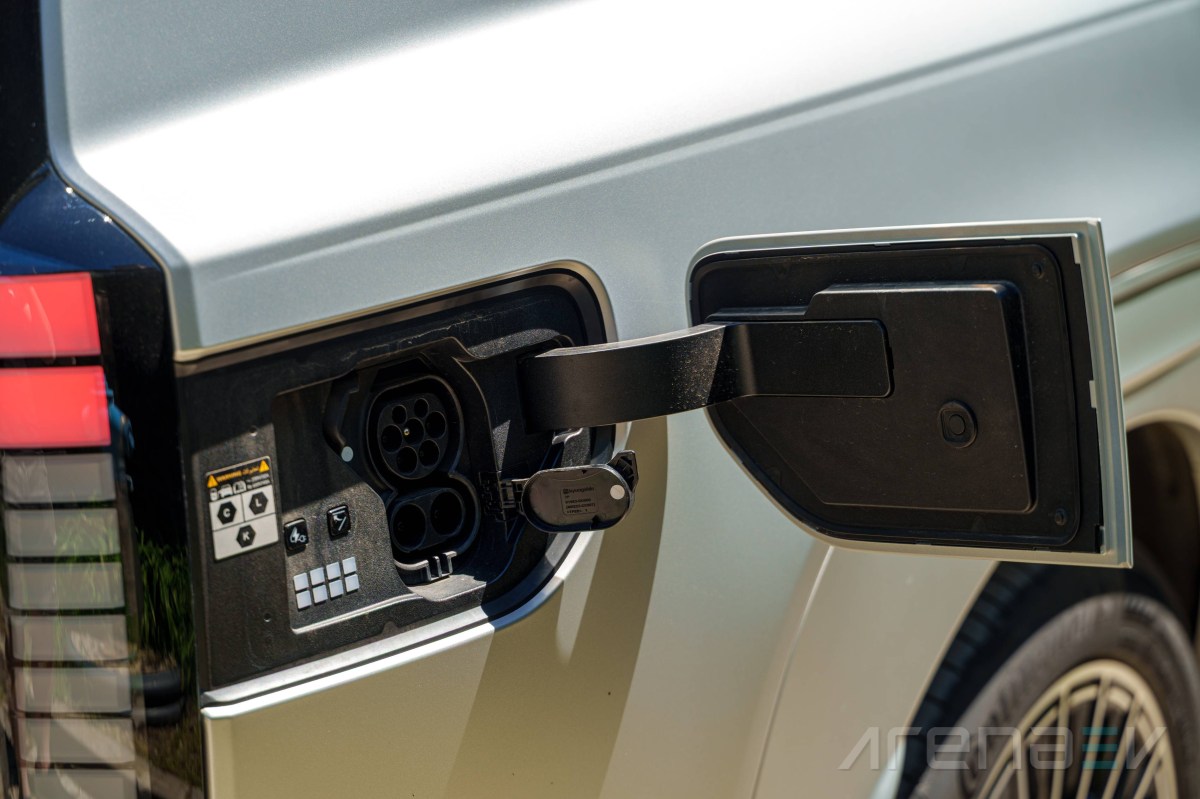
Thanks to its 800-volt electrical architecture, the Hyundai Ioniq 9 Performance supports exceptionally fast charging speeds of up to 350 kW. Unfortunately, we did not have the vehicle long enough to verify these figures in real world conditions. Even if we had, there are currently no charging stations near our office capable of delivering such power, although the Hyundai salesperson reassured us they’d seen those numbers on previous occasions.
Competition
Different brands have different takes on the full-size SUV segment differently. Hyundai tries to balance the vehicle's capabilities by offering multiple features and customization options. Luxurious touches and modern infotainment ensure that spending time inside will always be a pleasure.
The closest rival of the Hyundai is its close relative - the Kia EV9. Despite being built on the same platofrm, the EV9 has smaller batteries and thus shorter range. Pricing is in favor of the Kia but the Hyundai offers enough to justify that difference.
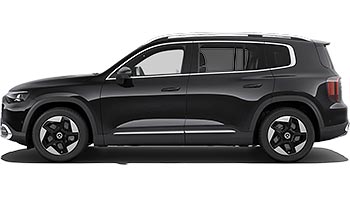
The second rival we chose is the Mercedes GLB. It is a much smaller EV, yet it delivers much of the Ioniq 9's capabilities and its range figures are similar. It is one of the smallest SUVs to offer third row seating but nothing feels like a major compromise or sacrifice. The one thing the GLB lacks is excess but it tackles that with maneuverability and compact dimensions, which would appeal to buyers in an entirely different manner.
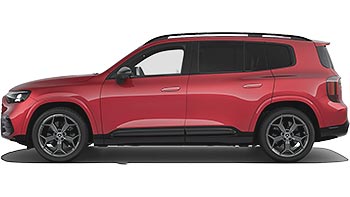
Kia EV9 99.8kWh AWD 2023 - • Mercedes GLB 350 4Matic 2025 -
Verdict
The Hyundai Ioniq 9 Performance is one of the most complete electric SUVs we have tested. It provides space, comfort, technology, versatility and everyday usability, with few downsides and minor ones at that. In a segment where buyers expect very few compromises, the Ioniq 9 delivers an exceptionally well rounded package.
Its spacious cabin, generous equipment levels and thoughtful features make it an outstanding companion for family life and long distance travel. Despite its imposing dimensions, it remains easy and relaxing to drive, requiring little effort from the driver while providing a refined and comfortable experience for every occupant. Combined with its competitive pricing, it represents excellent value in today's market.
Ultimately, the only reasons to overlook the Ioniq 9 are likely to be matters of personal taste, whether that involves styling preferences or brand loyalty. On objective merits alone, however, it deserves a place at the very top of the shortlist for anyone considering a full-size electric SUV.
Pros
- Huge interior space for all passengers.
- Big cargo areas no matter the configuration.
- Easy to drive.
- Fast charging times.
- V2L outlets inside and out.
- Quicker than advertised.
- Good efficiency and range for the size.
- Great value for money.
- Real panoramic sunroof with opening functions.
- Games and connectivity features.
Cons
- Hard to disable driver assistants.
- Multiple shared parts with other Hyundai models, which make the interior feel less special.
- No rear displays even as an option.
- No version with a smaller battery for even less money.


From the team behind
GSMArena.com
Facebook
Twitter
Instagram
RSS
Settings
Log in I forgot my password Sign up