Volkswagen took electric motor from ID.7 and squeezed it into the ID.Polo GTI Clubsport
Volkswagen engineers in Kassel clearly had a quiet afternoon and a spare angle grinder lying around the workshop. Squeezing the APP550 electric motor - a huge drive unit specifically designed to sit on the rear axle of heavy cruisers like the ID.7 and the ID. Tiguan - into the nose of the tiny MEB+ front-wheel-drive platform sounds like a bad joke. Yet that's exactly what the ID. Polo GTI Clubsport Concept is. They completely gutted the front subframe just to make the larger motor fit. It took millimeter precision to clear the suspension components. The result is unhinged.
It has two doors. I didn't think we would ever see a two-door electric hot-hatch from a legacy automaker. We all know the German giant isn't exactly cruising through smooth waters right now. Plant closures and software delays are dominating their board meetings in Wolfsburg. But none of that stopped them from throwing a serious budget at the 50th anniversary of the legendary GTI badge. This one-off track weapon strips out the rear seats, bolts in a roll cage, and deletes the infotainment system entirely. It's a desperate, but glorious flex from a company trying to prove its modular architecture can do a lot more than build only sensible commuter pods.
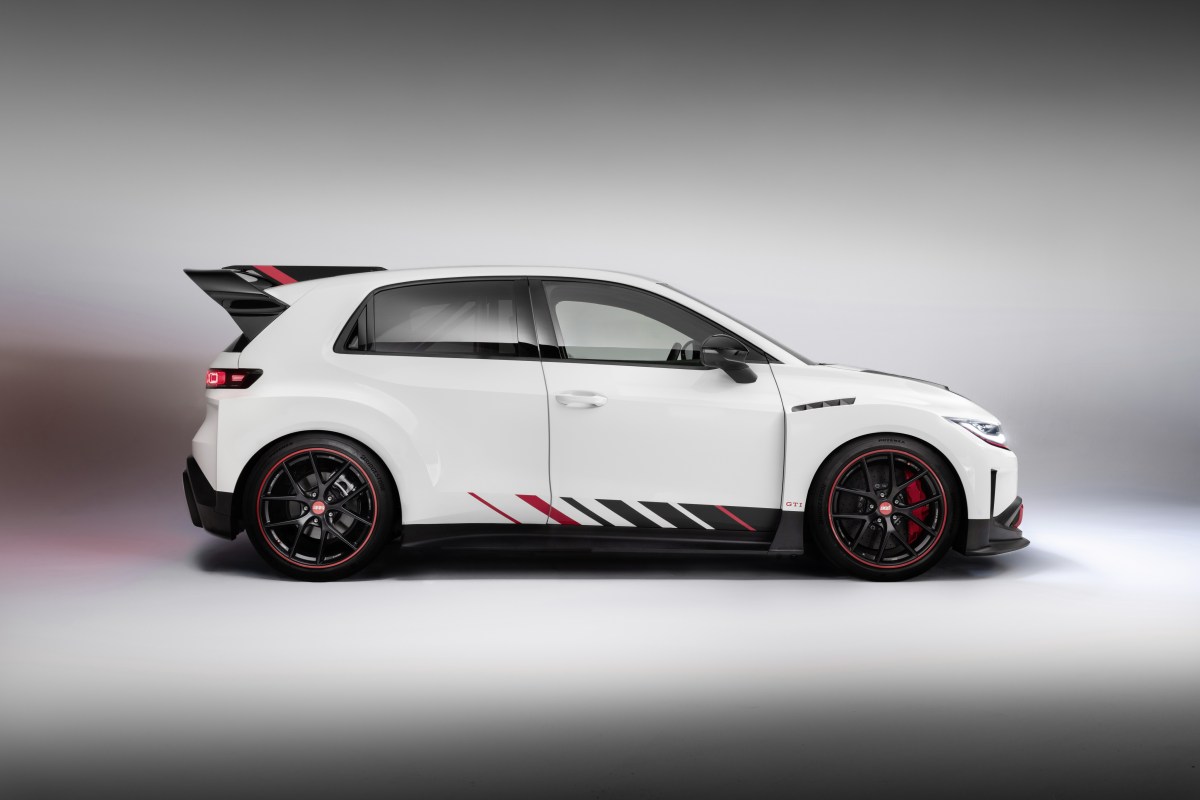
The standard ID. Polo sits around 159.8 inches long, putting it against the Alpine A290, which measures 157.1 inches in length, or the Abarth 500e at a stubby 144.6 inches. But where the Alpine maxes out at 220 horsepower, and the Abarth struggles to justify its price tag of over $52,200 with a meager 173 lb-ft of torque, this mutant Polo throws down 362 horsepower and 406 lb-ft. That's more twist than you get in a base Porsche 911 Carrera. Putting that much grunt into a car this short is a recipe for torque steer that could snap your wrists. A front-wheel-drive hatchback weighing an estimated 3,638 lb shouldn't be able to handle this output. It's madness.
Front-wheel-drive EVs usually fall apart dynamically when you give them more than 200 horsepower. If the electronic nanny fails to control your right foot inputs, the inside wheel simply lights up in a cloud of expensive tire smoke. You end up fighting the steering wheel instead of focusing on the road. The front axle simply cannot juggle the competing demands of steering, braking, and laying down instant torque simultaneously.
But Volkswagen knows this perfectly well - they've been making front-wheel-drive GTI cars for 50 years. They didn't map the throttle pedal to be numb at low speeds to hide the problem - they fitted an electronic front differential lock with a multiplate clutch. It's the same fundamental VAQ logic they used in the hardcore petrol Clubsport Golfs. When you flat-foot the throttle out of a tight hairpin, the differential locks to shuffle power to the wheel with the most grip rather than annoyingly cutting motor output. It means you actually get to feel the chassis pulling you into the apex. You aren't sitting there waiting for the traction control light to stop flashing. Grip is mechanical, not just digital. They also threw out the standard steel brakes for a set of ceramics with a sophisticated one-box braking system to handle all this energy.
Making room for that APP550 motor meant drastic surgery under the hood. The drive unit is a lot taller than the standard 226 horsepower motor you get in the production ID. Polo GTI. The chassis engineers had to redesign the engine bay, fabricate a bespoke stabilizer bar, and invent completely new mounting points.
Then they realized the water pump, the thermal management module, the air conditioning compressor, and the high-voltage charger were all sitting exactly where the new motor needed to go. Every single one of those auxiliary systems had to be relocated into whatever dead space they could find in the front crash structure. Relocating a thermal management module in an EV means rerouting high-voltage lines and coolant hoses through a packed chassis without compromising crash safety. It's a nightmare.
The result of all this overtime is silly. Straight-line speed is relentless. It hits 62 mph in 4.7 seconds - fast enough to embarrass a lot of serious sports cars at a set of traffic lights. It pulls hard. But there's an annoying bottleneck hidden inside this engineering miracle. The battery is still the same 52 kWh unit found in the standard ID. Polo GTI. To feed the hungry motor, they tweaked the pack's management software to allow short-term discharge spikes up to 290 kW. It enables the car to hit a top speed of 149 mph, but pushing that much current out of a 52 kWh pack on a race track means your track day is going to be incredibly short. When you do eventually pit, it fast charges at a rather pedestrian 105 kW. It takes 24 minutes to get from 10% to 80%. You'll spend more time drinking coffee in the pits than setting lap times.
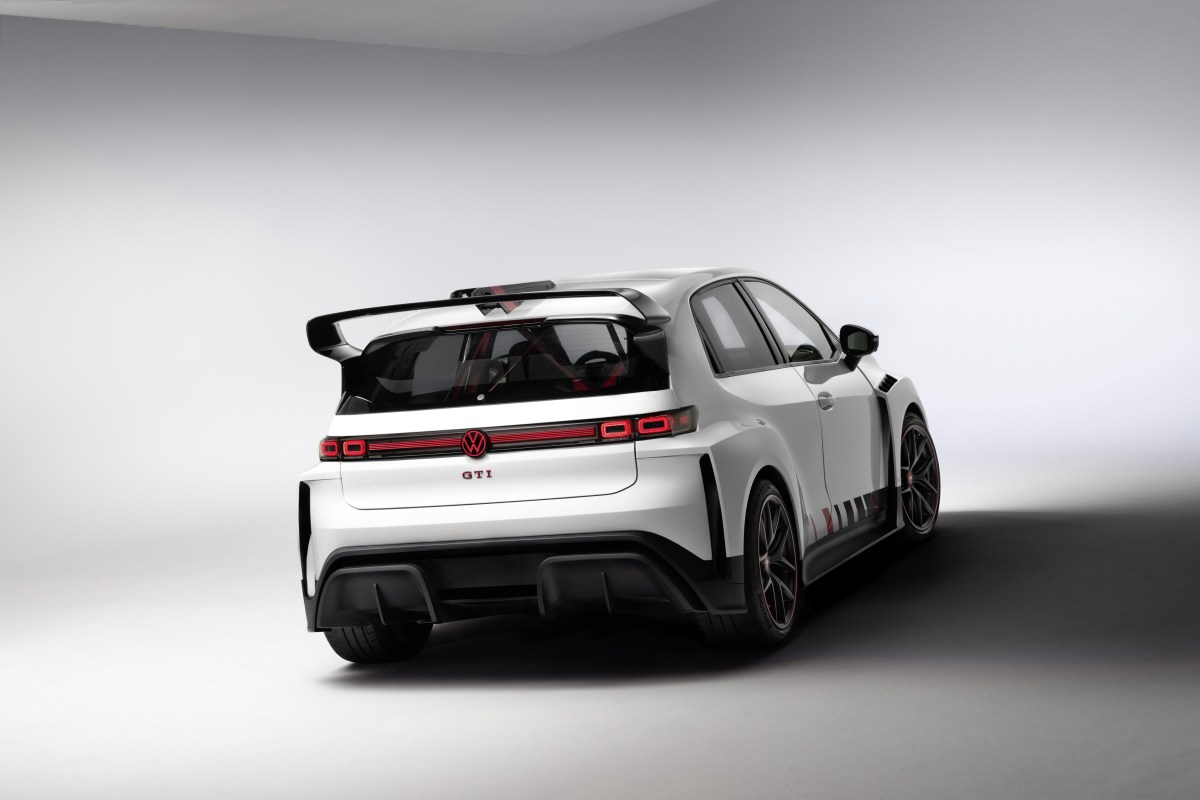
The stance is where the motorsport intent becomes incredibly obvious. They widened the track and slapped on flared carbon arches that push out the bodywork by 1.97 inches on each side, increasing the overall width by a full 3.94 inches over the standard production car. They also dropped the adaptive DCC suspension by 1.18 inches, leaving virtually zero wheel gap. There's a carbon fiber front splitter, functional cooling ducts for those ceramic brakes, and a towering rear wing bolted above the roofline that looks like it was stolen directly from a TCR racing grid. Downforce matters when a hatchback is pushing 149 mph. It works.
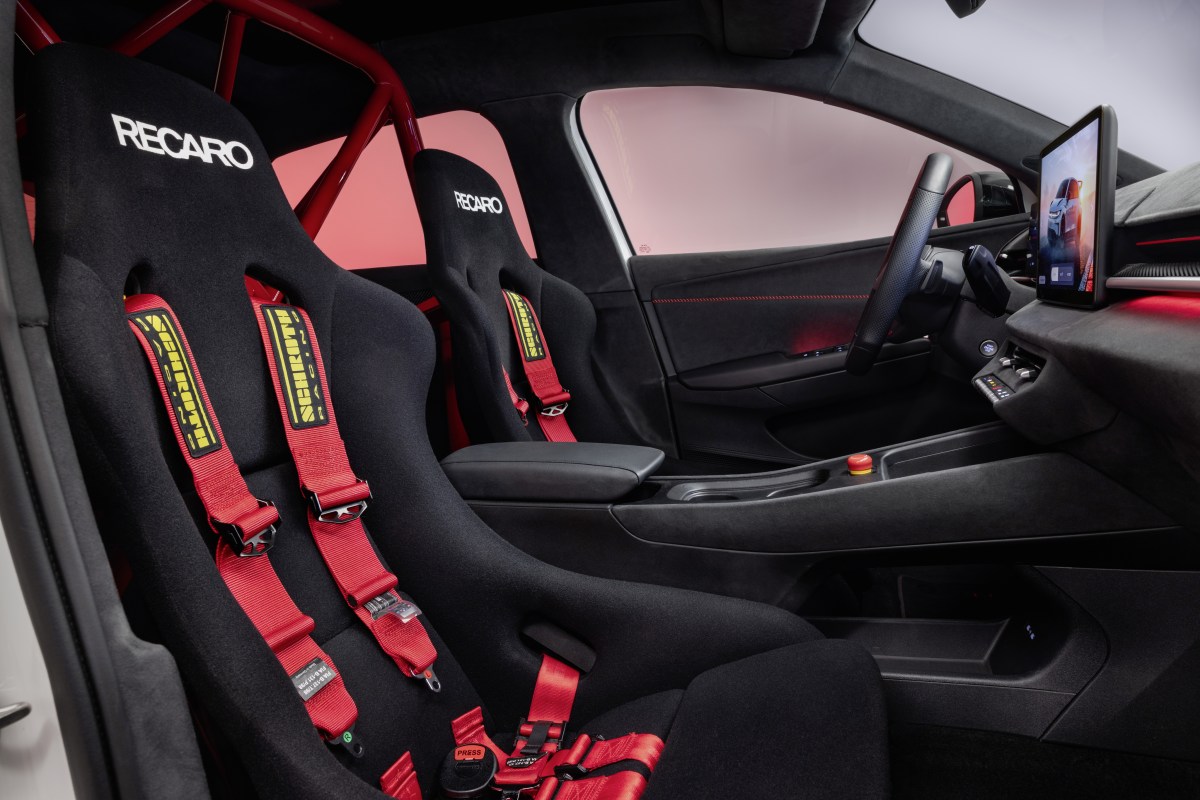
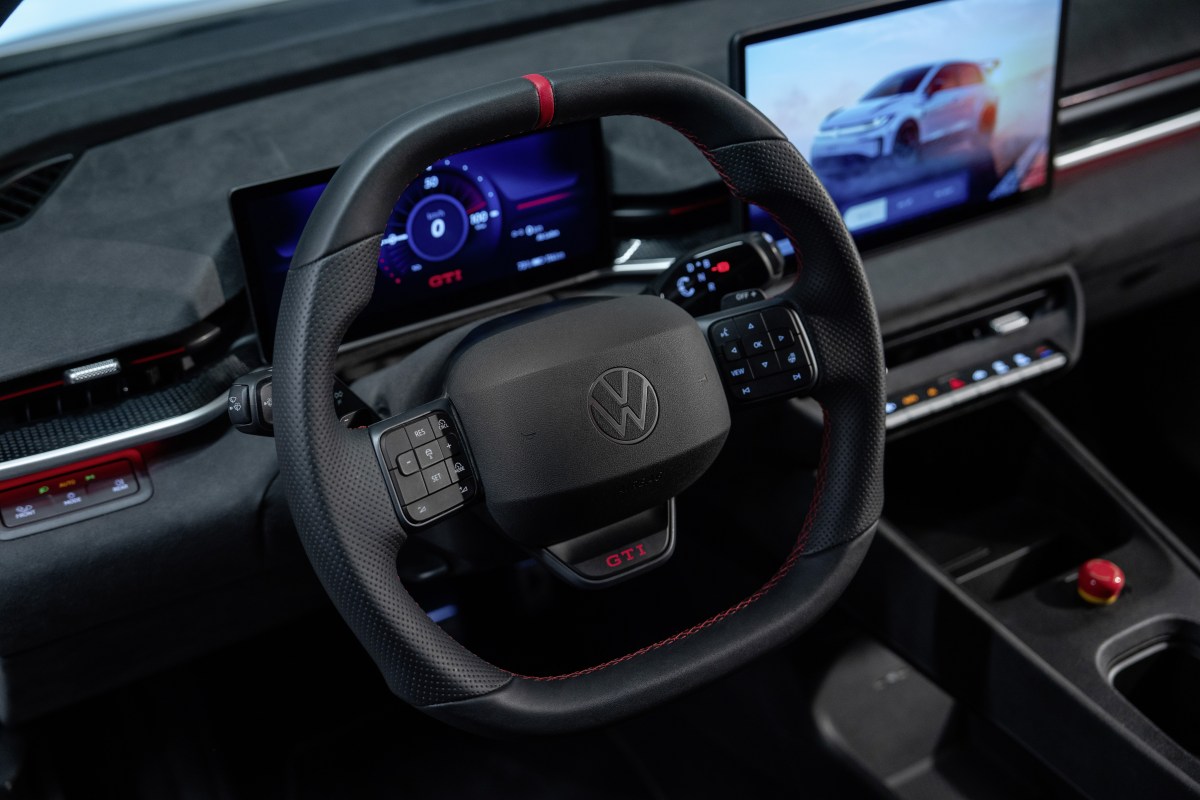
VW stripped the cabin to the bare metal. The rear bench is completely gone. In its place sits a thick rollover bar painted in Tornado Red. The driver and passenger are clamped tightly into Recaro racing buckets with bright red five-point harnesses. There's no radio. There's no Apple CarPlay or ambient lighting menu. The central touchscreen was entirely reprogrammed to display only driving settings, telemetry data, and battery temperature. The dash and door cards are wrapped in dark ArtVelours microfibre to cut down on windshield glare, stitched together by Volkswagen trainees who clearly enjoyed their assignment.
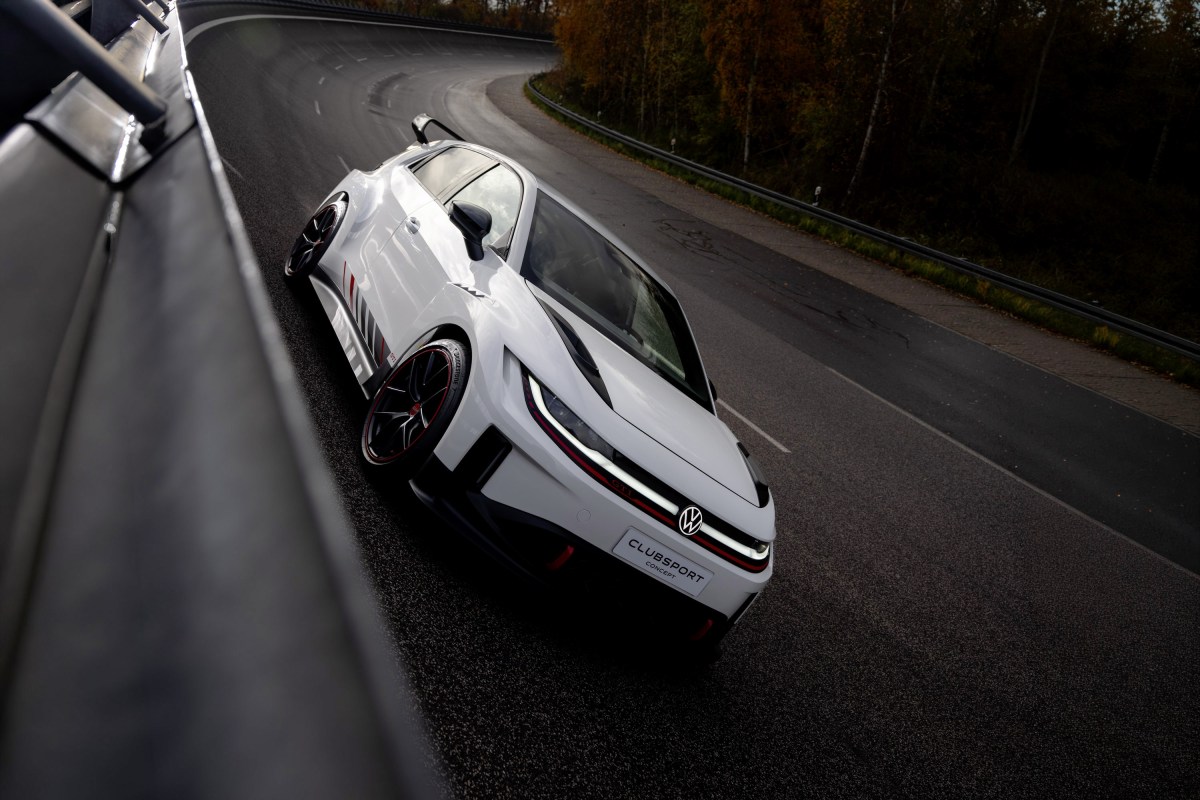
This car is a rolling paradox. It's a track-focused EV that you can't actually buy. It rides on a modular commuter platform, but it's powered by a motor meant for a luxury electric sedan. Volkswagen says the ID. Polo GTI Clubsport Concept is just a showpiece for the Essen Motor Show right now. The public gets to stare at it from November 27 through December 6, and then it goes into a warehouse.
But they also left the door wide open by stating they never build concepts without the theoretical option of a production derivative. If they do actually build a limited run, they'll likely have to detune it so the warranty claims don't bankrupt the company. You can't hand the general public a front-wheel-drive hatchback with ceramic brakes and expect everyone to keep it off the racetrack. For now, it is a rare flash of chaotic brilliance from a brand that desperately needed a win.



From the team behind
GSMArena.com
Facebook
Twitter
Instagram
RSS
Settings
Log in I forgot my password Sign up