Xiaomi unveils new AI Auto World Model framework as it faces $460M Q1 loss
The battlefield for modern smart electric cars is moving quickly from mechanical hardware to computing intelligence. On May 26, Chinese technology firm Xiaomi revealed its latest step in this direction by introducing the Xiaomi Auto World Model framework. This is the first time the automotive division has explained its complete development path for advanced driving software to the general public.
For the past few years, competing brands have built their advanced driver-assistance features primarily around physical hardware. Companies packed electric cars with expensive sensor suites, including radar, high-definition cameras, laser-based LiDAR units, and complicated vision systems. The industry is now entering a new phase where vehicles must go beyond recognizing immediate traffic to actively predicting what will happen next on the road.
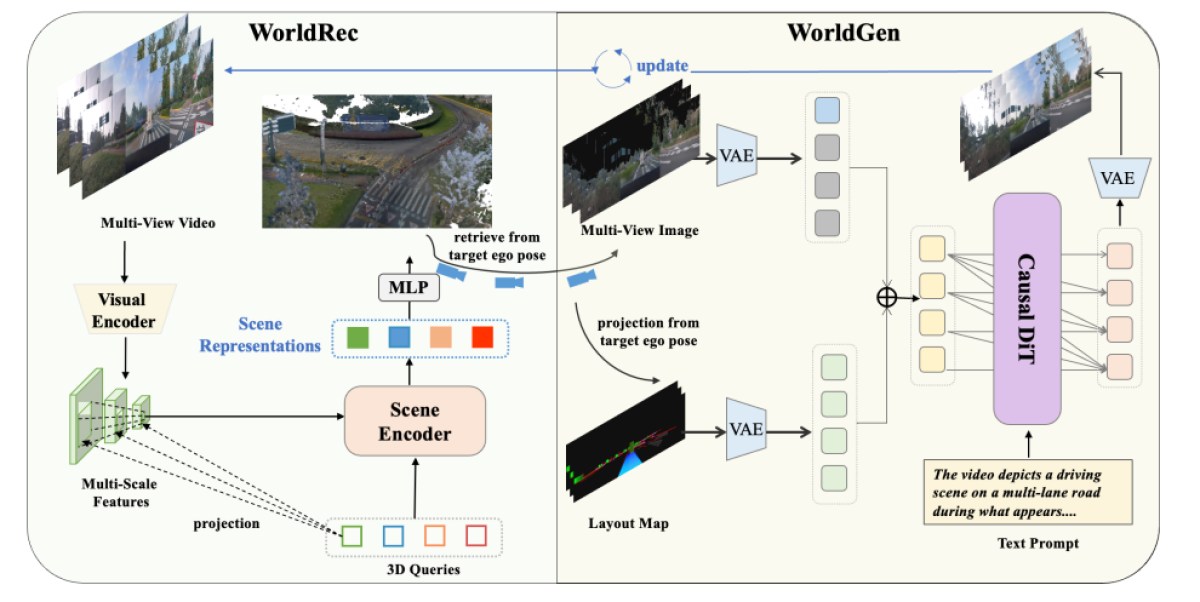 Workflows of WorldRec and WorldGen - source: Xiaomi
The auto industry relies on two separate techniques to build these computer models. One method uses digital camera files to build exact, rigid 3D representations of physical roads. This path offers strong reliability but cannot simulate unexpected hazards well. The second method uses generative artificial intelligence to imagine and create future traffic videos, though these simulated clips frequently suffer from digital distortion. Xiaomi attempts to resolve this issue by creating an integrated system that connects a 3D building tool called WorldRec directly to a video-creation application named WorldGen.
This engineering strategy places Xiaomi in direct competition with local electric vehicle rival XPeng. XPeng introduced its own artificial intelligence software package, known as VLA 2.0, which heavily uses generative video technology to predict road behavior. XPeng focuses extensively on creating continuous video streams to teach its electric cars how to act, and Xiaomi uses its 3D structural mapping tool to keep its artificial intelligence accurate. This structural anchor helps prevent the software from generating unrealistic images or losing track of the environment during long, complex drives.
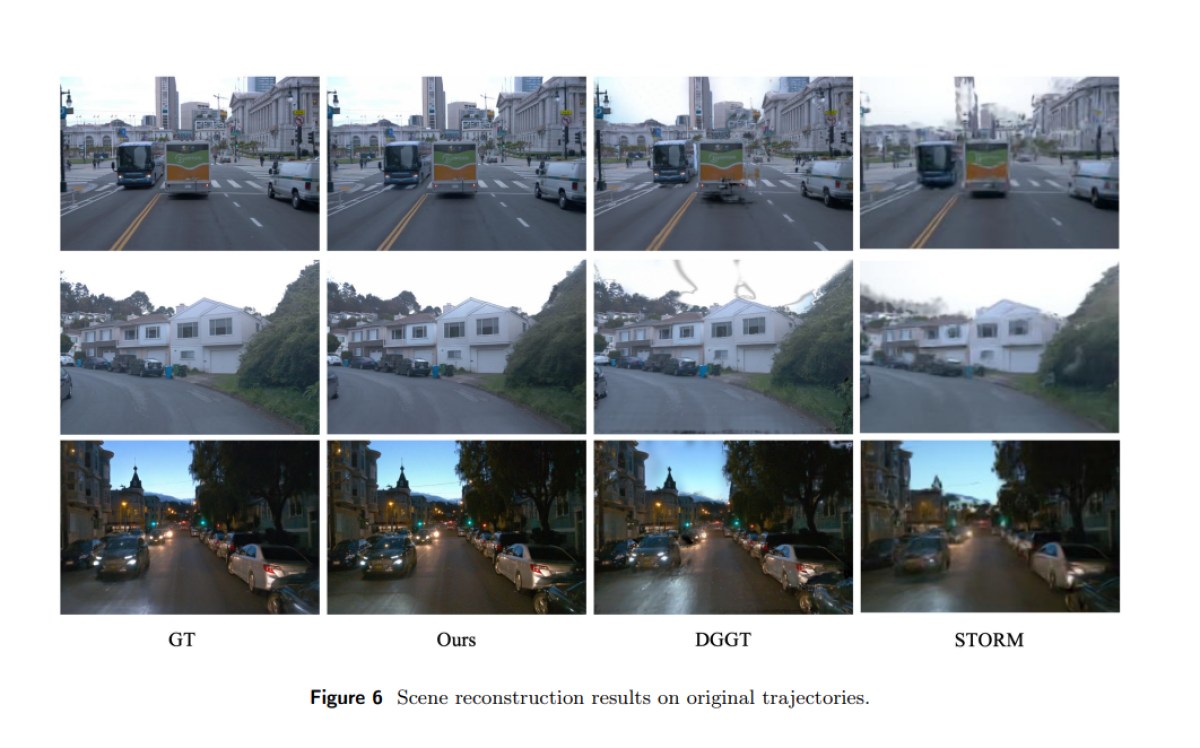 Comparison of scene reconstruction results of different algorithms: GT, Xiaomi, DGGT, and STORM - source: Xiaomi
The debut of this technology comes precisely as Chinese regulators increase their attention on advanced driving systems. The Ministry of Industry and Information Technology started its 2026 nationwide safety check program for "new energy" vehicles. Government inspectors are specifically reviewing how driver-assist systems handle sudden, rare road hazards and emergency conditions. Automakers are facing increased pressure to prove that their electric cars can navigate uncommon problems, which the industry refers to as long-tail risk scenarios.
Xiaomi stated that its new framework has already scored top marks on public driving datasets, including the global benchmarks managed by Waymo and nuScenes. The system can produce up to one minute of continuous simulated driving video. The brand has already deployed the software to generate more than 100,000 highly realistic video clips to train vehicle sensors, run virtual simulation tests, and support features inside its vehicle cabins.
Expanding its engineering capabilities is one thing, but Xiaomi is also balancing the financial realities of its EV business. The company's innovative business division, which handles electric cars and artificial intelligence, registered a quarterly operating net loss of 3.1 billion yuan ($460 million). The surprising decline follows a strong financial year in 2025, during which the department recorded its first annual operating profit. Executives blame the drop on factory downtime during the traditional Spring Festival holiday, rising costs for core materials, and reduction in government incentives for electric car buyers.
The vehicle segment delivered 80,856 total electric cars in the first quarter, which is a 6.57 percent increase compared to the same period last year. Total revenue for the innovative department reached 19.9 billion yuan, with the electric vehicle business bringing in 19 billion yuan of that sum. The division's gross profit margin dropped by 3.1 percentage points over the year to settle at 20.1 percent, matching the slower growth pattern in overall deliveries.
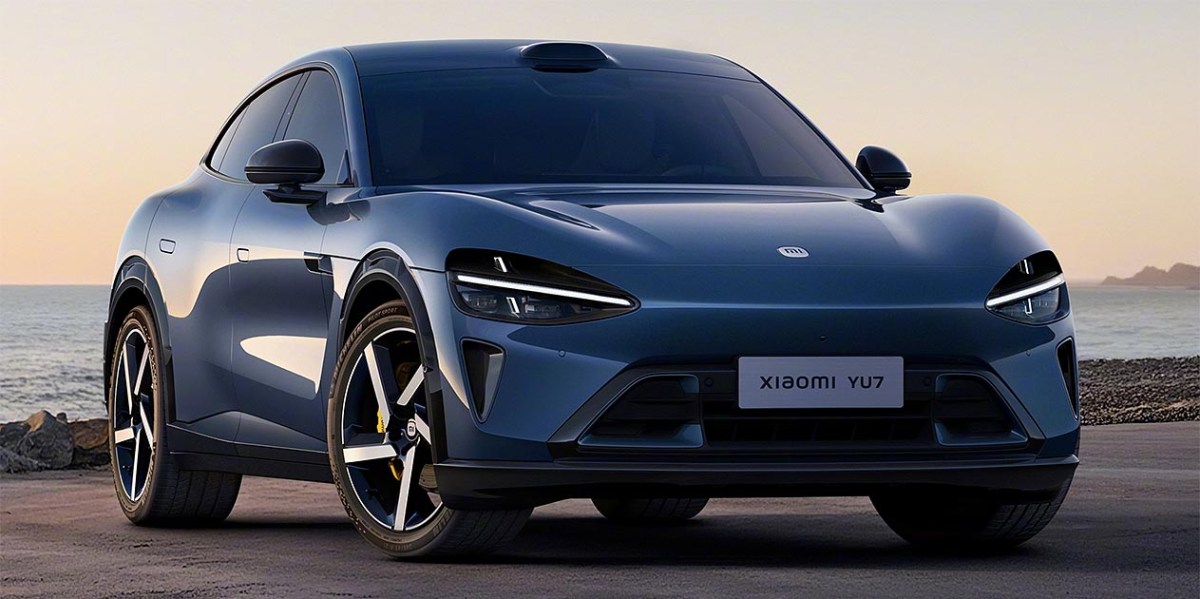
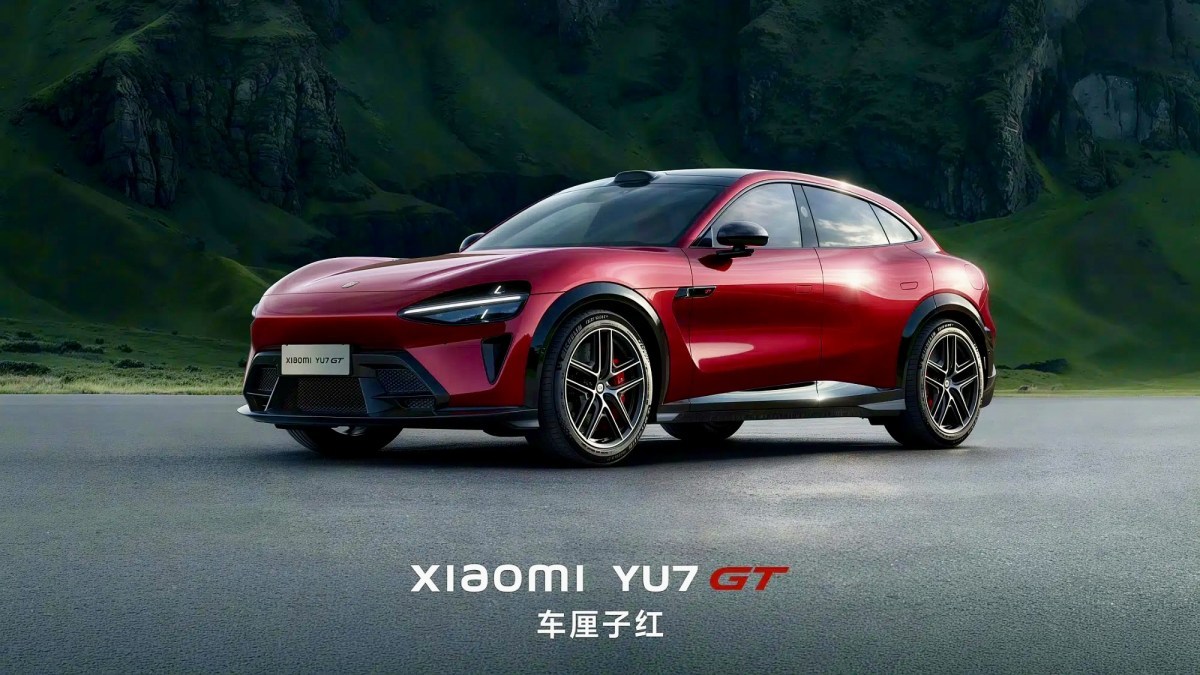
Delivery volumes shifted a lot during March as the manufacturer transitioned to newer models. Total monthly sales dropped to 21,440 electric cars. The YU7 SUV was the company's best-selling model, contributing 13,558 deliveries and making up 63.24 percent of total monthly sales. Meanwhile, production of the first-generation sedan stopped to allow for a product refresh. The updated SU7 electric sedan launched on March 19 and managed 7,882 initial deliveries by the end of March.
Sales picked up quickly in April as production of the new sedan reached full volume. Total monthly deliveries jumped to 36,702 units - that's a month-on-month increase of 71.18 percent. The updated SU7 sedan drove this recovery with 26,826 units (over 70 percent of April sales). This growth brought cumulative deliveries for the first four months of the year to 117,558 vehicles.
Xiaomi is sticking to its ambitious delivery goal of 550,000 vehicles for the full year of 2026. Apart from the domestic market, the electronics giant wants to expand its automotive operations globally. The company expects to officially enter international markets in the second half of 2027, with Europe as the first launch location.



From the team behind
GSMArena.com
Facebook
Twitter
Instagram
RSS
Settings
Log in I forgot my password Sign up