XPeng G9L interior, design and features review: The European flagship SUV makers are running out of excuses
I think I said that somewhere before, but I'll say it again - the honeymoon phase of the electric vehicle transition is officially over. Five years ago, buyers were willing to forgive cheap cabin plastics, clunky infotainment screens, and a stiff ride as long as the car had a big battery and could beat a sports car away from a traffic light. Today, nobody cares if a family hauler can shave another tenth of a second off its sprint time. A big SUV hitting 62 mph in under 4.9 seconds is already faster than any sensible parent needs when there are kids, dogs, and groceries in the back. The same goes for driving range. Once a car gives you around 373 miles on the WLTP cycle - well past the limits of a normal human bladder - obsessing over an extra handful of kilometers becomes pointless.
We have reached the point where electric powertrain improvements are becoming minimal, especially when 5C battery technology lets you plug in and get that range back in about 10 minutes. With XPeng planning to roll out thousands of megawatt-level chargers across Europe buffered by recycled EV batteries, range anxiety is pretty much dead. That shifts the entire burden of competition back to where it belongs: how the car actually feels to sit in, how easy is it to interact with, and - most importantly - whether it is worth your hard-earned cash.
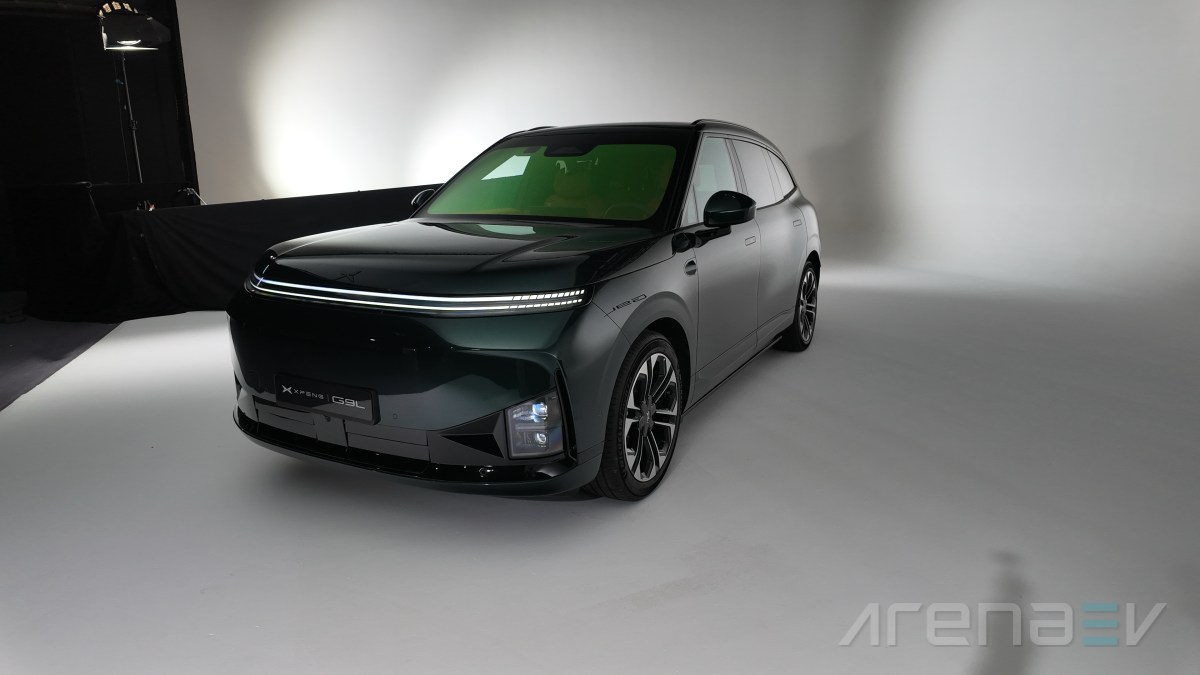
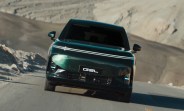
I spent a great deal of time climbing in and out of the new XPeng G9L at the Paris Motor Show, and it made that shift in priorities crystal clear. This is XPeng bringing its flagship engineering to Europe, and they are not just shipping over a Chinese domestic spec and hoping for the best. XPeng builds an even larger GX model back home and sells the Chinese G9L exclusively as a plush two-row cruiser, but the product planners figured the GX was a step too far for tight European streets. Instead, they put the G9L at the very top of the European lineup, gave it three rows of seating, and arranged for it to be built right here in Europe at the Magna Steyr facility in Graz, Austria. At 201.6 inches long, 78.7 inches wide, and 70.4 inches tall (and with a 122 inches wheelbase), it lands right in the full-size luxury SUV bracket.
Fitting that third row into a European-market flagship comes with a few compromises, and it is worth being honest about what we lost in translation from the Chinese model. If you buy a two-row G9L in Shenzhen, both front and rear passengers get full zero-gravity reclining seats, and the back row comes with a powered center console that hides a fold-out tray table and wireless phone chargers - like you would find in a private jet. In our three-row European spec, only the front passenger gets the zero-gravity lounge treatment.
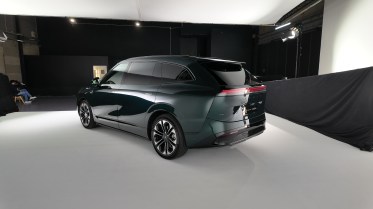
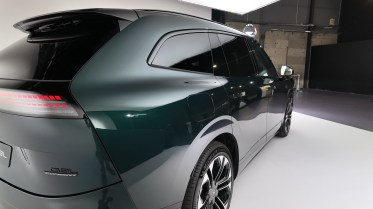
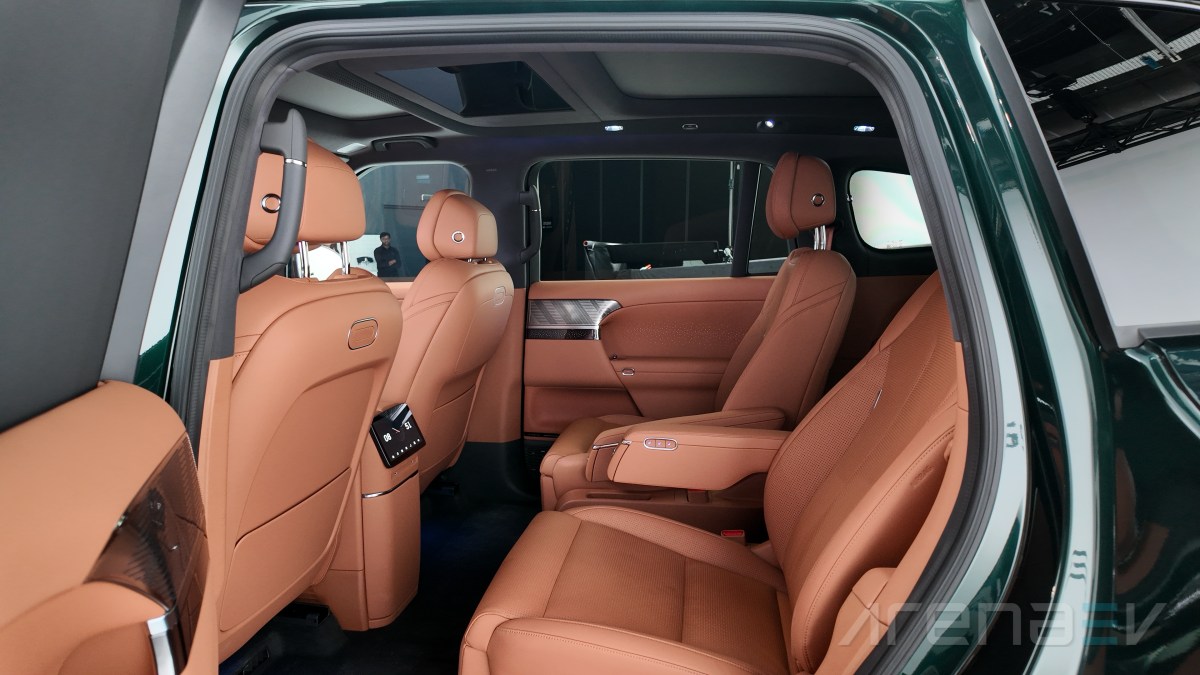
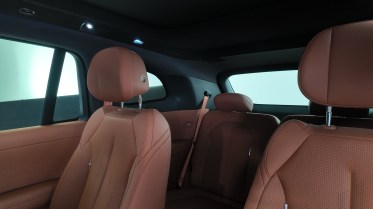
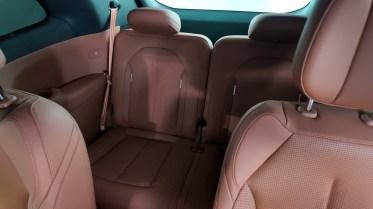
Even so, calling the European second row a downgrade feels ridiculous once you actually sit in it. You still get heated, ventilated, and reclining captain's chairs with extending leg rests and a 10-point massage system. Thankfully, the third row is not the usual padded penalty box reserved for small children or people you quietly dislike. Those seats are still heated, ventilated, power-reclining, and offer plenty of room. To prove the point in Paris, XPeng packed six burly rugby players into all three rows at the same time, and nobody looked like they needed a chiropractor afterward.
That focus on the passenger experience makes even more sense when you look at where autonomous driving software is heading. As XPeng pushes its XNGP architecture closer to true Level 4 capability, the person sitting behind the steering wheel spends less time wrestling with traffic and more time acting like another passenger. Even when you are driving yourself, a big three-row SUV is going to use a tiny fraction of its performance envelope on a daily commute. I have not driven the G9L on the open road yet, though the hardware (dual-chamber air suspension, adaptive dampers, and four-wheel steering) promises serious body control, and it already achieved class-leading 50 mph through the classic moose test. XPeng spent months tuning the chassis software specifically for higher European motorway speeds and patchy surfaces - it turns out we are not far off from a future where AI adapts the suspension tune on the fly.
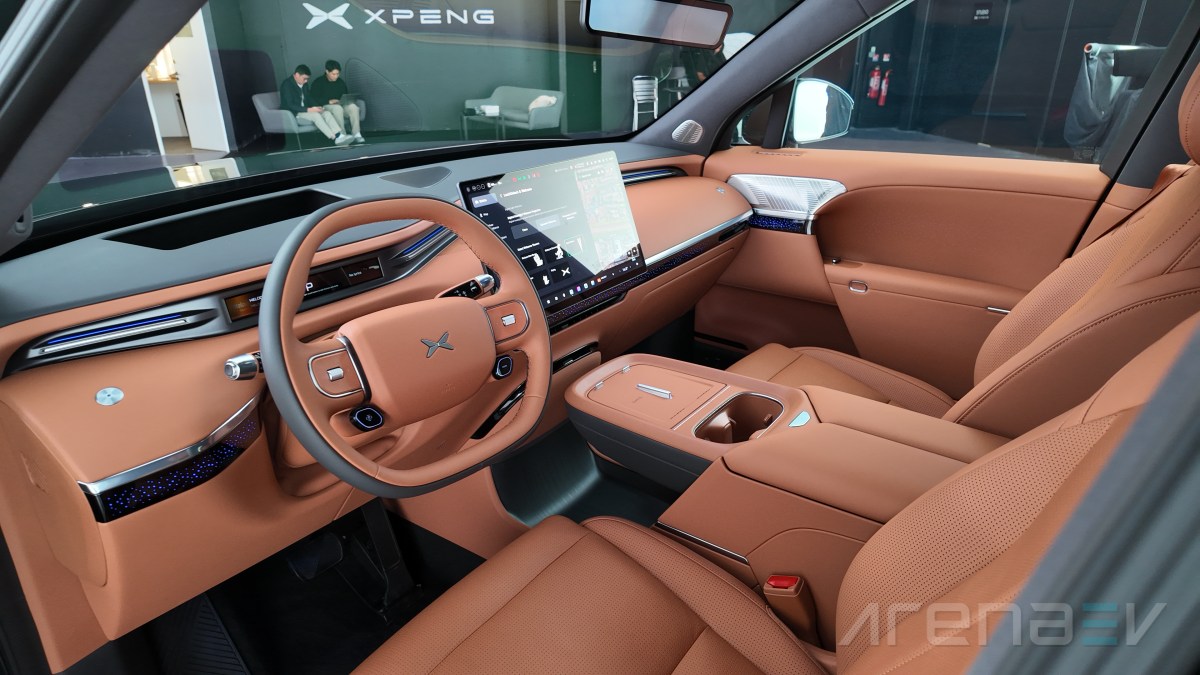
Because the software handles so much of the road stress, the cabin becomes the main event. The front seats are packed with 176 individual sensors and 56 air cells that constantly monitor your posture and adjust side bolsters and lumbar support under cornering loads, even if you fidget on a long drive. Combine that 16-point front massage with a 23-speaker sound system, a 21.4-inch drop-down rear entertainment screen, power sunshades, a 0.44 ft³ power-opening refrigerator for cold drinks, and diffused halo air vents that never blow harsh drafts in your face, and the cabin feels more like a private screening room than a car.
Up front, the driver looks out over a clean dashboard with a 17.3-inch central touchscreen and a huge 88-inch augmented reality head-up display that projects navigation prompts directly onto the road ahead. The physical buttons on the steering wheel are configurable, though during my time in the car I barely touched the screens at all. XPeng's voice assistant has reached the point where talking to the car feels natural, and because the system recognizes individual voice profiles both inside and outside the cabin, you can walk up to the exterior with your hands full of bags and tell the power doors to open.
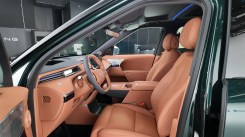
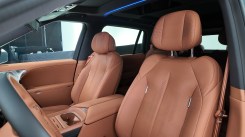
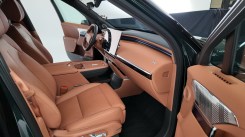
Once on the move, the integration with the navigation and autonomous driving suite lets you tell the car to change routes or find a safe spot to pull over. What really stayed with me, however, was the proper old-school physical craftsmanship. It's something I noticed before in other XPeng cars - every single stitch line was dead straight. The unusual orange-brown Nappa leather inside the dark green show car looked rich and timeless, and the soft-touch lining extended all the way down the door cards and right inside the storage pockets. At night, ambient lighting glows through thousands of tiny laser-cut perforations in the door leather - a neat visual trick that very much reminds you of the starlight headliners in a Rolls-Royce.
But the real shock comes when you look at the price tag and compare it to what the competition is doing. Starting at $87,850, the European G9L is way more expensive than its domestic Chinese equivalent, but in the context of the European market it looks like an absolute steal. Right next door in Paris sat the BYD's new ATTO 8 - sold in China as the Tang L - for the same money. At 198.4 inches long, 78.6 inches wide, and 69.3 inches tall with a 116.1 inches wheelbase, the BYD is only slightly smaller on the outside, and on paper it holds a range advantage at 406 miles WLTP versus 367 miles to 368 miles for the XPeng.
The Chinese-built ATTO 8 also introduces BYD's flash-charging capability paired with its second-generation LFP Blade Battery. The Austrian-built G9L uses ternary NMC batteries for Europe. That ternary pack gives the heavy G9L better energy density, and it taps into an established European battery supply chain that will help XPeng avoid punitive tariffs if stricter local sourcing rules kick in.
Back to the BYD ATTO 8 for a moment - once you step inside, any on-paper advantage disappears. The Tang L is an old platform from China that is already facing replacement by the newer Datang and Sealion 08 models, and its age shows. With 5.9 inches less wheelbase than the XPeng, the BYD's cabin packaging feels tighter across all three rows. The ATTO 8 has a larger front trunk, but its rear trunk has an awkward rounded shape and has no decent underfloor storage. The BYD's seats, screens, and material quality felt a full generation behind the G9L, and despite having a housing for a roof-mounted LiDAR unit, the European show car had no intelligent driving system at all.
Being at the Paris Motor Show, it was easy to find all the competitors in one place - a bit further down the hall was the Kia EV9, a former World Car of the Year. It might be 197.4 inches long on a 122 inches wheelbase, and it might offer three rows of seating, but the value gap grew even wider. A mid-spec rear-wheel-drive EV9 Earth with 354 miles of range pushes past $94,000, yet it only gives you a 150 kW motor compared to the 270 kW rear motor in the base G9L. Sitting in the Kia after the XPeng, the Korean cabin felt plasticky and spartan, with software that cannot touch XPeng's base specification.
As for the ubiquitous Tesla Model Y, its sparse cabin feels unfinished and low-budget in this company, and we are still waiting to see how Tesla prices the slightly stretched Model YL in Europe. Even the traditional German heavyweights at the show - Audi and Mercedes-Benz - looked flat-footed, serving up cabins full of scratchy lower-door plastics and sluggish software while asking for tens of thousands of euros extra once you tick the option boxes to match XPeng's standard equipment list.
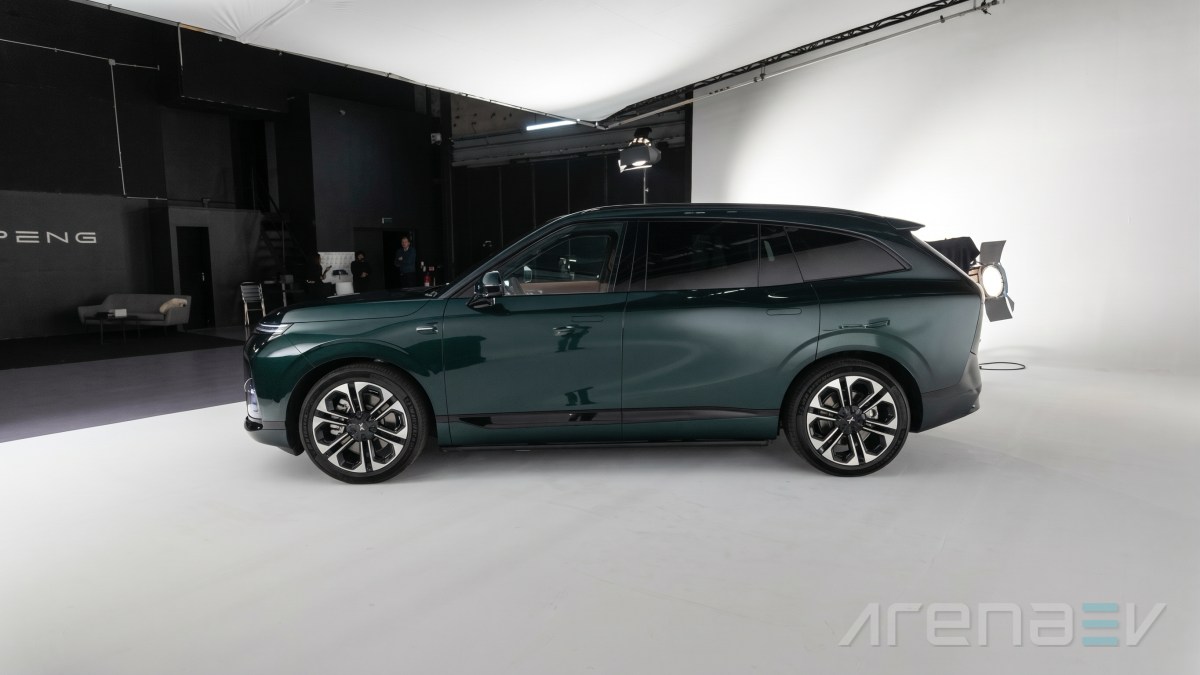
I have absolutely no doubts that XPeng has set an intimidating new benchmark for sub-$120,000 three-row SUVs in Europe. Although it is hard to admit, the XPeng G9L is better than many legacy EVs out there - it certainly beats Kia and Hyundai on quality and tech, it is miles ahead of anything VW has ever made, and it makes Audi and BMW look really like a stitch-up - and it is painful. It might not be as dynamic as anything from Porsche, but when it comes to interior quality, Porsche could learn a few lessons here.
Honestly - I am not being paid to say this, and this is not an advertisement - the G9L really is that good. If you were thinking about buying the new iX5 or the iX, or toying around with the idea of a Q8 e-tron or even the new Porsche Cayenne - by all means, take them for a test drive. Once you have done it, take the G9L out for a few hours and see how your perception changes. At the end of the day, you will be spending a serious chunk of money, and you owe yourself an honest decision - and legacy brands fall very short when it comes to respecting your money.


From the team behind
GSMArena.com
Facebook
Twitter
Instagram
RSS
Settings
Log in I forgot my password Sign up