2026 Nissan Micra EV 52 kWh review
Nissan Micra is a familiar name in urban mobility, debuting in the early 1980s and evolving through multiple generations while remaining true to its compact roots. The latest model, internally named K15, introduces perhaps its biggest change yet, becoming fully electric for the first time. Remarkably, despite the industry-wide trend toward ever larger cars, the Micra has consistently stayed below 13 ft in length.
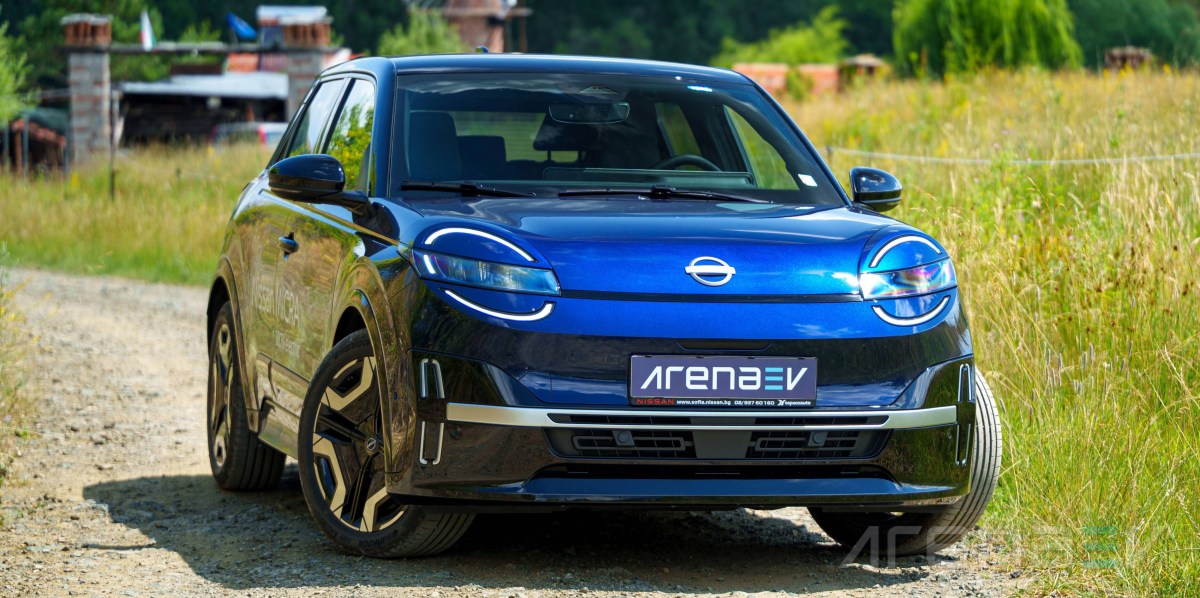
Table of Contents:
- Exterior
- Interior
- Storage & practicalities
- Driving experience
- Ride comfort
- Tech features
- Cabin noise
- Acceleration and braking
- Consumption
- Charging speed
- Competition
- Verdict
Today we are reviewing the long range version of the Nissan Micra EV, which pairs a larger 52 kWh battery with a 150 hp electric motor driving the front wheels. Its claimed range exceeds 249 miles on a single charge, which seems to be the figure all rivals also quote for their similarly-sized models.
The Micra shares much of its hardware with the Renault 5 E-Tech, including the battery packs and large parts of the interior. However, Nissan uses its own motor and suspension tuning, giving the two closely related models noticeably different characters on the road.
Nissan Micra EV 52kWh 2025 -
- Dimensions: 156.5 inches x 72 inches x 59 inches, 100 inches wheelbase.
- Drivetrain tested: 52 kWh - FWD 110 kW (150 hp), 181 lb-ft, 52 kWh usable battery capacity
- Other drivetrains: 40 kWh – FWD 90 kW (120 hp), 166 lb-ft, 40 kWh usable battery capacity
- Charging: 100 kW CCS; 15-80% in 30 min
- Range: 254 miles WLTP
- Weight: 3,201 lb unladen
- Other features: Heated seats, CarPlay and Android Auto, OTA updates.
Exterior
The Micra doesn't quite have a fixed design identity, with each generation largely reflecting the styling trends of its era. The new K15 generation appears to take some inspiration from the 2002 K12, particularly through its large round lighting elements and generally friendly character.
A playful detail is easier to notice on brighter colors, unlike our dark test vehicle. There's a small black panel above the license plate that contrasts with the bodywork in a way that makes the Micra look as if it is sticking its tongue out. It is a subtle touch, but one that fits the car’s cheerful personality well.
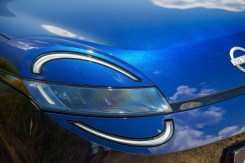
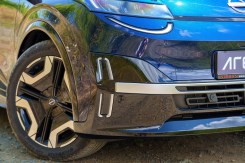
Nissan Micra EV front end
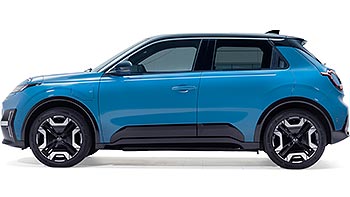
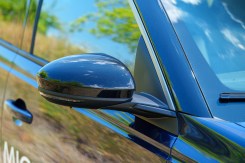
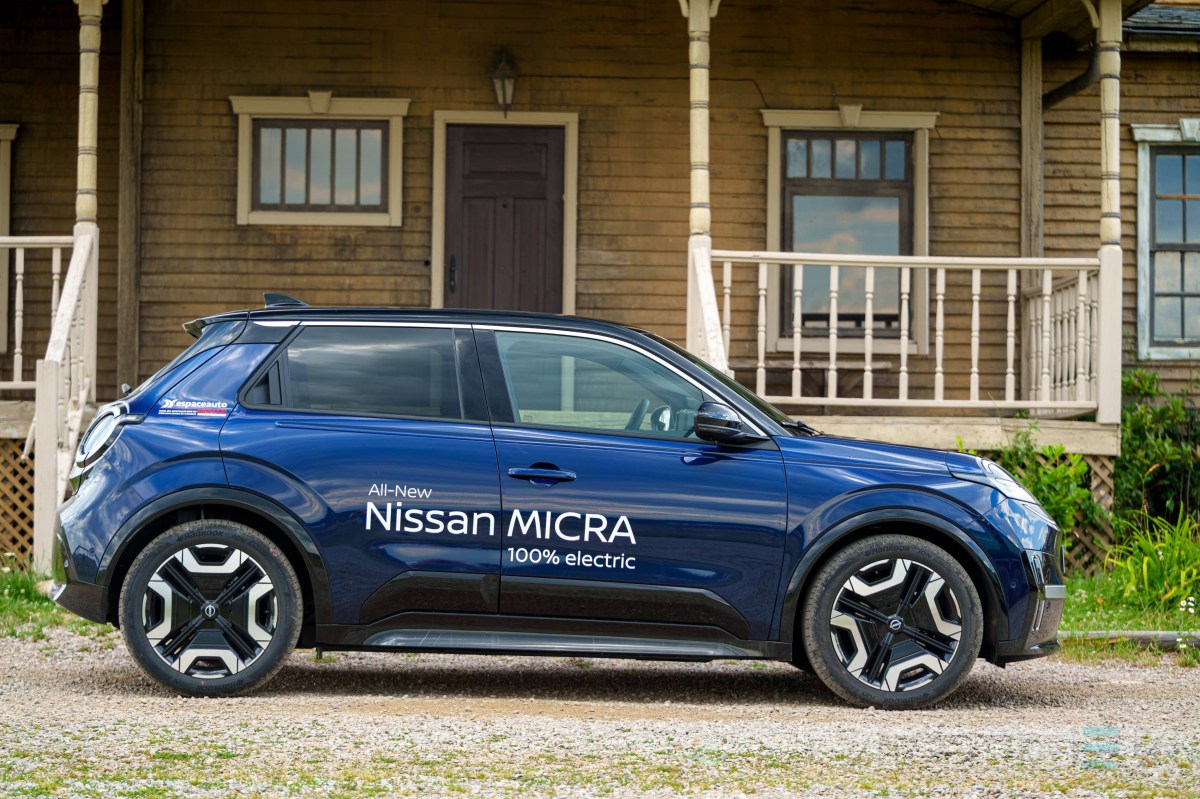
Looked from the side, the Micra’s close relationship with the Renault 5 E-Tech becomes immediately obvious. The two share almost identical proportions, with most of the visual differences limited to the bumpers, lighting and smaller styling details.
Even the concealed rear door handles carry over, while the charging port remains positioned on the front driver side fender.
Where Nissan adds its own character is in the bodywork. Compared with the sharper Renault 5, the Micra uses smooth curves and rounded surfaces, giving it a softer and more delicate appearance.
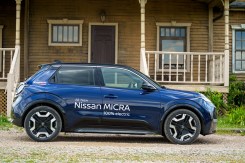
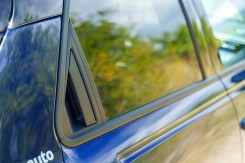
Nissan Micra EV side profile
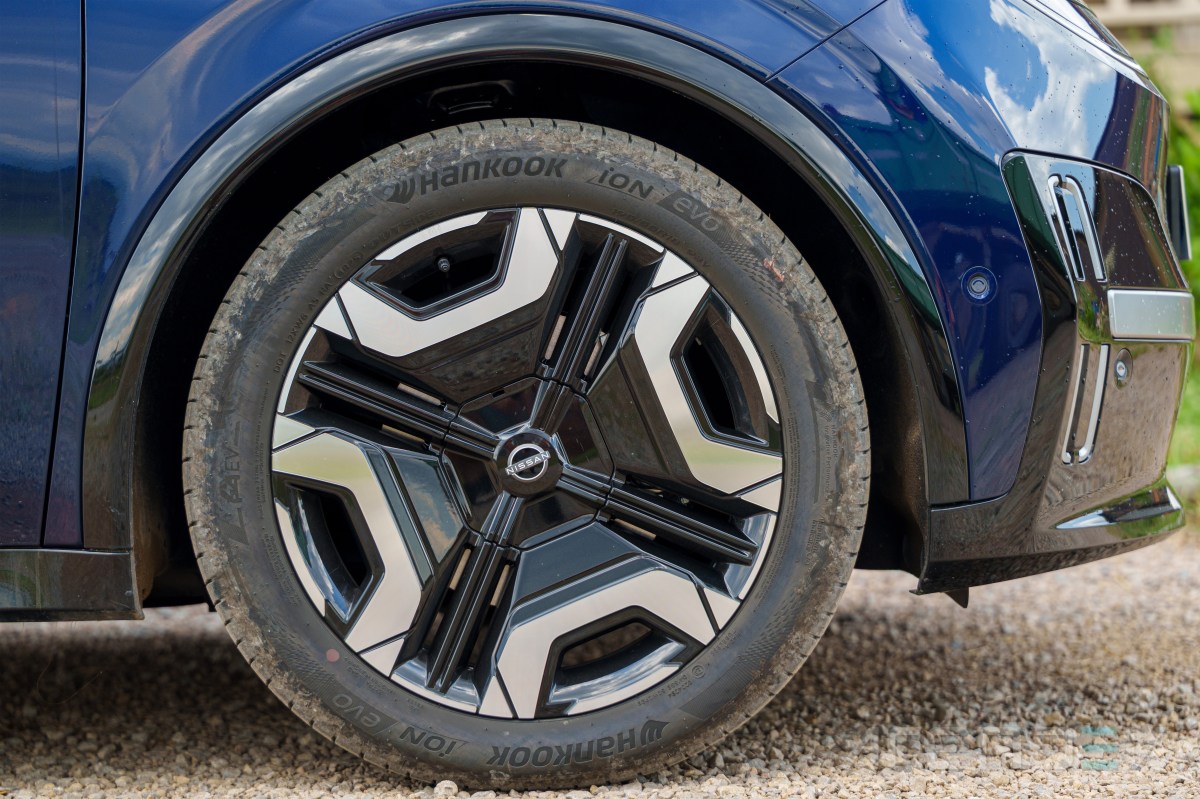
Every Micra comes with 18-inch wheels regardless of trim, although each equipment level receives its own design, making the wheels an easy way to distinguish between versions.
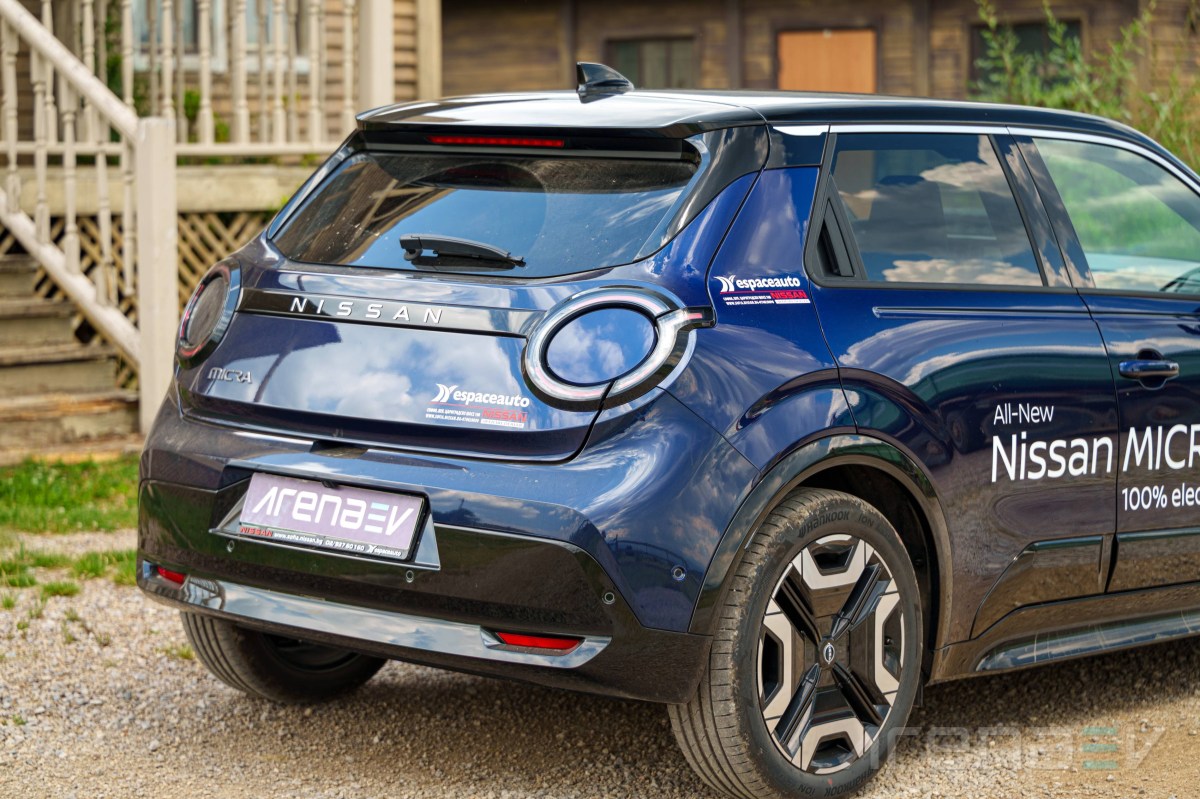
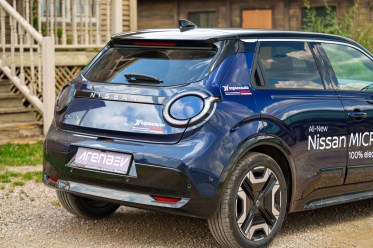
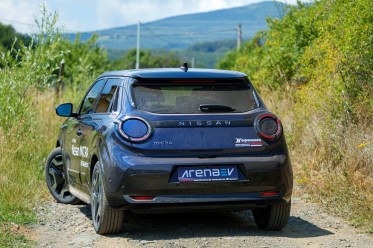
The rear continues the circular lighting theme, with round taillights that protrude slightly through the bodywork. Small curves at each end add some character to what could otherwise have been a fairly generic LED ring design.
Instead of a traditional badge, a large Nissan script stretches across the tailgate, leaving little doubt about the Micra's identity.
Nissan Micra EV rear end
Interior
As we already mentioned, the Nissan Micra EV borrows large portions of its interior directly from the Renault 5 E-Tech, which we already reviewed a year ago.
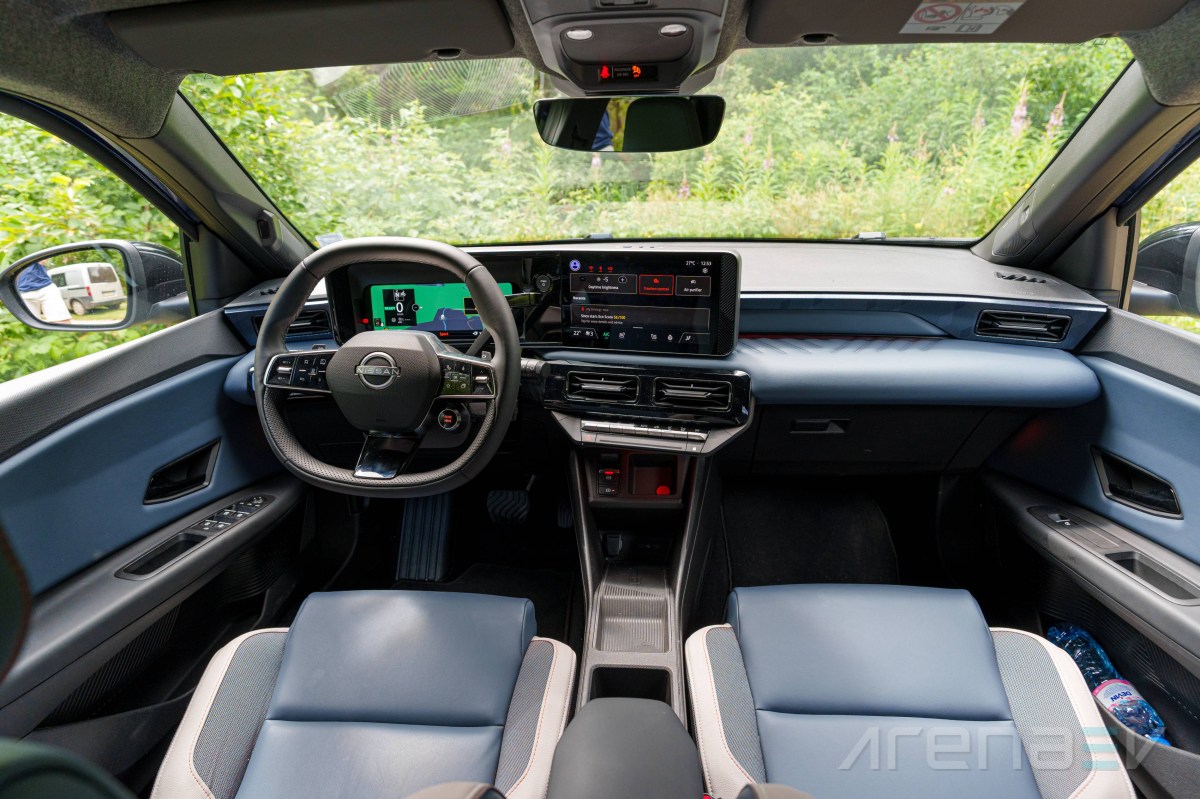
The steering wheel comes straight from Renault, as do the instrument cluster and main infotainment screen. Both displays offer plenty of customization and are practical and easy to use. Sharing these components is a smart move, too. Developing them individually requires significant resources, while using the same hardware allows both brands to focus on refining it to a higher standard.
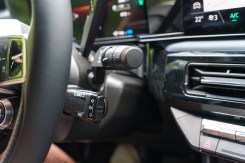
The stalks behind the steering wheel are also carried over, including Renault’s signature radio controls. Strangely, though, Nissan has removed the Park position from the gear selector altogether. This is particularly odd considering Renault even allows buyers to customize this exact piece in the 5 E-Tech, while Nissan decided to omit it altogether.
One option the Renault doesn’t get is the driver monitoring system, which sticks slightly out of the A-pillar and checks if the driver is paying attention to the road and beeps in case they don’t.
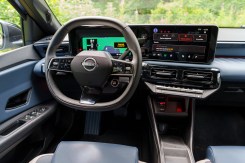
Cockpit area
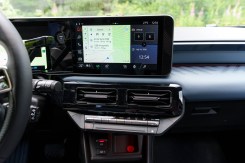
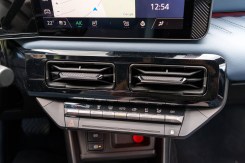
A row of buttons under the main screen controls the air conditioning features, which is a breath of fresh air in modern interiors when most rivals bury those somewhere in the infotainment.
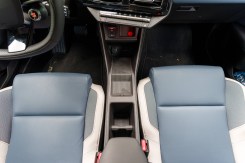
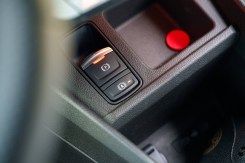
The center console makes good use of the available space with plenty of pockets and storage areas, along with a wireless phone charging pad and additional charging ports.
The cup holders are deep and generously sized, although their rectangular shape means most cups tend to jiggle around while driving.
Center console amenities
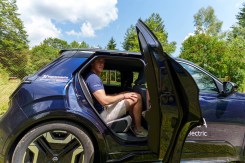
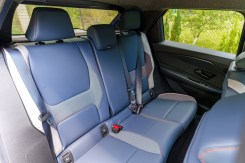
The second row is surprisingly spacious for such a small vehicle. There are no fancy features or luxuries back there, but the fact that the seats are genuinely usable is already a win. Even our 1.95 m (6'4") reviewer can sit behind a front seat adjusted for someone of the same height. With more ordinarily sized occupants up front, four adults can travel comfortably in the Micra EV, which is uncommon for vehicles in the segment.

Nissan Micra EV rear seats
Storage & practicalities
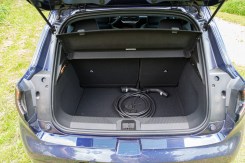
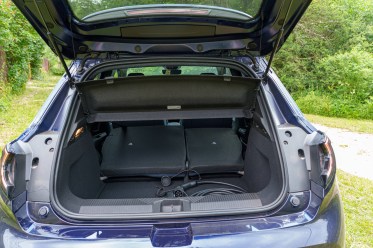
As a small car, we don't expect wonders from the Nissan Micra EV in terms of storage space. Its 11.5 ft³ trunk can handle the usual groceries and a couple of bags, but you'll quickly run out of room when packing for a longer trip.
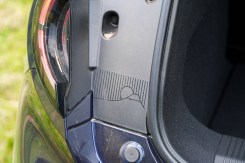
There is a nice little detail next to the trunk that separates the Micra from its Renault sibling. The Renault 5 gets a rooster to emphasize its French origins, while Nissan replaces it with a rising sun over Mount Fuji graphic as a nod to Japan.
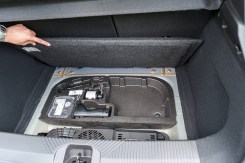
Underneath the main trunk floor is a little extra storage space, which is just about enough to keep the charging cables tucked away and out of sight.
Nissan Micra EV trunk
Folding the rear seats increases capacity to 39.1 ft³, so the Micra can carry considerably larger items. However, the numbers tell only part of the story. There is a huge step between the trunk floor and the folded seatbacks, making it almost impossible to use the entire available volume efficiently. It also makes loading and moving heavier items further into the cabin much more difficult than it needs to be.
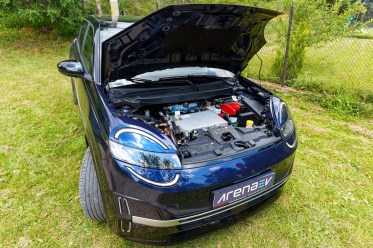
Despite being an EV, the Micra doesn't get a frunk (front trunk). Even a small one would have been useful for storing charging cables and added a few extra practicality points.
Driving experience
Despite all the similarities, the Nissan Micra EV is noticeably more engaging to drive than the Renault 5 E-Tech. When we drove the 5 a year ago, we thought it handled brilliantly for its class but felt unstable at speeds. That was until we got behind the wheel of the Micra.
This is particularly surprising considering the Micra is positioned more as an everyday city car, while the Renault 5 has the more aggressive styling and even serves as the basis for the sporty Alpine A290.
The Micra delivers significantly more feedback through the steering wheel, while its chassis feels remarkably planted through corners. It isn't particularly quick in a straight line, but it can carry plenty of speed through bends, making it genuinely entertaining on narrow mountain roads.
The main thing holding it back was the factory tires. They clearly prioritize efficiency over grip, and the Micra regularly struggled for traction once we started pushing harder. Even with that limitation, though, you can feel there is much more capability underneath. Better still, the chassis communicates clearly when the tires are approaching their limits, so you always know when it is time to back off.
On a more practical note, the Micra has an impressively tight turning circle, making it particularly easy to maneuver around crowded city streets and tight parking spaces.
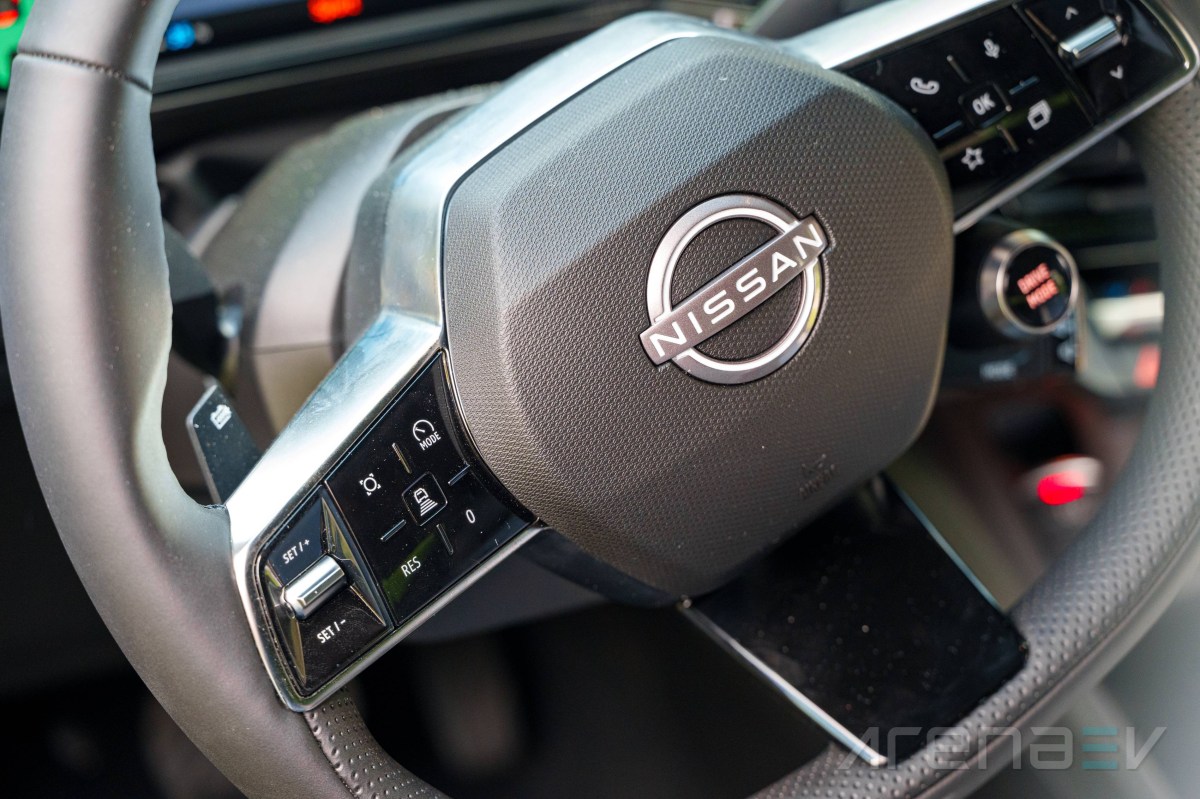
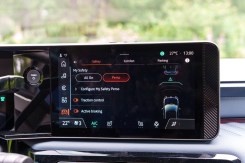
Just like in the Renault 5, turning off the driving assistants is refreshingly simple. European regulations mean they switch back on every time you start the car, but Nissan makes dealing with them a painless two-touch process. Pressing the button to the left of the steering wheel activates Perso mode, which you can configure beforehand to keep the systems you want and disable the ones you don't.
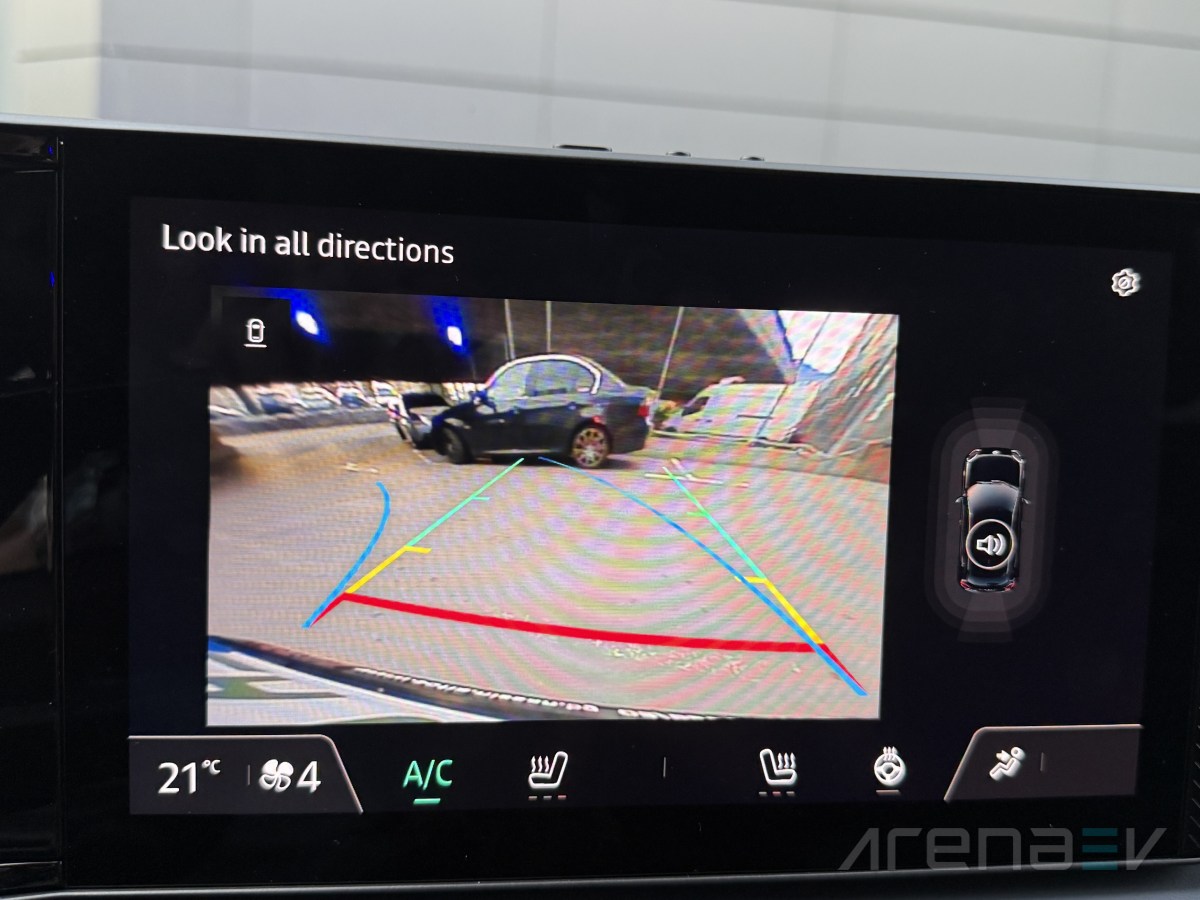
Unfortunately, not everything is quite so well thought out. We live in an age where cameras are everywhere and even the cheap ones deliver fantastic image quality. Well, the Nissan Micra sadly utilizes an abysmal camera that takes ages to engage then rewards your patience with image quality worthy of a ‘90s CCTV camera system.
Ride comfort
The Nissan Micra is a soft and comfortable vehicle despite its great handling and cornering prowess. No matter the size of the bump or pothole, the Micra glides over with ease. It shakes the cabin noticeably but there are no rough hits at any time.
Tech features
Nissan has also borrowed the infotainment system from the Renault 5, which itself was co-developed with Google. A number of Google services are built directly into the system and can be accessed through the voice assistant. This should help keep the software relevant for longer through regular updates, while also reducing development costs for Nissan.
Connectivity is one of the most important aspects of any modern car, and the Micra performs very well here. Android Auto and Apple CarPlay work seamlessly, while navigation directions from your phone can also be projected into the instrument cluster. It is a genuinely useful feature and one we are happy to see appearing in more vehicles.
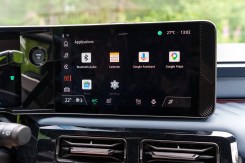
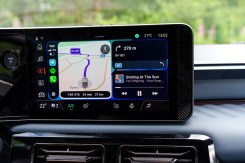
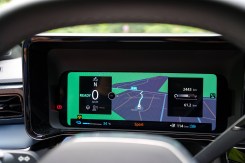
Great connectivity on board the Micra
There are no immediately visible infotainment buttons around the display, because Nissan has placed them along the top edge of the unit itself.
A drop-down menu, much like the one on a smartphone, gives quick access to a selection of configurable widgets and frequently used functions.
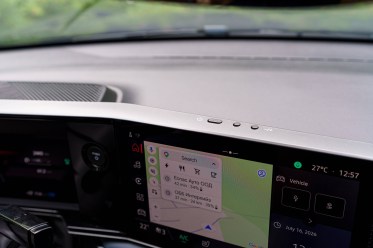
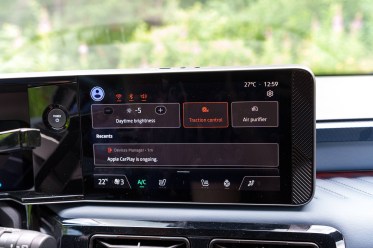
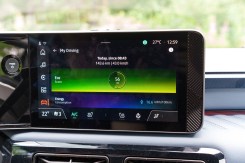
After each drive, the Micra also gives you an “eco score” based on your driving. It is mostly a gimmick, but you can use it either to chase the highest possible efficiency score or see just how badly behaved you can make it think you were.
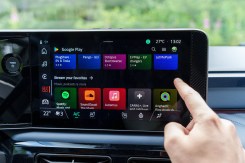
Thanks to the Google-based infotainment, there is also a wide range of apps available to download. These include various streaming services, audiobooks and plenty of other options to keep you entertained while stationary or, where appropriate, on the move.
Cabin noise
For what it is, the Nissan Micra EV offers a quiet cabin. Granted, it lets some wind and tire noise at all speeds but that is to be expected for the segment. There are no rattles inside or strange wind turbulences like in some rivals, which is much more important for this kind of vehicle. Its overall performance is objectively slightly worse than the Renault 5 at all speeds but from a subjective standpoint they feel identical.
Cabin noise test results
- 37 mph
- 56 mph
- 81 mph
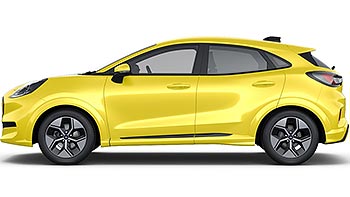 Ford Puma Gen-E
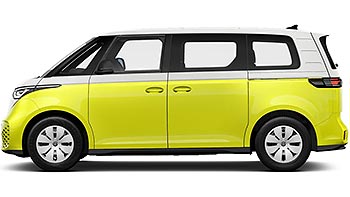
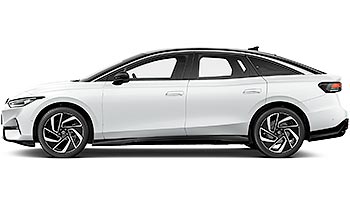
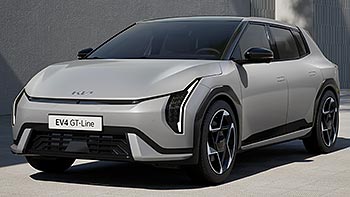
 Hyundai Kona Electric 65.4kWh
 Renault 5 E-Tech
 Nissan Micra EV 52 kWh
 Mini Cooper SE
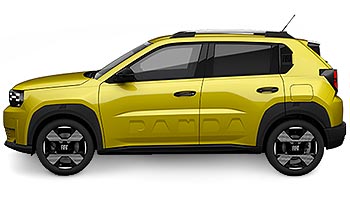
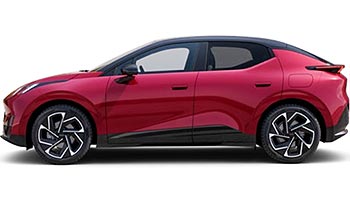
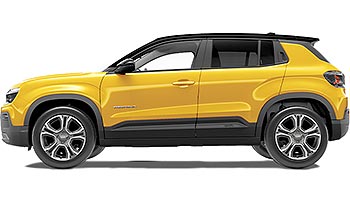
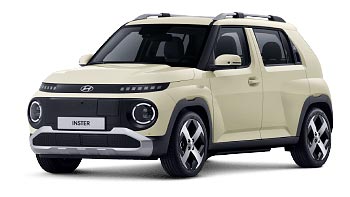 Hyundai Inster Long Range
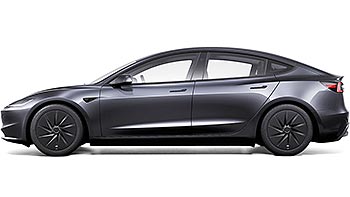
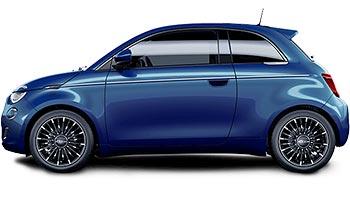 Fiat 500e
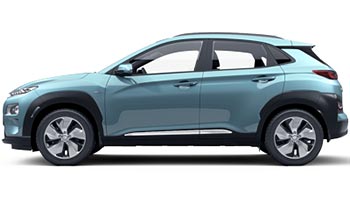
Sound level tests are carried out with a specialized sound level meter placed in the car's cupholders. The test is conducted with air conditioning and radio off and while maintaining a steady speed.
Acceleration and braking
With just 150 hp, the Nissan Micra EV 52 kWh is far from a sports car, especially by modern EV standards. Still, it accelerates from 0 to 62 mph in 7.92 seconds, slightly beating Nissan’s official 8 second claim. It never feels dangerously slow, which is ultimately what matters most in everyday driving.
0-62 mph acceleration test results
Mini Cooper SE
Renault 5 E-Tech
Ford Puma Gen-E
Hyundai Kona Electric 65.4kWh
Nissan Micra EV 52 kWh
Fiat 500e
Hyundai Inster Long Range
Braking performance is respectable as well, particularly because we managed to replicate the result four times with virtually no variation. Coming to a complete stop from 62 mph takes 36 m (118'1"), which is a solid result for the class. A set of grippier tires would likely shave a little distance off that figure, but they would also hurt efficiency and range. In the end, Nissan has clearly chosen to prioritize the latter.
Braking distance test results
Renault 5 E-Tech
Nissan Micra EV 52 kWh
Fiat 500e
Mini Cooper SE
Hyundai Inster Long Range
Hyundai Kona Electric 65.4kWh
Ford Puma Gen-E
Acceleration and deceleration are measured with a RaceBox device inside the car. Testing is done with a single person inside the car, with air conditioning and traction control off.
Consumption
This is the category the Nissan Micra EV truly excels at. In almost all categories, the small Micra manages to set a record among the models we’ve tested so far in terms of efficiency. By also having the bigger 52 kWh battery, the Micra manages to cover some real distances without having to constantly recharge, making it suitable not only for urban usage but the occasional longer journey outside the city. To learn our detailed thoughts about the Nissan Micra’s consumption check out our detailed range test article.
Range test results
- 37 mph
- 56 mph
- 81 mph
Nissan Micra EV 52 kWh
Renault 5 E-Tech
Hyundai Kona Electric 65.4kWh
Mini Cooper SE
Ford Puma Gen-E
Hyundai Inster Long Range
Fiat 500e
We measure consumption by driving at constant speeds on an identical test route during the day. Testing is conducted with air conditioning, all safety systems and radio on. The data comes from the vehicle's board computer. Specific testing parameters such as ambient temperature are mentioned in the text on a case by case basis.
We now suggest you use the widget below to find out the Nissan Micra EV 52 kWh’s range in every combination of speed and temperature you might need. We've used our real world tests and a complex model to provide an estimate that should be as close to the actual performance as possible.
Charging speed
Small cars rarely deliver spectacular charging speeds, and the Micra EV is no exception. The little Nissan can charge at up to 100 kW, with a 15 to 80% top-up taking around 30 minutes. Some larger, albeit more expensive, EVs can cut that time almost in half, which becomes increasingly important on longer journeys but matters far less in everyday use.
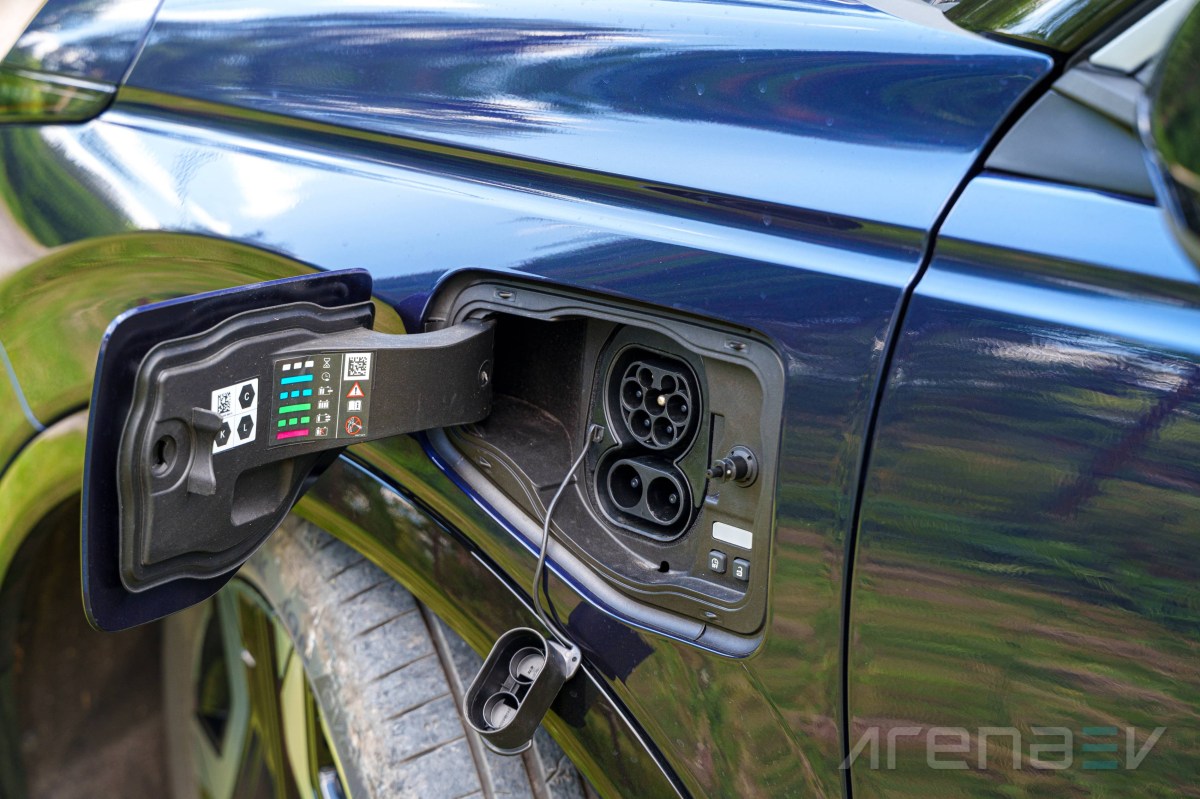
More impressive is the fact that the Micra EV supports both V2L and V2G bidirectional charging. These features can prove genuinely useful in a variety of situations and are still far from common among direct rivals, making their inclusion a welcome surprise.
Competition
The compact EV market is growing rapidly, and the Nissan Micra now faces competition from all directions. We decided not to include the Renault 5 E-Tech here, as it is essentially the same car underneath, and instead focused on a couple of more distinct alternatives.
The first rival is the Hyundai Inster. It is cheaper in its most basic form, although once you start adding options the two can end up costing similar money. The Hyundai offers noticeably more interior space, greater cabin configurability and extra amenities such as an available sunroof. The Micra fights back with significantly more range, a better driving experience and an even stronger infotainment system.
The second rival is the newly-launched Kia EV2. It benefits from Kia’s excellent infotainment, while also offering more ground clearance and a wider range of interior and exterior customization options. The Micra once again counters with longer range and a slightly lower price when comparing similarly equipped versions. We have yet to drive the EV2, so a definitive verdict would be premature. Still, judging by its setup and our previous experiences with both brands, we suspect the Micra will remain the more entertaining car to throw around.
Hyundai Inster Long Range 2024 -
Verdict
Nissan has a long tradition of building excellent compact cars, and the new Micra EV proves it still knows exactly what it is doing. Although it shares much of its hardware with the Renault 5 E-Tech, the Micra manages to develop a character of its own that noticeably changes the overall driving experience. Most importantly, it feels more planted and more engaging behind the wheel, while retaining nearly all of the Renault’s other strengths at a lower price.
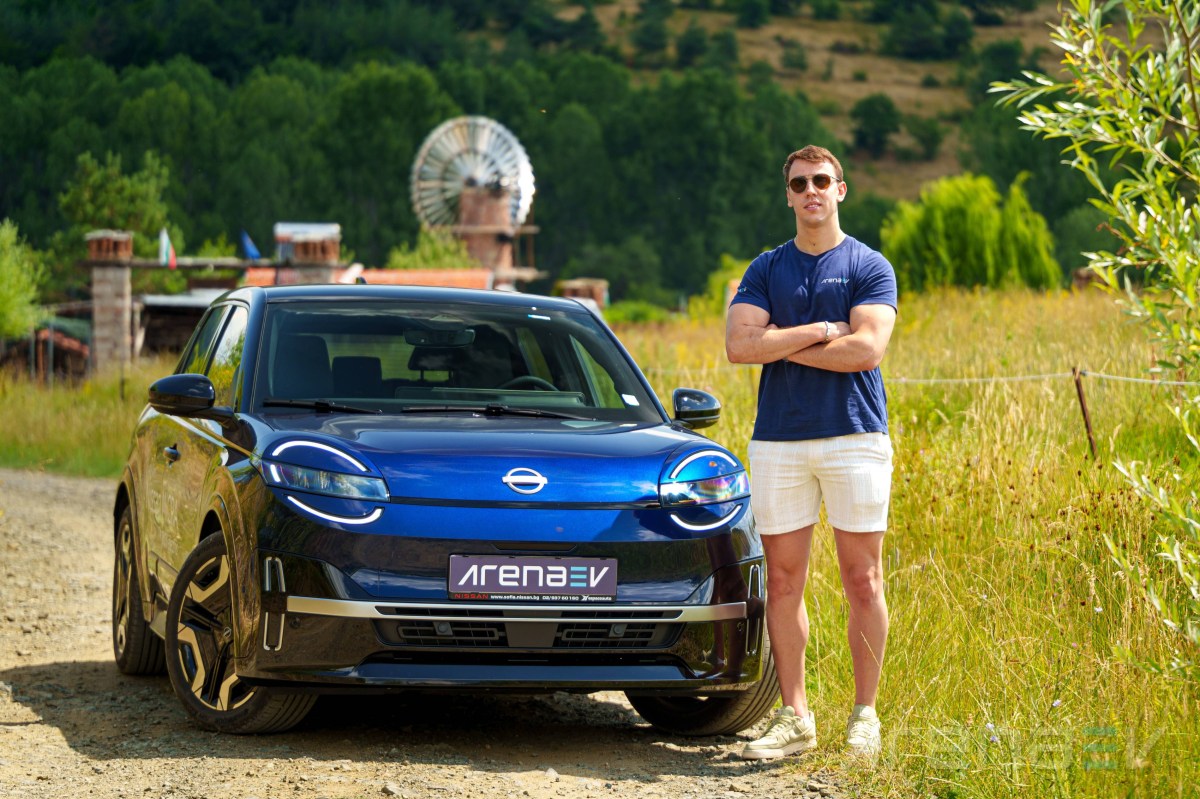
When it comes to luxury, the Micra offers just enough to make the cabin feel pleasant without adding unnecessary features that would push the price too high. More importantly, its infotainment system is perfectly suited to the needs of a modern driver, while the Google-based architecture should keep it useful and relevant for years to come.
There are, of course, a few details that take away from an otherwise excellent package. The strangest one remains the lack of a Park position on the gear selector. Apart from being unnecessarily inconvenient, it also means you should probably think twice before taking a quick nap while waiting somewhere, unless you fancy waking up after accidentally nudging the accelerator and introducing the Micra to whatever is parked in front.
That oddity aside, our overall impression of the Nissan Micra EV 52 kWh is overwhelmingly positive. It is an efficient, entertaining and well-rounded urban EV with plenty of strong points, and one we can comfortably recommend to anyone looking for a compact daily driver.
Pros
- Huge range for the class.
- Great usable infotainment.
- Better driving experience than rivals.
- V2L and V2G.
- Recognizable styling.
- Easy to disable driver aids.
- Games and connectivity features.
Cons
- No Park position on the gear lever.
- Terrible reversing camera.
- No sunroof even as an option.
- No flat-folding rear seats.



Reader comments
- anon
- ajM
I noticed only a handful of makers with the D/N/R. This shifting row arrangement may be the usual one.
- Aardvark
- L3Y
It's also annoying that you pull the gear lever down - towards the rear of the car - to go forward and push it forward - towards the windscreen - to reverse the car. What freaking genius decided that!!!??

From the team behind
GSMArena.com
Facebook
Twitter
Instagram
RSS
Settings
Log in I forgot my password Sign up