Alfa Romeo refreshes Junior crossover
Alfa Romeo has never been the one to enter a room without causing a scene, and the christening of its first electric crossover was no exception. When Italy's industry minister threw a full-blown patriotic tantrum over the proposed "Milano" badge - complaining that assembling an Italian-named car in Poland was a commercial treason - Alfa simply raided its archives and slapped the historic "Junior" badge onto the tailgate instead. It was classic Italian opera: bureaucratic farce with a romantic pivot. But once the political smoke cleared, an uncomfortable question lingered for anyone who likes the Alfa Romeo: can an iconic manufacturer built on screaming twin-cam engines and lightweight racing coupes, bottle that magic inside a battery-electric package?
The stakes could hardly be any higher. The Junior does not enjoy the aluminum-intensive Giorgio platform that made the Giulia saloon and Stelvio SUV such revelations. Instead, it rides on the multi-energy e-CMP2 architecture shared across the Stellantis empire - the very same bones that underpin the Jeep Avenger, the sensible Peugeot E-2008, the retro Fiat 600e, and the Opel Mokka Electric. In this family, the ever-present danger is badge engineering by numbers. If you peel away the Scudetto grille and the phone-dial wheels, do you end up with a boring commuter car wearing a sharp Milanese suit? Thankfully, Alfa's engineers understand that, and the comprehensively updated Junior leans into interior flair, chassis upgrades, and mechanical credibility.
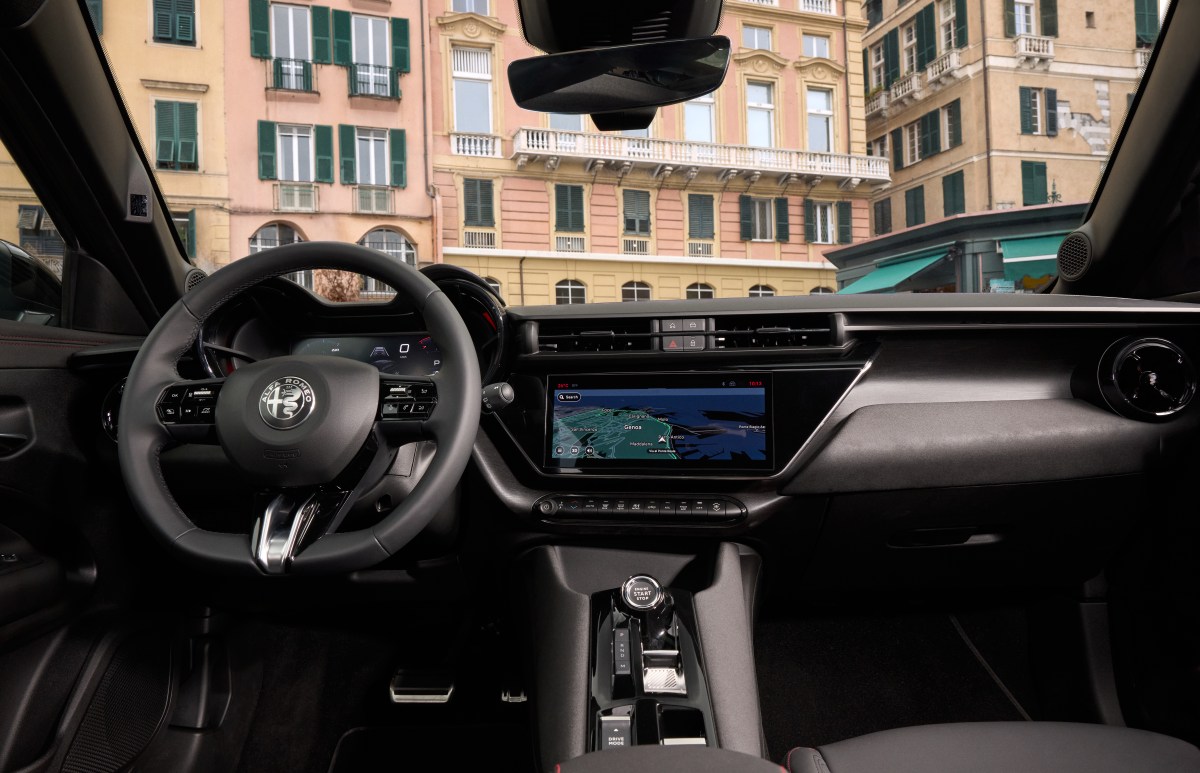
Pop the Junior's door open, and you immediately see the effort that went into curing the hollow plastics plague. Alfa has treated the entire cabin to a complete material overhaul, introducing contrasting stitching, soft-touch door casings, and a far more focused layout. The entry-level Junior and Sprint trims introduce the new Icona interior, which pairs textured black fabric seats sporting embroidered Biscione emblems with rugged black Scuba trim across the dashboard and central tunnel.
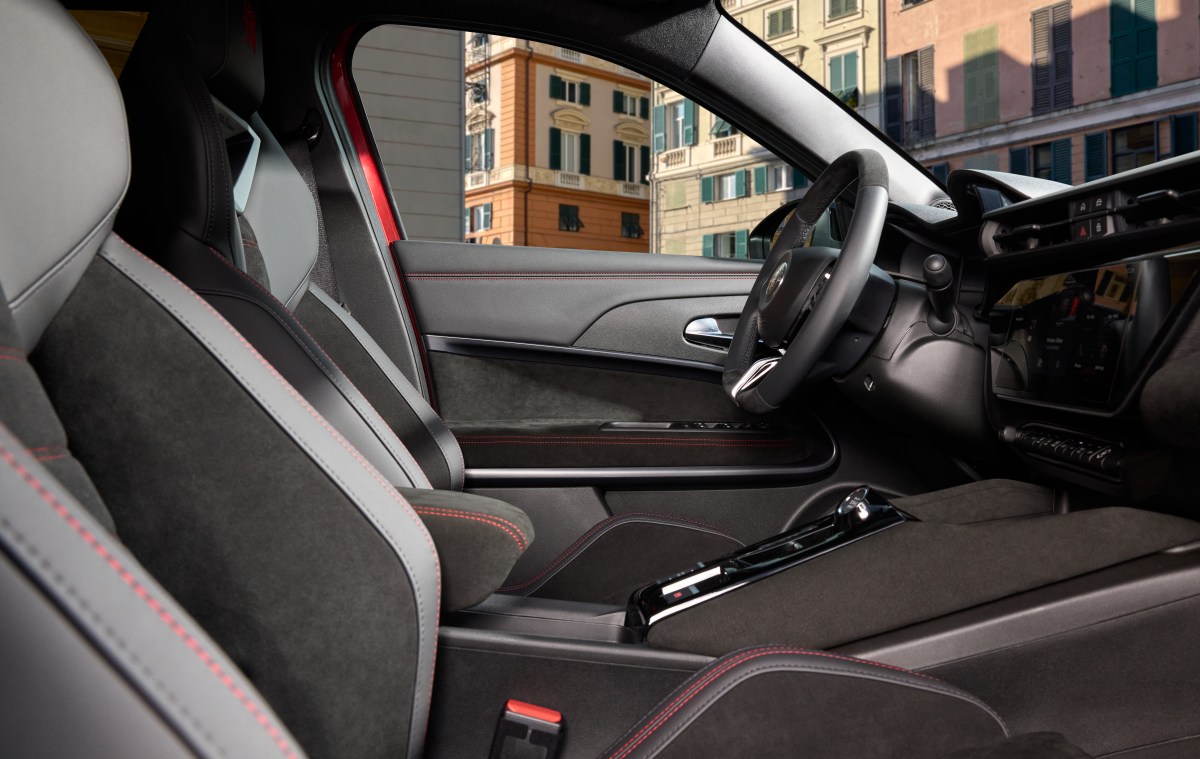
Jump into the Ti or the performance-focused Veloce, and you are met with the new Carbon specification. Here, electro-welded fabric seats with bright red accents meet Microcloud upholstery - it's a synthetic suede covering the fascia and door cards that feels more upmarket than the scratchy cabin finishes found in many German and French competitors. The optional Sabelt bucket seats swathed in Alcantara bring touring-car theatre to a sensible hatchback cabin.
Of course, no Italian car launch is complete without a high-concept lifestyle angle, and Alfa has topped off the range with the Edizione Luna Rossa special series. Created to celebrate the brand's association with America's Cup sailing, this nautical-themed variant gets exclusive seats trimmed in dark Scuba and textured three-dimensional gray knit fabric. Unique livery, gloss black badging, and an exclusive Luna Rossa Grey exterior finish complete this boutique package that comes with a steep price bump.
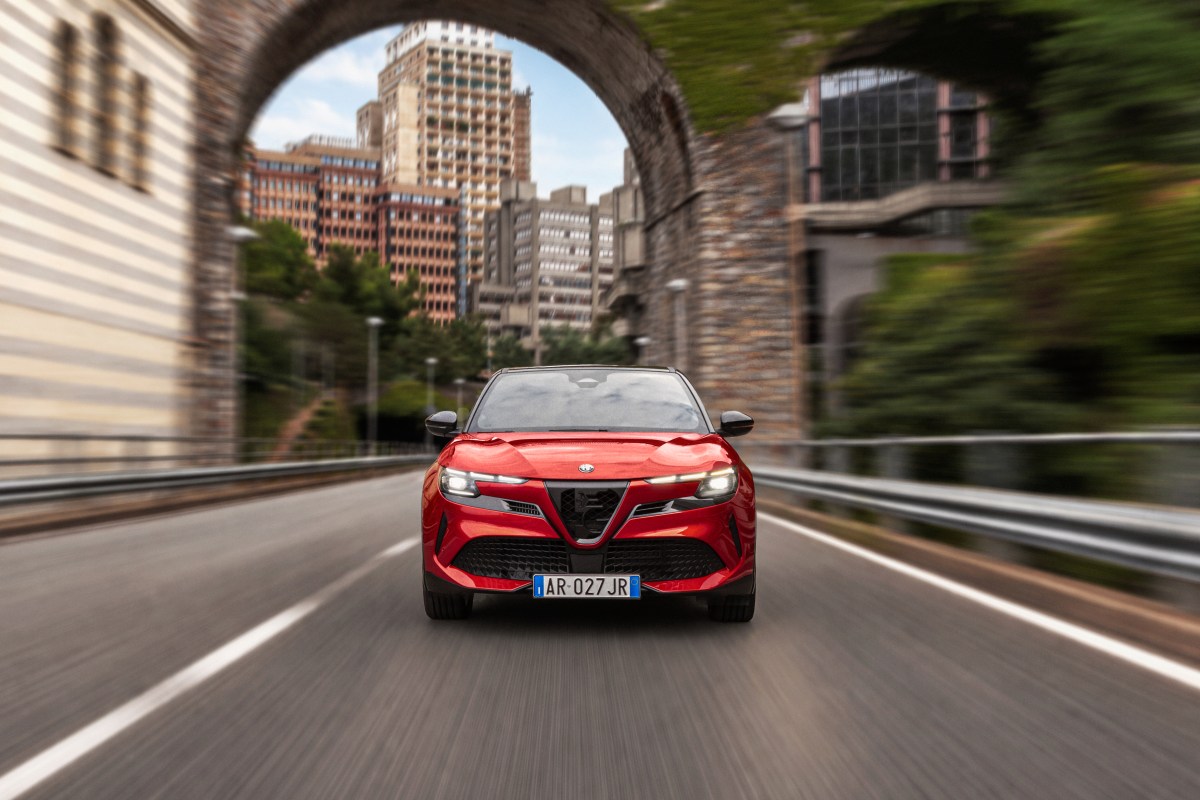
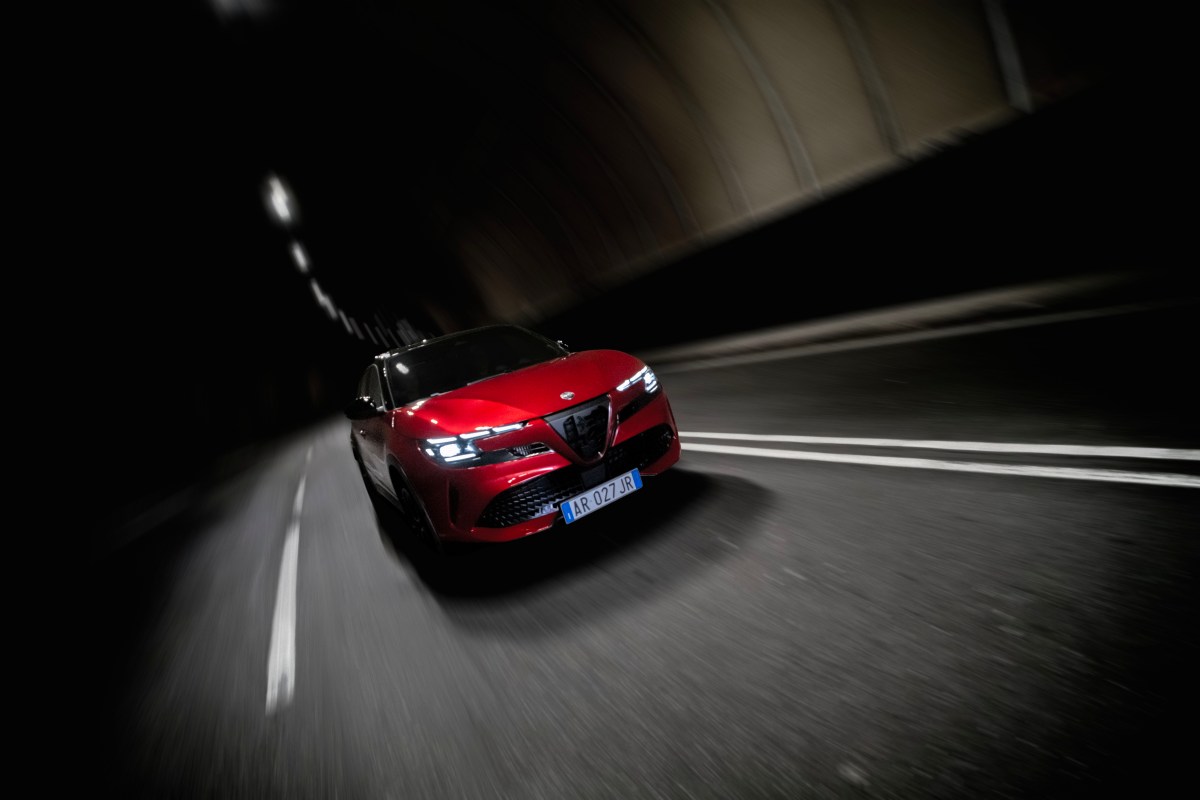
The exterior design changes try to disguise the car's high-riding platform proportions. Alfa has expanded the wheel menu to seven different patterns ranging from 17-inch up to 20-inch, with a new 19-inch four-spoke design standing out. Far from being a vanity project, these wheels wear beefier 225/45 R19 tires that expand front tread width by an extra 0.39 inches, giving the front axle more bite on turn-in, while the truncated tail - the iconic "coda tronca pioneered on Zagato race cars in the 1960s - and pinched front LED lights lend the Junior an aggressive, crouching stance that avoids the jelly-bean silhouette common to modern EVs.
Alfa Romeo gives the Junior a powertrain lineup designed to navigate the uneven pace of European electric adoption. For traditionalists and high-mileage drivers, there is a 1.2-liter 145 hp mild hybrid driving the front wheels, as well as an upcoming 145 hp Q4 hybrid variant that introduces an electrified rear axle for all-weather traction. But the pure electric models are where the brand's reputation will sink or swim. The standard Junior Elettrica matches a front-mounted 156 hp motor with a 54 kWh lithium-ion battery pack (51 kWh of usable capacity). It is refined, quiet, and delivers an official WLTP range up to 255 miles. It is a competent commuter, but 156 hp in a market full of dual-motor rocket ships is hardly the stuff that gets our pulse racing.
The Junior Veloce fixes that problem. Instead of leaving the front axle with polite commuter power, Alfa slotted in a 280 hp electric motor with 254 lb-ft of torque. In a front-wheel-drive car, that much instant twist is usually a recipe for violent torque steer and a fresh set of front tires every month. When you bury the throttle, the Veloce goes from zero to 62 mph in 5.9 seconds with a hot-hatch punch that feels refreshingly mechanical.
The feature that separates the Veloce from almost every compact crossover on sale right now is the inclusion of a proper mechanical Torsen Type-D limited-slip differential. Most modern electric crossovers mimic torque vectoring by using the anti-lock braking system to grab an inside spinning wheel, which cooks your brake pads and saps your momentum mid-corner. The Veloce's mechanical Torsen does the exact opposite: as you feed in power mid-apex, it locks up across the front axle and drags the nose toward the kerb. Backed up by a suspension dropped by 0.98 inches, stiffer anti-roll bars, a quick 14.6:1 steering rack, and huge 15 inches front discs clamped by four-piston Alcon monobloc calipers, the Veloce promises to be a proper driver's car.
Stretching out to 164.3 inches in length, 70.1 inches in width, and 60.3 inches in height over a 100.9 inches wheelbase, the Junior is more compact and urban-friendly than its platform sibling, the Peugeot E-2008 (169.4 inches), or the Smart #1 (168.1 inches). Its closest challenger is the Swedish-Chinese Volvo EX30, which is 166.7 inches long. But the single-motor Volvo weighs a chunky 4,048 lb and can feel wooden when thrown into a fast turn - the standard Junior Elettrica comes in at 3,406 lb, while the track-honed Veloce weighs 3,505 lb. A quarter of a metric ton less of dead weight pays massive dividends in change of direction, braking distance, and driving joy.
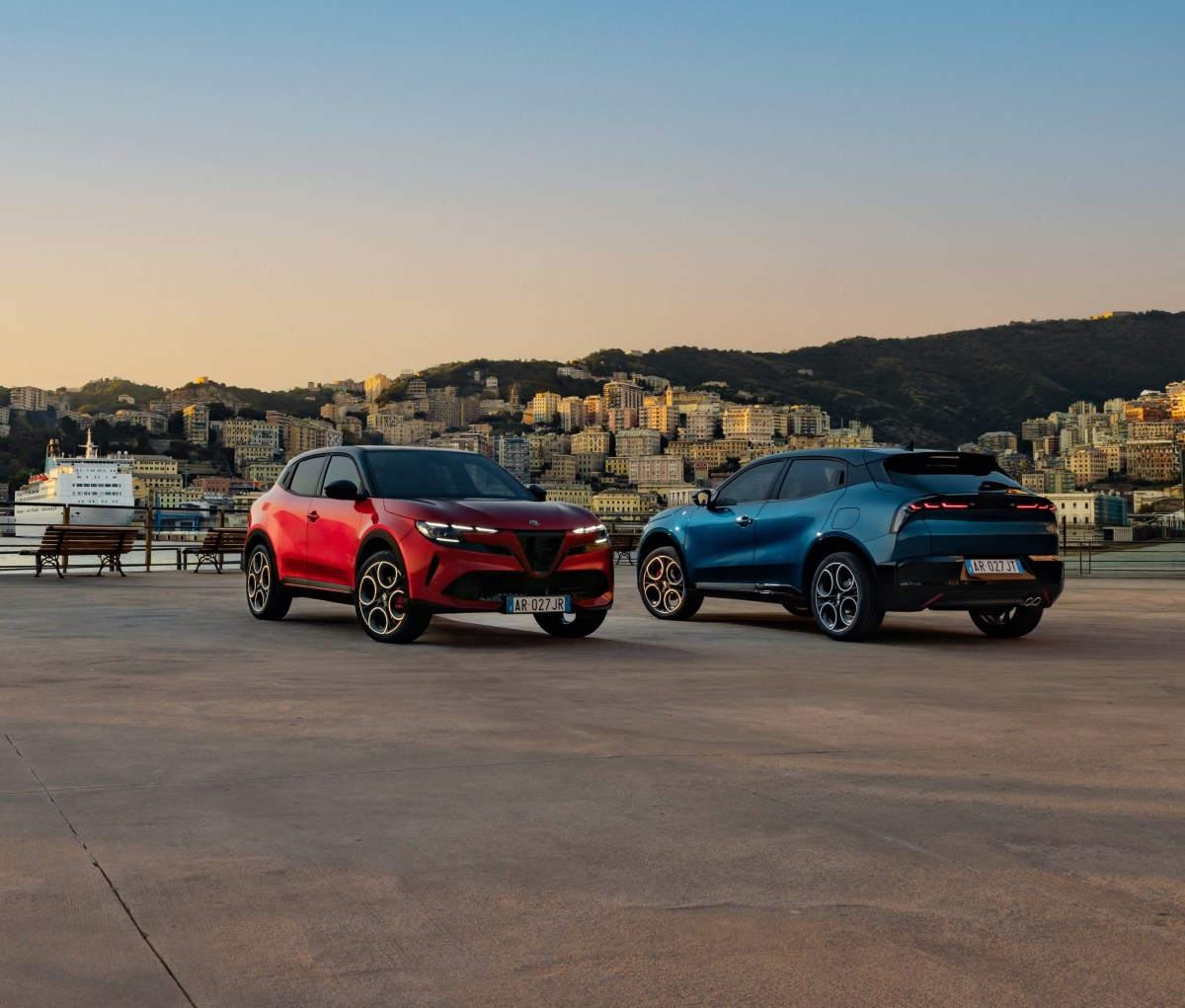
That lightweight engineering and hot-hatch hardware comes with real-world trade-offs in the showroom - the standard Junior Elettrica kicks off around $45,100 in Europe, but stepping up to the performance-tuned Veloce will easily push the invoice past $56,200. That is a lot of money for a compact crossover, especially when aggressive Chinese rivals offer twin-motor all-wheel-drive straight-line drag pace for less. The Veloce's aggressive 20-inch rubber, lowered aerodynamics, and punchy motor shrink official WLTP range down to 208 miles. But Alfa isn't trying to win an efficiency contest here - they are betting that drivers and style-conscious buyers are happy to trade a bit of motorway endurance for a car that makes their heart beat faster on an empty B-road.

From the team behind
GSMArena.com
Facebook
Twitter
Instagram
RSS
Settings
Log in I forgot my password Sign up