CATL claims its lithium-air battery has energy density similar to gasoline
The global race to build better batteries for electric cars has a new target. Contemporary Amperex Technology Co. Limited, known as CATL, announced a major change in its long-term research plans. The Chinese battery manufacturer is now focusing on lithium-air technology with a theoretical maximum energy density that matches the energy density of gasoline.
The announcement came from Wu Kai, the Chief Scientist at CATL, during the 2026 Powering the Nation Forum. Wu, who is also a member of the Chinese Academy of Engineering, shared the company's strategy publicly for the first time, indicating where the giant battery manufacturer believes the next phase of global market competition will happen.
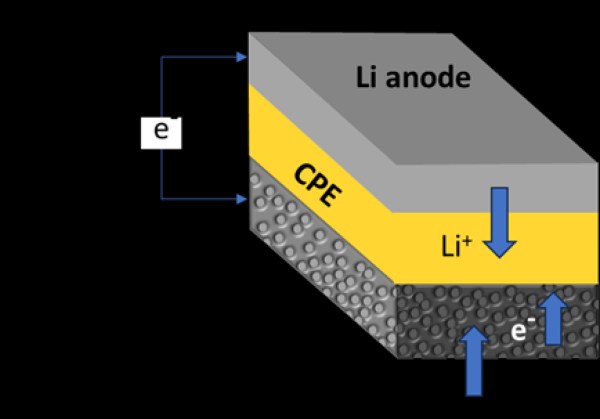 Source: Argonne National Laboratory
Standard lithium-ion batteries in electric cars use heavy metal compounds. These compounds usually contain nickel, cobalt, and manganese to hold the lithium ions. Lithium-air designs remove these heavy materials. Instead, they use a lithium metal anode and take oxygen directly from the surrounding air to act as the cathode reactant. Because they draw in oxygen from the environment, researchers call them "breathable batteries." This setup lowers both the total weight and the internal complexity of the battery cells.
The math behind the technology explains why battery manufacturers are interested. The theoretical energy density limit for lithium-air systems is 12,000 Wh/kg. Gasoline sits at roughly 13,000 Wh/kg, and modern laboratory battery prototypes have reached more than 1,200 Wh/kg. That last number is four times higher than the 250 to 270 Wh/kg capacity found in mainstream electric cars today. It also more than doubles the 500 Wh/kg target expected from upcoming solid-state batteries.
If manufacturing companies can successfully mass-produce these components, the standard driving range of electric cars will change significantly. Vehicles with driving ranges of more than 994 miles on a single charge could become normal. This would effectively solve the driving distance concerns that keep many buyers away from EVs.
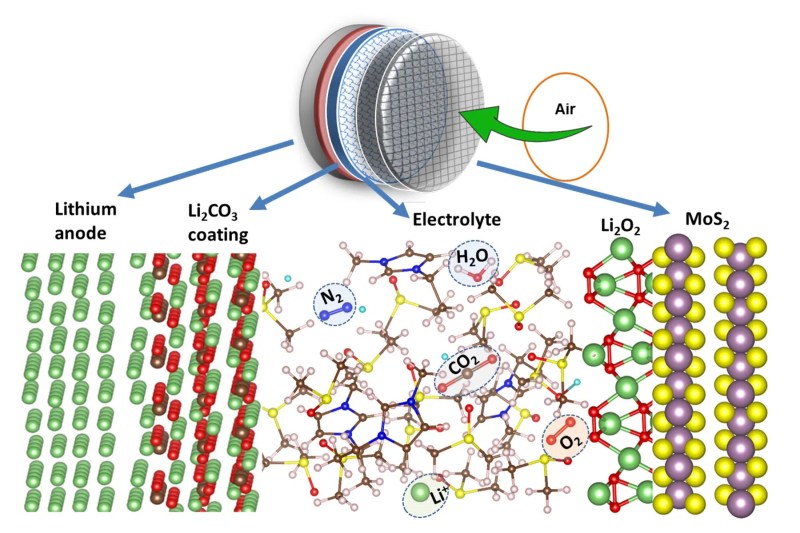 Source: Daegu Gyeongbuk Institute of Science and Technology
Scientists first thought of the lithium-air concept in the 1970s, but engineering problems stopped companies from using the tech in real vehicles for decades. The components are highly sensitive to moisture and carbon dioxide in the air. Early prototypes also suffered from poor catalyst stability and short lifespans. But a lot of progress has been made, and the latest academic projects have started to solve these issues.
A joint project by the University of Illinois Chicago, Argonne National Laboratory, and California State University, Northridge, showed an operational lithium-air battery in 2024. That prototype managed more than 700 cycles in an environment that mimicked natural air. By 2025, Argonne National Laboratory paired up with the Illinois Institute of Technology to build a new prototype. This unit achieved the 1,200 Wh/kg energy density level and lasted for 1,000 charging cycles at standard room temperature. Experts do not expect this specific design to be ready for real vehicles until after 2030.
CATL has a history of turning alternative chemical concepts into actual products. The firm presented a sodium-ion battery design in 2020, and now those batteries are already in mass production, with automakers installing them into several new vehicle models. These models include the GAC Aion UT and the Changan Oshan 520. Other automotive brands like Geely, Chery, and FAW are also using these sodium-ion packs to lower prices on smaller electric cars.
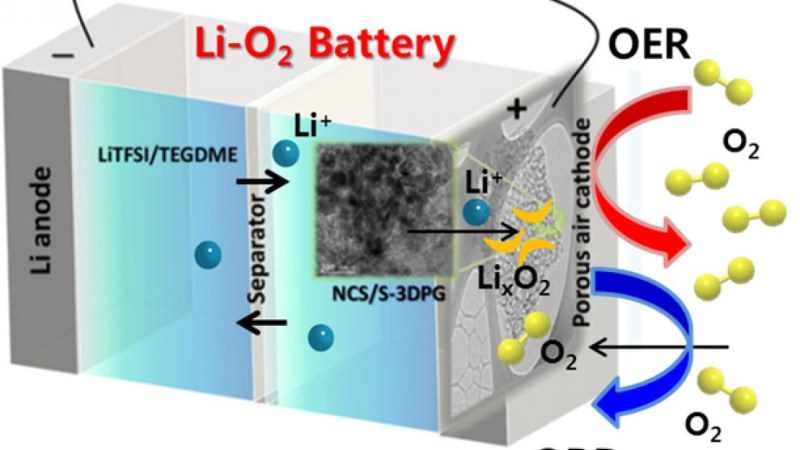 Source: Daegu Gyeongbuk Institute of Science and Technology
The new lithium-air announcement shows how the company plans to split its timeline into three distinct parts. The short-term plan is to meet current market requirements using existing, mature battery designs. In the mid-term, CATL will improve the driving experience for premium EVs by rolling out solid-state packs. The long-term is all about maximizing energy storage capabilities by commercializing lithium-air technology.
The business scales are tipped in favor of the Chinese manufacturer as it begins this long-term research. CATL holds the largest market share in the world for both power batteries and stationary energy storage systems. In the automotive sector, the firm secured a 47.0% market share in April 2026. On the energy storage side, the company sold 121 GWh of storage batteries over the course of 2025. This volume gave them a 30.4% global market share, keeping them in the number one position globally for five years in a row.



From the team behind
GSMArena.com
Facebook
Twitter
Instagram
RSS
Settings
Log in I forgot my password Sign up