Five EU member states are against the 2035 ICE ban
The EU has announced its controversial proposal to ban all ICE vehicle sales from 2035 only a couple of weeks ago and now the member states are preparing to vote whether to approve it or not. As it turns out, it’s not a clear cut case with quite few countries outright denouncing the proposal.
Bulgaria, Italy, Portugal, Romania and Slovakia have circulated an alternative proposal to member states, which wants to lower the emissions down by 90 percent when compared to 1990 levels. The proposed 100 percent reduction is to be pushed back to 2040 giving the EU additional 5 years to prepare for new emission targets.
 This isn't our future - this is now
The counter-proposal asks as well for commercial vehicles to be treated with leniency and only target 80 percent emissions reduction by 2035. Commercial vehicles would have to adhere to the 100 percent reduction by 2040 just as other vehicles if the new proposal was accepted.
The reasoning behind this proposal is that various states are in different financial situations and simply put, not everyone can afford a new electric car. Another reason is lack of national charging infrastructure and the countries behind the proposal fear they won’t be able to meet the targets.
The EU is planning to reach net zero emissions by 2050 and the ban on ICE vehicles by 2035 is essential to meet that target. Many scientists argue that it is already too late and we are facing extreme weather changes not in decades to come but from now on. The majority of the EU countries support the proposed 2035 ban, majority of car manufacturers came out in support of it as well with some already planning to stop fossil fueled car production much earlier.
Is there any logic behind the counter proposal? Well, the opposing countries' main argument is that electric cars are not a match to ICE cars in terms of affordability.
However, maybe the politicians assumed that people only want to buy new cars, which obviously are getting only more expensive. However, by 2035, we will have had nearly 15 years of electric car sales with a second hand market larger than what we have now for ICE cars.
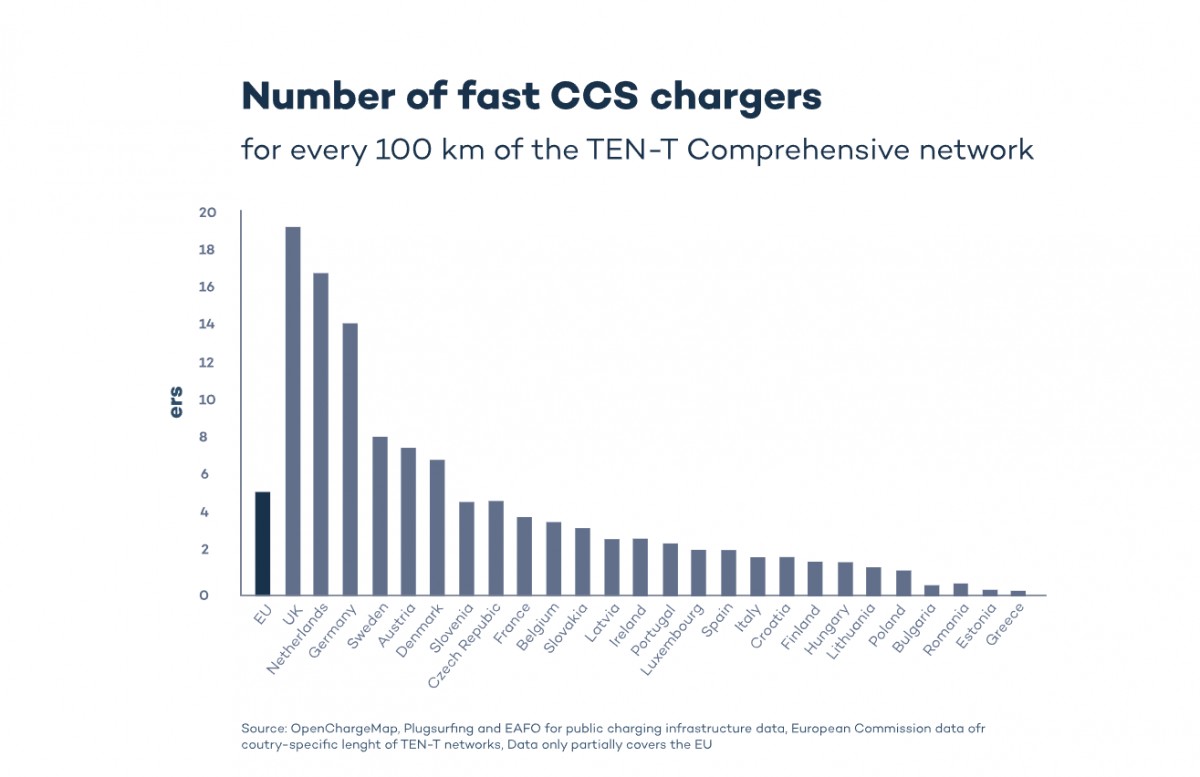 We have 5 public charges for every 100km of road in Europe
All car manufacturers, not only in Europe, are ramping up production at unprecedented levels, the investments in electric car technology are some of the biggest ever in the history of this industry. Manufacturers are planning to sell in excess of million EVs every year by 2025 - that’s each manufacturer in less than 3 years. Our used car market in 2035 will be 100 percent electric with cars costing as much as the equivalent piston cars cost now.
The number of people who are in the market for a new car only grows - year after year. This group of people will not suddenly become priced out of the new car market. New models, new ranges and new manufacturers only expand the product lineup, there will only be more choice for those who want a new car.
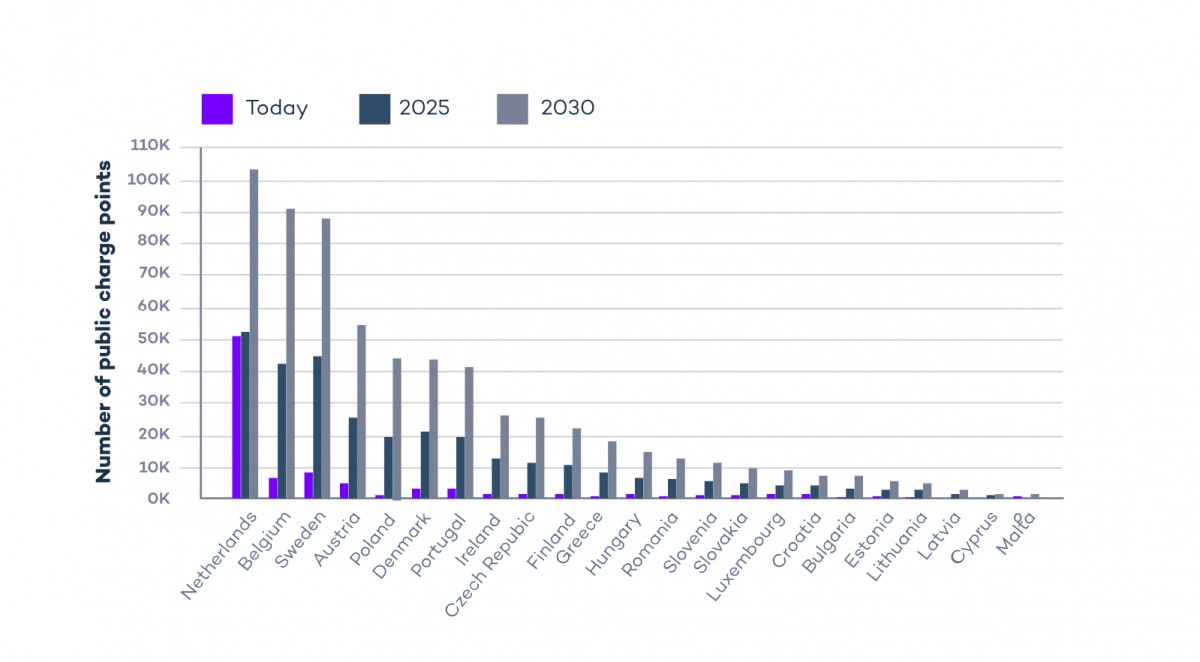 Future of public charging points - 2.9 million by 2030
The affordability argument clearly falls apart at closer inspection. Even more so when it comes to commercial vehicles, it seems the politicians who came up with it have no clue how the vehicle fleet works. Companies that operate fleets have a primary concern - running costs. The purchase price is a secondary concern as it can be offset against savings made from operating costs - maintenance and running expenses. Commercial vehicle operators cannot wait to get into the electric vans because they will save a fortune and they know that.
Individual commercial vehicle operators face the same situation, they know they can save a lot of money by running an electric car, unlike the fleet operators their primary concern is the range of the electric van. That is improving pretty much every month, new models come out with much better batteries and much more efficient electric motors. In 13 years this isn’t going to be a problem and again - the used electric van market will be bigger than the legacy market is now.
The only plausible reason is lack of charging infrastructure - if we assume that the development stops today. 10 years ago we had a handful of charging stations in Europe. Today there are 374,000 public chargers. There are 5 public chargers for every 100 km of roads in Europe. By 2025 Europe will have 1.3 million charging stations and by 2030 that number will go up to 2.9 million. The expense of installing those chargers is less than 3 percent of the EU's budget for road infrastructure. By 2030 we will have at least 40 million electric cars in Europe. Everyone will be able to find one they can afford and everyone will be able to charge their car whenever they need to.




Reader comments
- CptPower
- Lfw
I really hope EV will be reality as soon as possible global heat is really bad compared to what we had many years ago.

From the team behind
GSMArena.com
Facebook
Twitter
Instagram
RSS
Settings
Log in I forgot my password Sign up