Blue paint, white stripes: Renault 8 Gordini returns as a RWD electric ghost
Long before the hot hatch became Europe's idea of fun, French rally enthusiasts worshipped a little shoebox called "la Gorde." In 1964, Renault put a crossflow head onto a rear-mounted engine, dialed in a tail-heavy, pendulum-like handling balance, slapped two white racing stripes over Bleu de France paint, and gave everyday motorists a masterclass in opposite-lock physics.
If you mastered an original Renault 8 Gordini on a rain-slicked Alpine pass, you could drive anything - don't take my word for it, ask rally god Jean Ragnotti, who learned his legendary car control from that very rear axle. And Renault decided that it would be a great idea to drag that rear-wheel-drive troublemaker into the high-voltage era. And yes - it looks like nothing else out there.
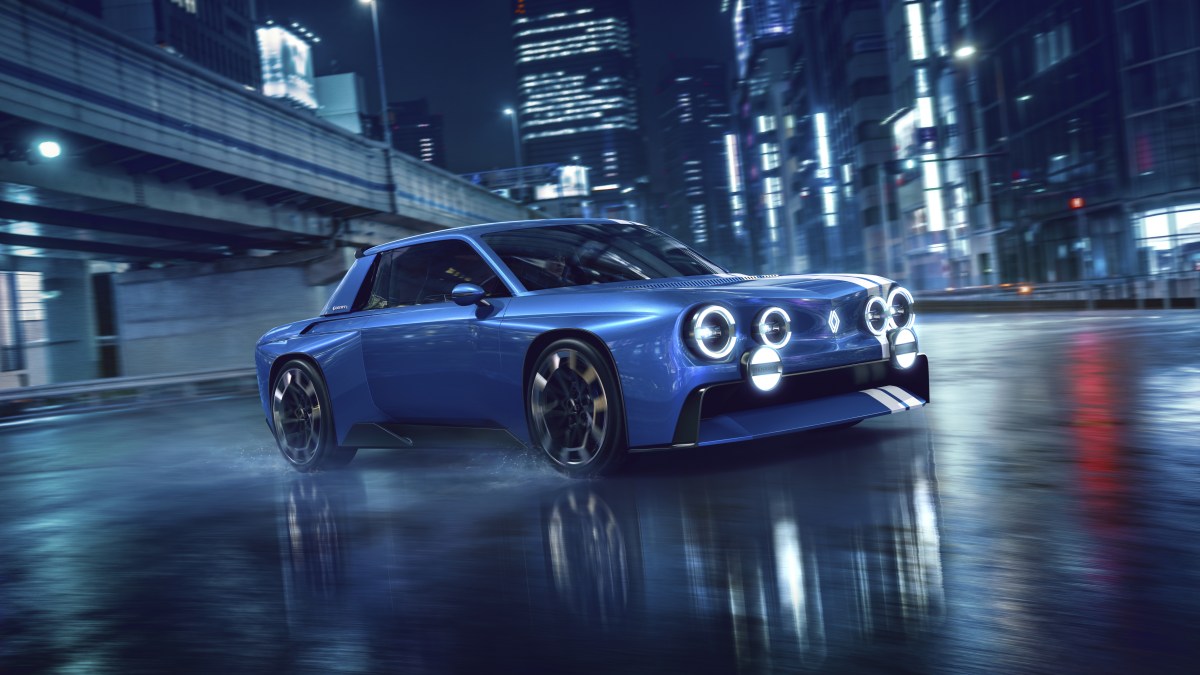
The Renault 8 Gordini Concept is an electric restomod study that bypasses the crossover template and goes straight to a motorsport-infused two-seater coupe. Unlike the R17 restomod created by designer Ora Ïto or the Pierre Gonalons R5 Diamant art car, this machine was cooked up in-house. Renault's styling studios had an internal design competition, with over 300 sketches submitted before whittling the contenders down to a pair of 2:5 scale clay bucks. The resulting one-off is destined for the Renault Carwalk, the Paris Motor Show, and eventually a spot in the Renault Collections museum at Flins.
The original four-door R8 was boxy, narrow, and upright, but this concept drops its shoulders to sit low and squat over staggered rubber - 19-inch wheels up front and a 20-inch set anchoring the rear. It is 162.2 inches long from bumper to bumper, quite wide at 74 inches, and stands 50 inches off the asphalt. That makes it a radically low, broad projectile, looking far more aggressive than typical compact EVs that must pack a chunky battery under the floor. It is clean, focused, and has absolutely zero fussy styling jewelry.
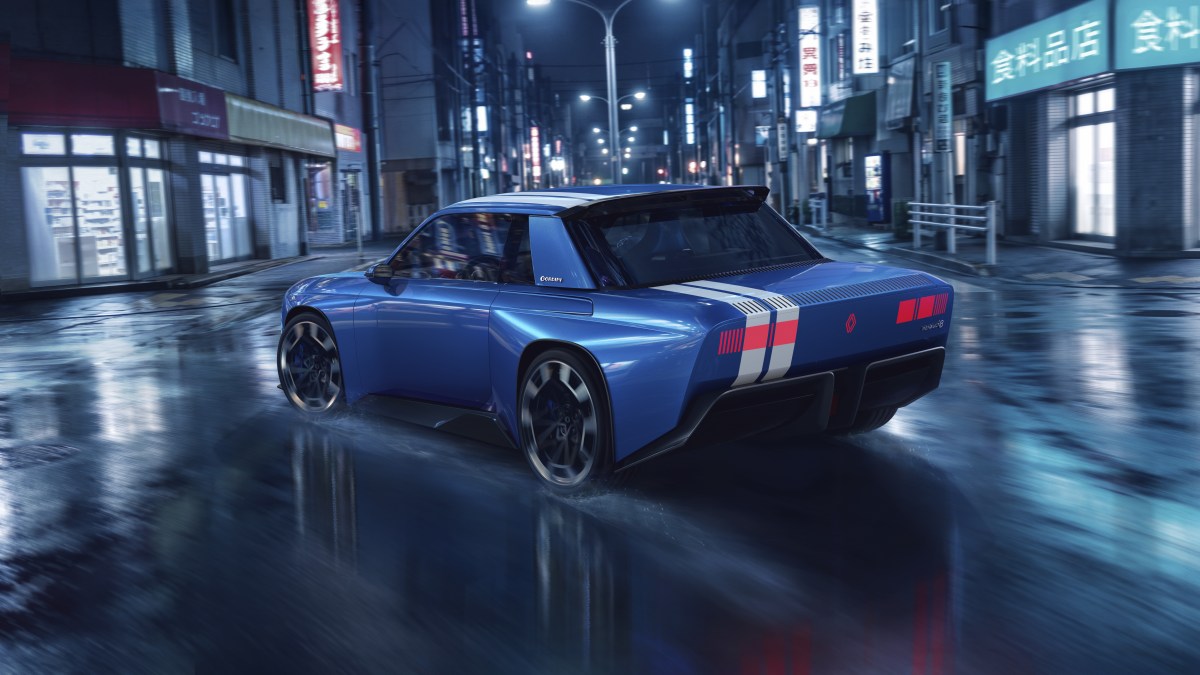
Purely for size comparison - an Alpine A290 hot hatch is 157.4 inches long, 71.7 inches wide, and stands much taller at 59.8 inches. A Mini Cooper SE is a stubbier 151.9 inches nose-to-tail and 69.1 inches wide, but still quite a bit taller at 57.5 inches. An MG4 EV XPower - a fast dual-motor bargain - stretches to 168.8 inches long, 72.3 inches wide, and 59.2 inches tall. The R8 Gordini Concept is longer and wider than an A290, and sits nearly a quarter of a meter lower than the MG4.
Hiding in that muscular rear end is a single electric motor delivering 270 hp directly to the back tires. Today's dual-motor hyper-EVs offer quad-digit power figures, but 270 horsepower in a light carbon-composite package is a sweet spot for genuine driving fun. No heavy front motor dragging down turn-in or dulling the steering rack - you get the immediate snap of electric torque sent straight to the rear. It's a configuration designed to rotate the chassis on the slightest lift that lets you dance along the edge of grip - very much like the tail-happy 1964 original did.
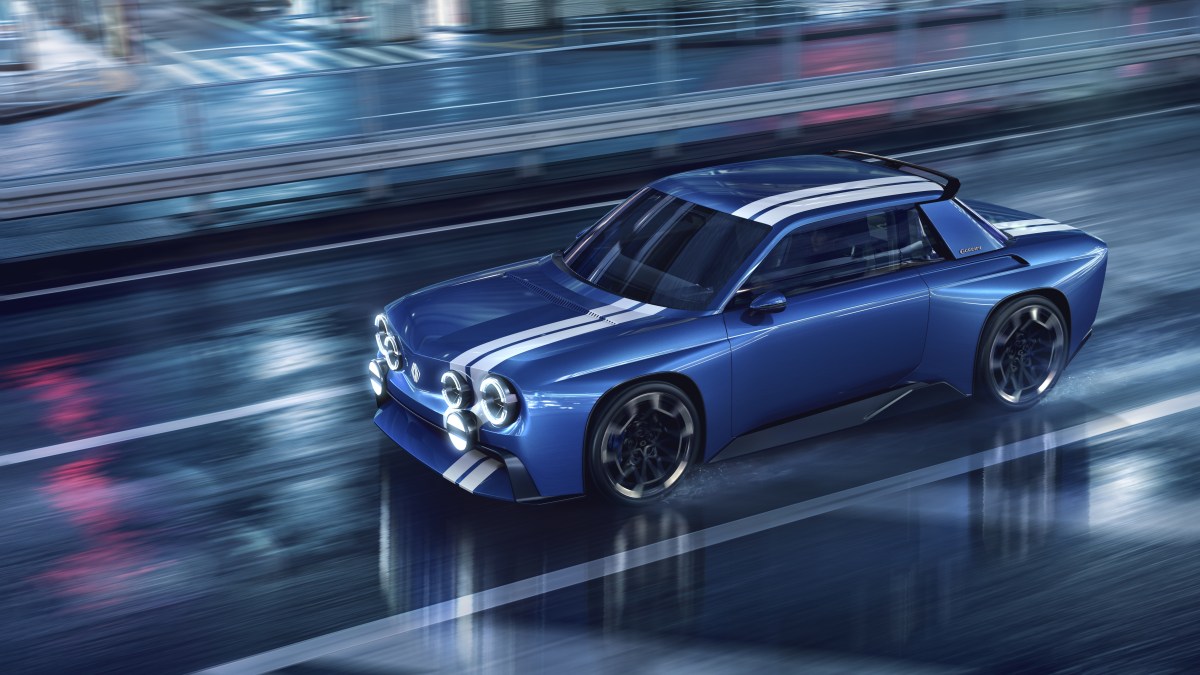
The concept borrows a lot of cues from vintage café racer motorbikes, where any part that does not make the car faster gets binned. The front end drops shut lines altogether with a race-style, one-piece removable clamshell hood. The signature chrome rub strips of the sixties are reimagined as sharp feature lines pressed into the flank, funnelling air toward rear cooling vents. Out front, a six-lamp LED setup revives the driving lights that illuminated nighttime stages in the Tour de Corse. The flush rear lights vanish seamlessly into the bodywork until switched on. The double white stripes neatly tie the nose, roof, and interior architecture together.
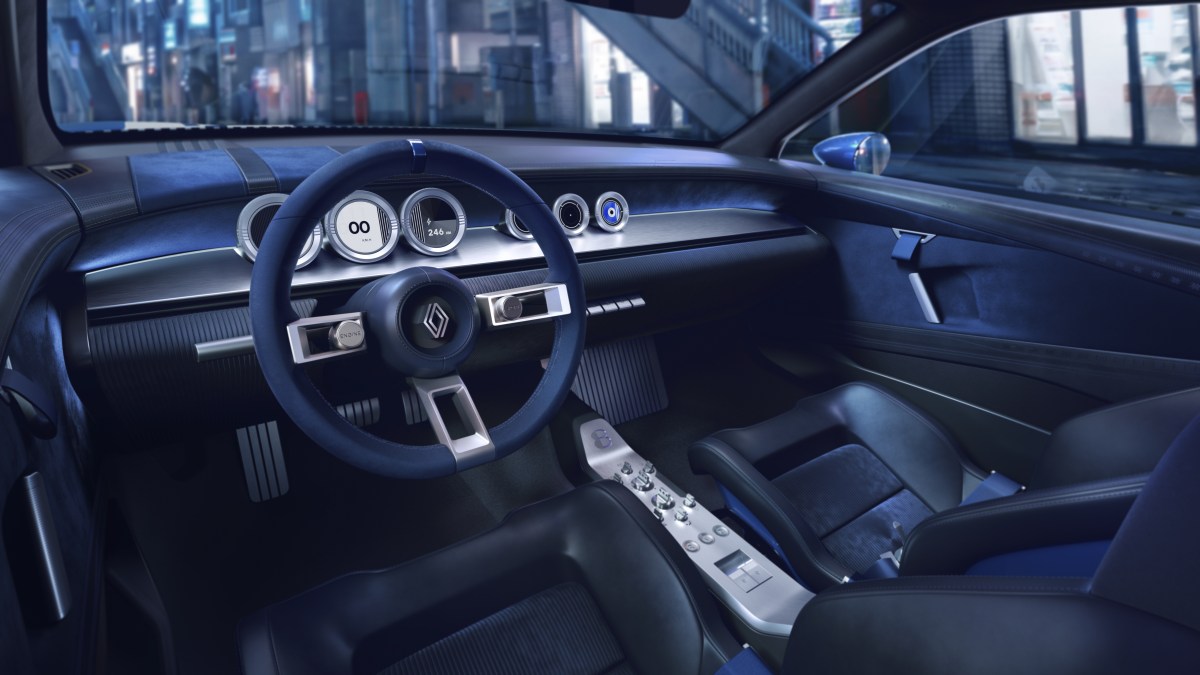
The interior spares us the usual pillar-to-pillar touchscreen slabs. The cabin is an analog love letter written in brushed aluminum, mechanical switchgear, and swathes of Alcantara. There are six individual circular digital dials, encased in thick metal bezels that mimic old mechanical Veglia gauges and echo the circular pods of the headlights outside. The center console has exactly zero haptic sliders - there's a bunch of twirly knobs to control everything together with a row of physical toggles on the dashboard, including the cheeky clicker of an integrated stopwatch.
The low-slung bucket seats have supportive carbon shells with centers trimmed in rich blue corduroy - a sweet nod to the flat, ribbed velour seats of the original R8. The door card stitching apparently traces its geometric angles to racetrack rumble strips, keeping the atmosphere spartan and focused. There is zero bloat here; every structural element doubles as interior trim. Sitting low behind the wheel, looking past that wrap-around cowl, the forward sightlines are totally clear of any obstruction, reminding you that driving engagement comes from outward visibility and road feel - not endless software submenus.
Of course, the painful reality is that Renault insists this retro-rocket is a strict one-off showpiece. The company is rolling out production-ready retro hits - first with the Renault 5 E-Tech, then the utilitarian Renault 4 revival followed by the funky Twingo - but this Gordini coupe will skip the showroom floor to spend its life behind velvet ropes at the Flins museum. It's a real shame - leaving such a driver-focused shape on the concept shelf is a missed opportunity for an affordable electric sports coupe.
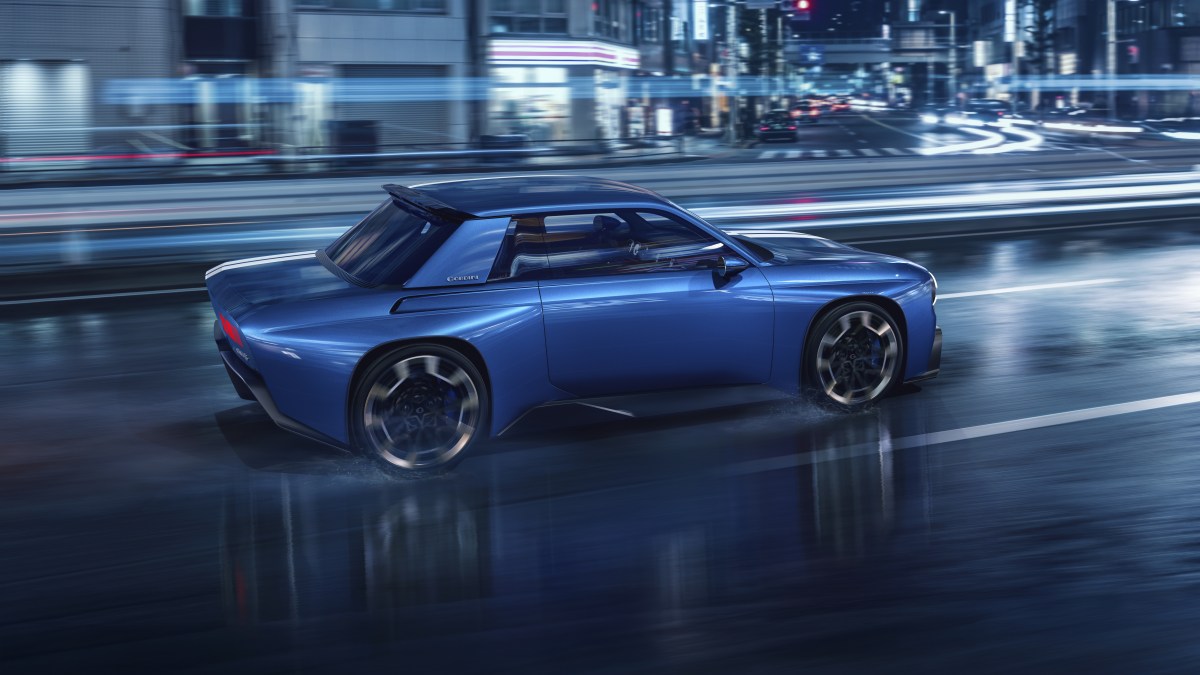
Even so, the engineering and styling speak volumes about Renault's creative groove. The R8 Gordini Concept does something vital - it proves that character, agility, and a sense of mischief do not have to die with internal combustion. And it reminds me very much of the 2013 Nissan IDx NISMO concept - it set the rumor mill on fire, with people asking where they should send the money for the new Hakosuka. There clearly is a serious demand for a sports car inspired by 60s and 70s legends, and whoever decides to take it seriously will have a winner on its hands.



From the team behind
GSMArena.com
Facebook
Twitter
Instagram
RSS
Settings
Log in I forgot my password Sign up