Xiaomi found volume in SkyNomad EREVs but sales of YU7 and SU7 are cooling off
Here's an interesting bit about electric cars - range anxiety hardly ever comes from the daily routines. Nobody worries about the school run or the supermarket trip when there's a charger either at home or at the shopping mall. The real stress sneaks up on you on a rainy night, with three kids in the back, and a busy service station with only one working charger. That probably explains why Chinese buyers can't seem to get enough of extended-range electric vehicles (EREVs) - you get the smooth electric drive, with a small petrol generator hiding under the hood as a backup plan.
Xiaomi Auto is living proof of how powerful that safety net can be. In October, the smartphone giant's car division delivered 50,168 vehicles - its highest monthly tally of the year and missed its all-time record of 50,212 from December 2025 by only 44 cars. According to data from the China Passenger Car Association, October numbers climbed 25.37% compared to September and rose 3.11% year-on-year, ending a two-month streak of shrinking volume. But what makes this rebound fascinating is not the headline total (Xiaomi already teased it at the start of November) - it is how the company actually got there. For the first time since Xiaomi started building cars, pure battery electric models took a back seat to hybrids with fuel tanks.
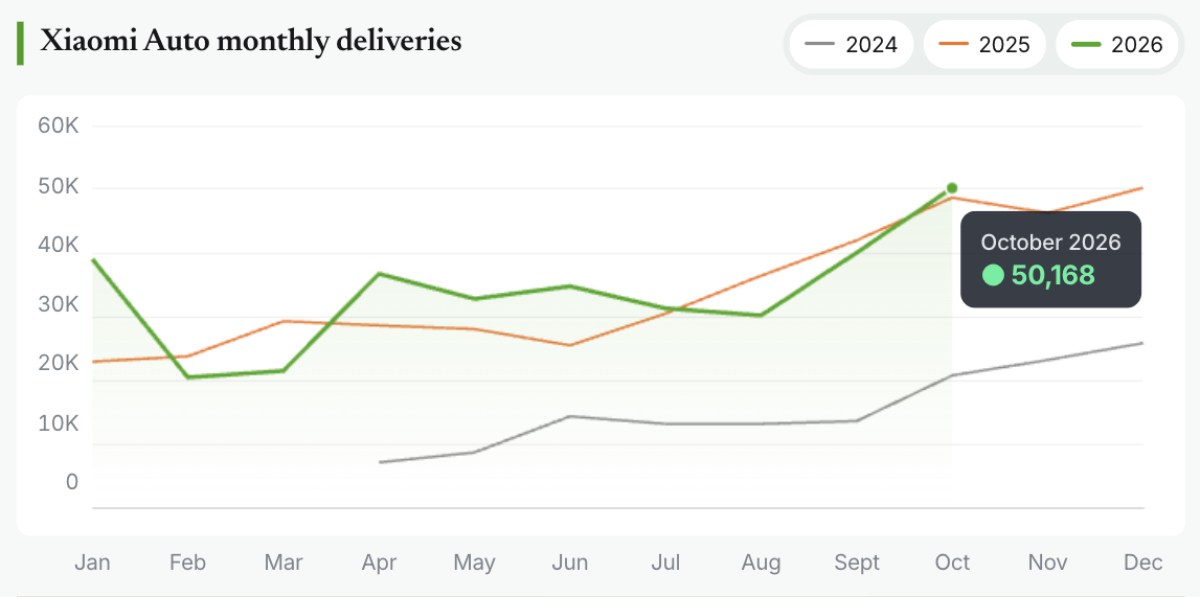 Source: CnEVPost
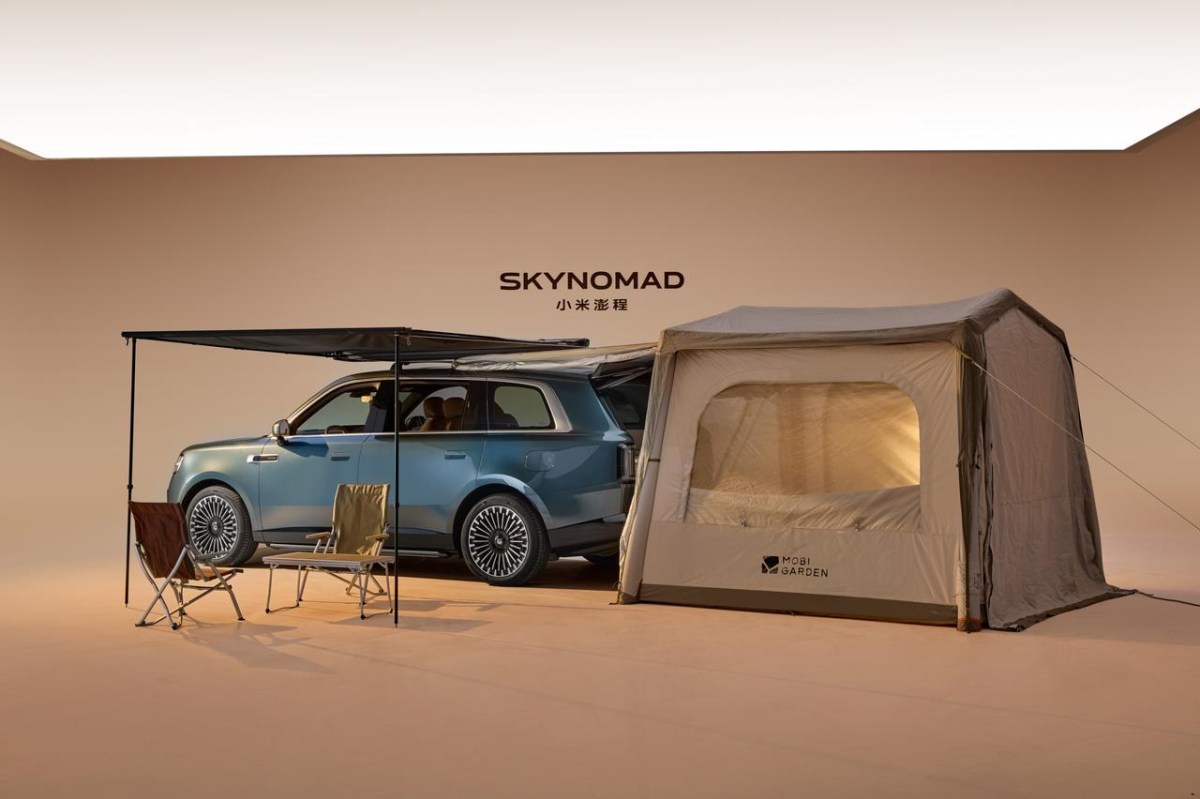
All the heavy lifting came from the new SkyNomad series, which launched on September 7 with Xiaomi's first-ever extended-range powertrains. Xiaomi handed over 27,147 Sky Nomad SUVs in October, a huge 118.15% jump from the 12,444 units delivered during its debut month in September. That single product line accounted for 54.11% of everything Xiaomi sold in October. Broken down by model, the five-seat Sky Nomad N70 reached 14,558 buyers (up 103.69% from September), and the larger N90 flagship found 12,589 homes (up 137.66%). With more than 70,000 locked-in orders recorded within 30 days of launch, Xiaomi still has a sizable queue of customers patiently waiting for their turn.
Built on the new Kunlun platform, both the N70 and N90 treat the combustion engine as an onboard power station. A 1.5-liter turbocharged four-cylinder engine built by Harbin Dongan sits up front, making 150 hp (112 kW) and never touching the wheels directly. Instead, it feeds electricity into either a 52 kWh LFP battery in the standard RWD N70 or a larger 76 kWh NMC pack in the AWD Max variants. That 76 kWh battery is larger than the pack in a standard-range Tesla Model Y, giving the N70 Max up to 236 miles of pure electric WLTP range before a drop of petrol burns, and a combined CLTC range of 908 miles.
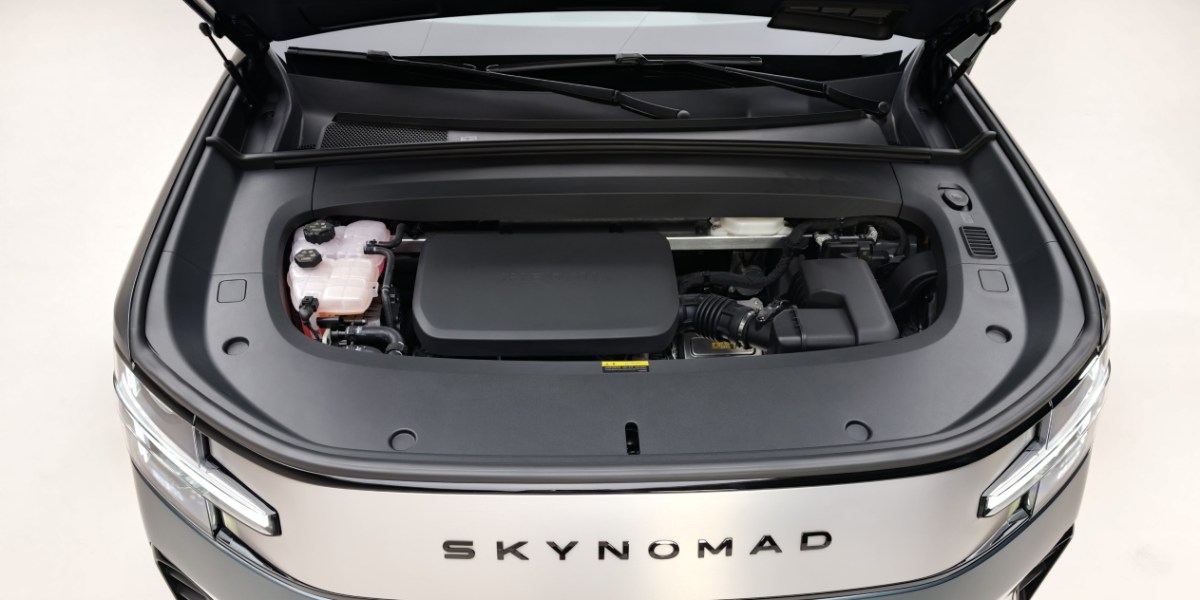
A big EREV with a battery of that size feels no different from an electric SUV for 90% of your driving. In the dual-motor N70 Max and N90 Max, the front and rear electric motors combine for 416 hp (310 kW) and 509 lb-ft of instant torque. That flings the 5,646 lb N70 from rest to 62 mph in 4.3 to 5.5 seconds depending on trim, and the double-wishbone front and five-link rear air suspension iron out even the worst surfaces. When the battery runs low and the 1.5-liter engine wakes up, the acoustic glass and Bridgestone quiet-tuned tires keep the generator noise reduced to a distant thrum. Of course, Xiaomi could not resist adding a few tech-company party tricks - the N90 has six exterior microphones and outside speakers so you can use voice commands while loading camping gear.
The SkyNomad family might be flying out of dealerships, but Xiaomi's pure electric models are feeling the squeeze. Combined deliveries for the battery-electric SU7 sedan and YU7 SUV dropped by 4,550 units from September to land at 23,021 cars in October. The sleek SU7 sedan logged 12,984 deliveries - down 17.57% from September and down 13.39% compared to October last year. That's 13 straight months of year-on-year declines for the car that put Xiaomi on the automotive map. The YU7 SUV fared even worse on the charts, sliding 15.08% month-on-month and a steep 70.18% year-on-year to 10,037 units.
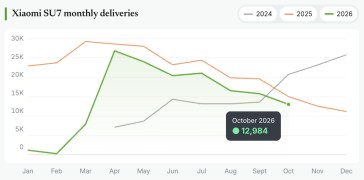
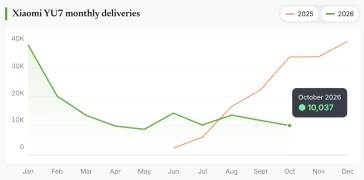
Source: CnEVPost
You don't need to be a detective to figure out that SkyNomad is cannibalizing Xiaomi's own electric lineup, especially the YU7. Walk into a Xiaomi store with around RMB 260,000 in your pocket, and you are faced with a choice between two five-seat SUVs sitting next to each other. The pure-electric YU7 gives you low-slung coupe styling, 800V architecture capable of 12-minute fast charges, and up to 519 miles of CLTC range. The SkyNomad N70 sacrifices the sports-car stance for a flat floor, upright family headroom, and the ability to drive 908 miles across rural provinces without hunting for a plug. For pragmatic family buyers, the tall EREV wins that argument almost every time.
This internal shift also throws cold water on the sales targets coming out of Beijing. Over the first 10 months of the year, Xiaomi Auto has delivered 336,658 vehicles, a respectable 6.75% increase over the same period last year and enough to bring its lifetime cumulative deliveries to 887,966 cars. Unfortunately, Xiaomi set an official annual goal of 550,000 vehicles for the full year. Sitting at 61.21% of that target with only November and December left on the calendar, the company would need to hand over 213,342 cars in two months - an average of 106,671 deliveries every four weeks. Even in an industry famous for wild CEO promises, doubling your factory and logistics output overnight to top 100,000 cars a month is simply not happening without a genuine miracle.
But focusing only on a target misses the bigger picture of how fast Xiaomi is moving toward Western markets. Buried inside October's CPCA report was a tiny, telling discrepancy: wholesale deliveries hit 50,168 units, but domestic retail sales stood at 50,123. Those "missing" 45 cars are the first factory export batches heading abroad for testing, homologation, or dealer trials. Xiaomi announced in September that it signed memoranda of understanding with major German dealer groups to set up a sales and service network ahead of its official European launch in 2027. For legacy European automakers already struggling to match Chinese software and battery costs, a family SUV that runs for 236 miles on battery power and has its own backup generator is a very good reason to be seriously worried.


From the team behind
GSMArena.com
Facebook
Twitter
Instagram
RSS
Settings
Log in I forgot my password Sign up