Tesla Roadster is finally coming - will it fly?
On a chilly November evening in Hawthorne nearly a decade ago, Tesla was supposed to be showing off an electric semi-truck. But when the trailer doors dropped and the lights dimmed - a sleek, crimson wedge rolled out onto the stage.
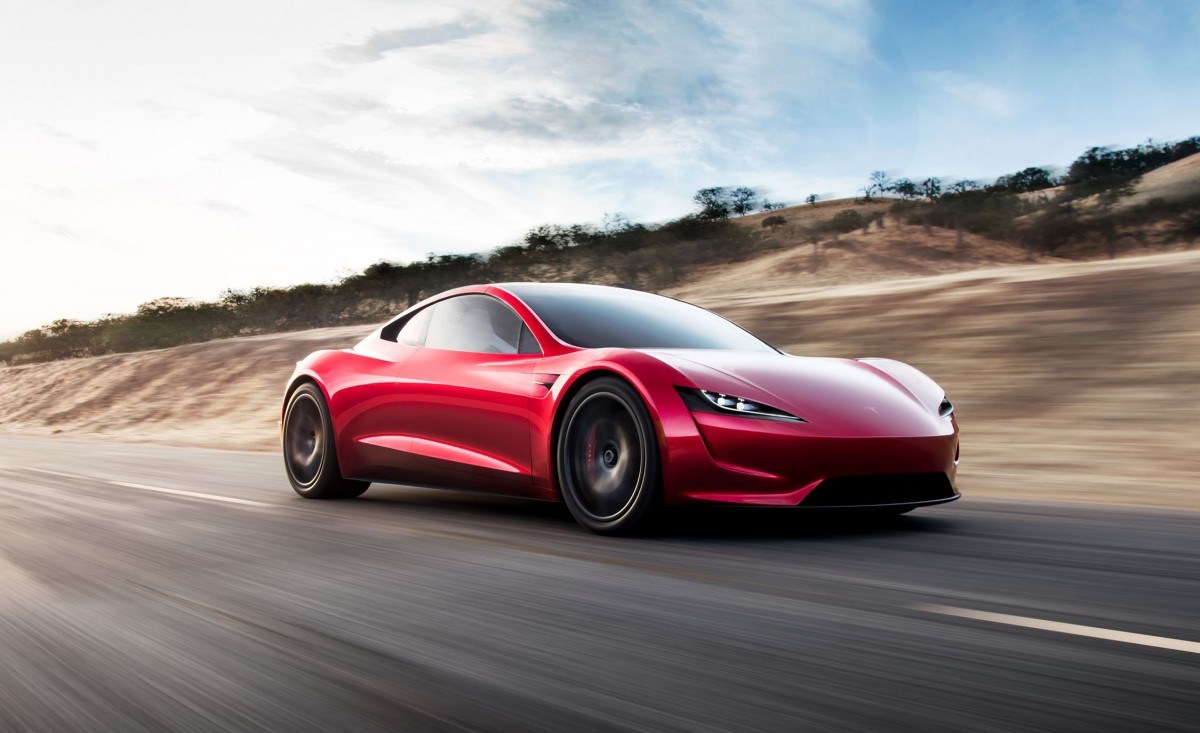
It was the second-gen Roadster. Four seats, 620 miles of highway range, and a sub-two-second sprint to 60 mph - those were the headlines. Best of all, it looked awesome - no juvenile theatrics, no awkward angles, just a low-slung, athletic coupe that made the mid-engine exotics out of Maranello look fussy and overcomplicated.
Nine calendar years have passed since that night. Nine years is an eternity - long enough for an entire platform generation to be engineered, launched, given a mid-cycle facelift, and peacefully retired. Reservation holders sat on their hands for a decade, having wired over $50,000 deposits, or the full $250,000 upfront for the Founders Series allocation. With a countdown clock ticking toward an October 1 unveiling in Texas, we are being told that the prodigal Tesla hypercar is coming back to the stage.
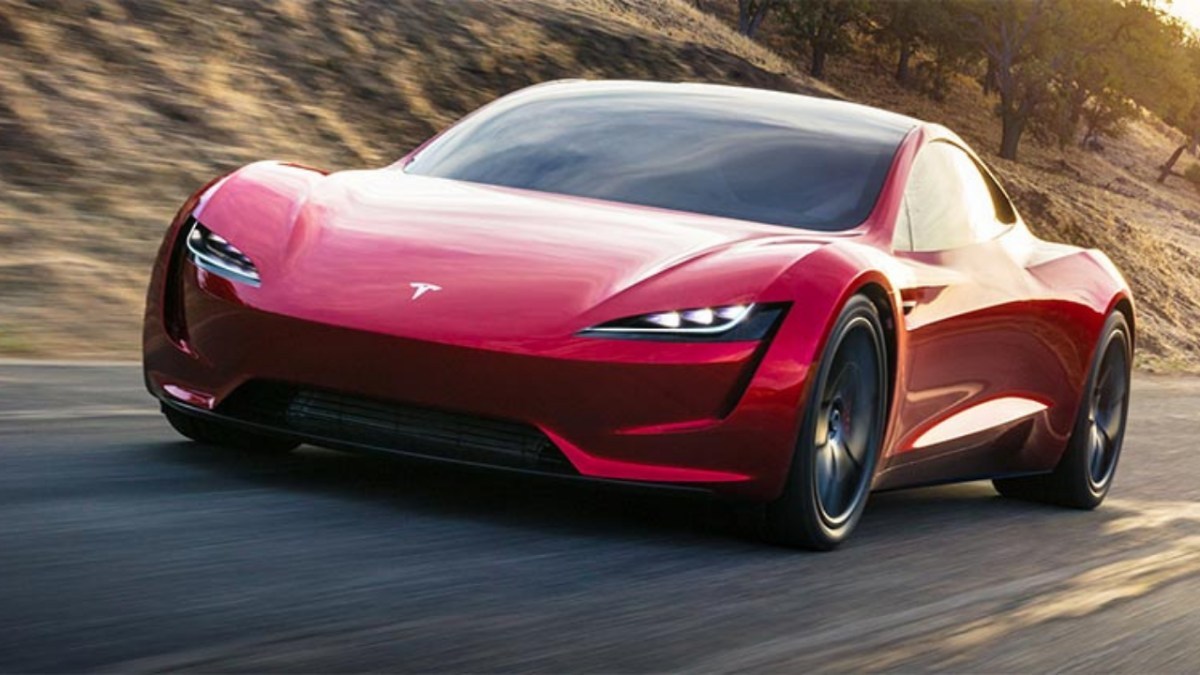
The trouble is, Tesla doesn't seem interested in giving us the car we all fell in love with. Instead of rolling out the finished, production-ready machine enthusiasts have been waiting for, the marketing circus has drifted off into orbit. The latest teasers show a car bathed in launch-pad spotlights under the caption "Go for launch," with hints of SpaceX-derived cold gas thrusters and promises of "radical design changes."
Let me call this what it actually is: a pneumatic gimmick. Cold gas thrusters on a road-going car are the shrewd exercise in diminishing returns. You get four or five brief squirts of pressurized propellant before the heavy tanks run dry and need a refill. They do absolutely nothing during a Sunday morning blast through the canyons. It gets worse - the demo vehicle reportedly cannot even carry an actual human behind the wheel. It must be steered remotely while spectators stand hundreds of yards back to avoid hearing damage.
Musk himself let the cat out of the bag when he offhandedly admitted that the sub-second acceleration figure was "the least interesting part" of the package. If a party trick makes a car too loud to legally drive, too dangerous to sit inside, and too complex to actually build, it is no longer a performance car. It's an amusement park ride.
https://t.co/3Vexk1sa1B
— Tesla (@Tesla) September 12, 2026
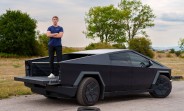
But more troubling than the rockets is the design change hinted at in the latest teasers. Tesla appears dead set on subjecting the Roadster to its "Cyber" styling obsession. Look at the lineage of Tesla's design house over the past decade. The company went from the classic elegance of the Model S and the flowing lines of that 2017 prototype straight into an aggressive, low-poly design rut. The Model Y was essentially a Model 3 that spent too much time in the breadmaker. Then came the Cybertruck, the Cybercab, and the Robovan - all dressed in identical post-apocalyptic, stainless-steel, full-width-lightbar drag.
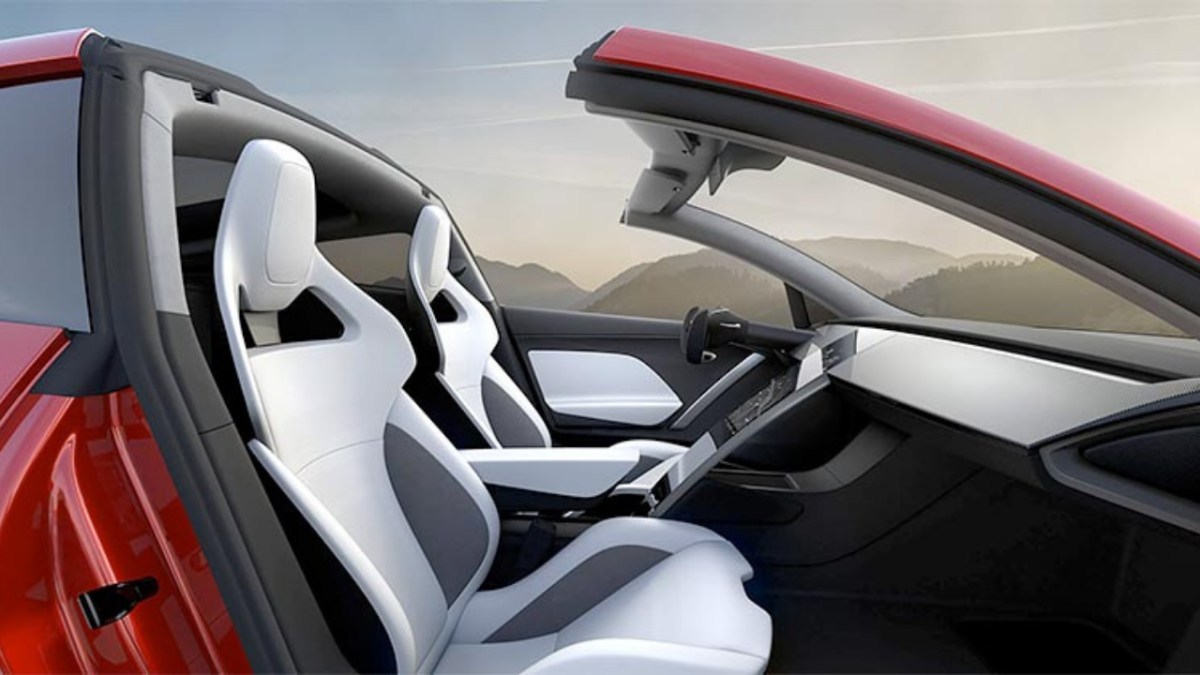
Grafting that origami onto the Roadster is a tragedy. The original 2017 concept had voluptuous rear haunches, a tight greenhouse, and timeless proportions that still look fresher than half the supercars parked outside Monaco casinos today. Swapping out those timeless curves for flat-faced panels and robotaxi light bars smells of creative exhaustion - Tesla has confused being brand-new with actually being better.
Tesla spent nine years playing with prop tanks and digital sketches, but the rest of the global auto industry got on with the real business of building electric hypercars. When the Roadster prototype was first revealed, it lived in a vacuum. Today, that playground is packed with competition.
Look at the benchmark: the Rimac Nevera. The Croatian projectile, with its four permanent-magnet motors delivering 1,914 horsepower, rips from zero to 60 mph in 1.74 seconds and completes the quarter-mile in under nine seconds flat. It does this without compressed air tanks or hearing protection. It has active aerodynamics, exquisite carbon-fiber weave, and air conditioning you can use to drive to the shops.
Against that backdrop, Tesla's never-ending goalpost-shifting went from being a Silicon Valley quirk to a proper frustration. The Roadster was promised for 2020. Then the delivery date slipped to 2022, slid past 2023, drifted through 2024, and was vaguely pegged to the 2025 to 2026 window. At the last shareholder meeting, Tesla casually suggested customer deliveries might not happen until 2027 to 2028.
It is hardly shocking that early reservation holders - including Marques Brownlee and Sam Altman - threw up their hands and canceled their pre-orders. Handing over $50,000 to $250,000 for an interest-free corporate loan that drags on for nearly a decade is a tough pill to swallow, especially when the company's attention is on dancing robots and autonomous taxis.
There's no surprise that the timing of this October reveal feels tactical. Wall Street analysts and former company executives point out Tesla's habit of pulling halo projects off the shelf whenever stock prices need a shot of adrenaline. With talk building around a potential merger between Tesla and SpaceX, rolling out a Tesla sports car strapped with literal rockets is the perfect narrative bridge.
All the enthusiasts really wanted was the car we were shown in 2017. Imagine if Tesla simply took that original shell, upgraded it with the tri-motor Plaid powertrain, slotted in an 800V architecture, delivered a genuine 600 miles of range, and sold it for the promised $200,000 base price. It would humiliate gasoline-powered hypercars on track days, and deliver on a promise to the people who believed in the brand when it was struggling to build sedans in a tent.
Musk has backed himself into a corner where a car can no longer be an extraordinary, heart-stopping sports car - it has to be a hovercraft, a spaceship, and an internet meme all at once. When October 1 arrives, I really want to be wrong. I want to see a street-legal, gorgeous machine that rolls on its own four wheels and obliterates every lap record in existence. But if all we get in Waco is a low-poly wedge that squirts compressed nitrogen to float two inches off the dirt (all remotely controlled), the whole world will shrug, look at its watch, and walk away.

From the team behind
GSMArena.com
Facebook
Twitter
Instagram
RSS
Settings
Log in I forgot my password Sign up