Tesla Robotaxis without a human monitor hit Austin streets
The future of autonomous EVs just took a giant, empty-seated leap forward. Over the weekend, residents in Austin, Texas, captured photos and videos of a Tesla Model Y navigating city streets entirely on its own. The car's steering wheel moved, the vehicle followed the rules of traffic, but both the driver's seat and the front passenger seat were completely empty.
This sighting is probably the biggest milestone in the long-promised world of autonomy. Following the immediate online storm, Tesla CEO Elon Musk confirmed the news on social media, simply stating that "Testing is underway with no occupant in the car." There is absolutely no doubt this is a monumental step for the company's autonomous ambitions, but it also forces a serious conversation about safety data and public trust.
Just saw a Tesla with no one in the car @SawyerMerritt @wholemars @robotaxi @Tesla pic.twitter.com/llSt6UPbH4
— 420 Bounty Hunter (@Mandablorian) December 14, 2025
The promise of truly self-driving EVs has always been just out of reach. Since the company's "Autonomy Day" back in 2019, Tesla has pushed out countless updates to its Full Self-Driving (FSD) software and missed self-imposed deadlines one after another. But seeing an actual driverless vehicle in action feels like the tangible progress customers and fans can truly appreciate. It suggests that Tesla has gained enough internal confidence in its newest Robotaxi builds to pull the human safety net.
Unfortunately, this optimism is heavily tempered by a complete lack of verifiable proof that the system is ready to operate safely in the real world. The main concern about Tesla's strategy has always centered on transparency. Unlike rivals such as Waymo, which regularly gives regulators and the public detailed reports about system "disengagements" - moments where the human driver had to take over - Tesla has never released comprehensive, verifiable data proving that its FSD system is safer than a person.
Instead, the company provides curated video clips, anecdotal stories, and high-level figures about the overall distance driven. And the truth is that when it comes to something as high-stakes as a Robotaxi service carrying passengers, the public needs hard facts, not marketing highlights.
Testing is underway with no occupants in the car
— Elon Musk (@elonmusk) December 14, 2025
The limited data that is available paints a worrying picture. Incident reports submitted to the US National Highway Traffic Safety Administration (NHTSA) give a glimpse into the performance of the Tesla Robotaxi pilot program already underway in Austin. Based on those reports, the Tesla fleet involved in the pilot was experiencing a crash roughly every 62,000 miles driven.
This is a much higher rate than the average crash rate for human drivers. Critically, these incidents occurred while a human safety monitor was still inside the vehicle, ready to intervene. If the system currently requires human intervention to prevent accidents, removing that human without a massive and documented improvement in capability seems illogical.
Yet, this illogical leap is exactly what the company is attempting. Before the driverless sighting, Mr. Musk stated his expectation that the Robotaxi service in Austin would operate without a safety monitor within three weeks. This is the moment where excitement crashes into common sense. The company appears to be skipping the critical phase of "prove it is safe" and jumping straight to the "deploy it" phase. It is a high-stakes gamble that could dramatically change transport if it works. But if it fails, the backlash against electric cars and autonomous EVs could set the industry back for years.
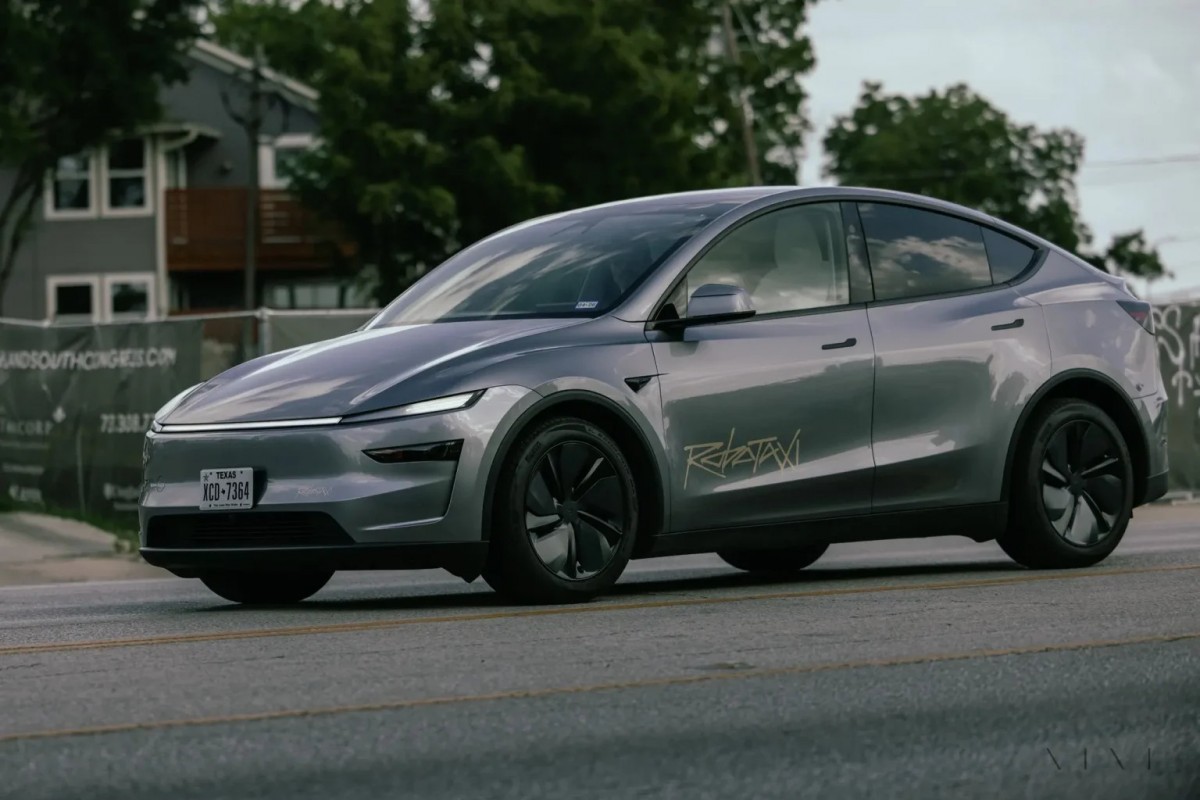
This whole thing feels nothing like the quiet, methodical scaling seen from some competitors and more like a marketing effort. By putting a highly visible, empty Model Y on the streets of Austin, Tesla creates a lot of buzz that advances the narrative of its technological leadership.
The whole world wants Tesla to succeed - a functional, scalable driverless network would be a global revolution. The lack of solid safety data suggests this public display may be more about generating interest than proving system readiness. Many cars already can drive themselves on a good day, but the true autonomy test is how they handle unpredictable situations. And that's something Tesla has yet to prove to the world.
Reader comments
- FredSpain
- n1@
Without visible driver. It could be a drone on wheels. Despite Elon's claims, Tesla is behind other constructors...
- jluke
- U@m
Keep your personal bias to yourself when reporting. Apparently, much better driving safety at highway speeds than humans, being incredibly better with fatal injuries caused due to accidents than human drivers, is not good enough safety data. Howev...
- drifter
- U@m
Misinterpretation of Data is such a norm these days. Crash roughly every 99,780 km, higher rate than humans.............Now check how many of those crash were at high speed. Surprisingly the rate gets drastically lower than humans. Check how many we...

From the team behind
GSMArena.com
Facebook
Twitter
Instagram
RSS
Settings
Log in I forgot my password Sign up