Xiaomi SU7 first real-world range tests show promise
The electric vehicle battleground just got a lot more interesting, courtesy of Xiaomi. The Chinese tech giant launched its first EV, the SU7 midsize sedan. With impressive specs rivaling industry leaders, it was just a matter of time before actual road tests would answer the question – could Xiaomi be a new force to be reckoned with?
In what looks like the world's first SU7 road test, the Chinese automotive outlet Dongchendi suggests the answer is a resounding yes. While the SU7 is unquestionably a powerful EV, the notoriously optimistic CLTC testing regime gave it an estimated range that, if true, would have made the SU7 one of the best EVs out there. The Dongchendi team decided to find out the actual number.
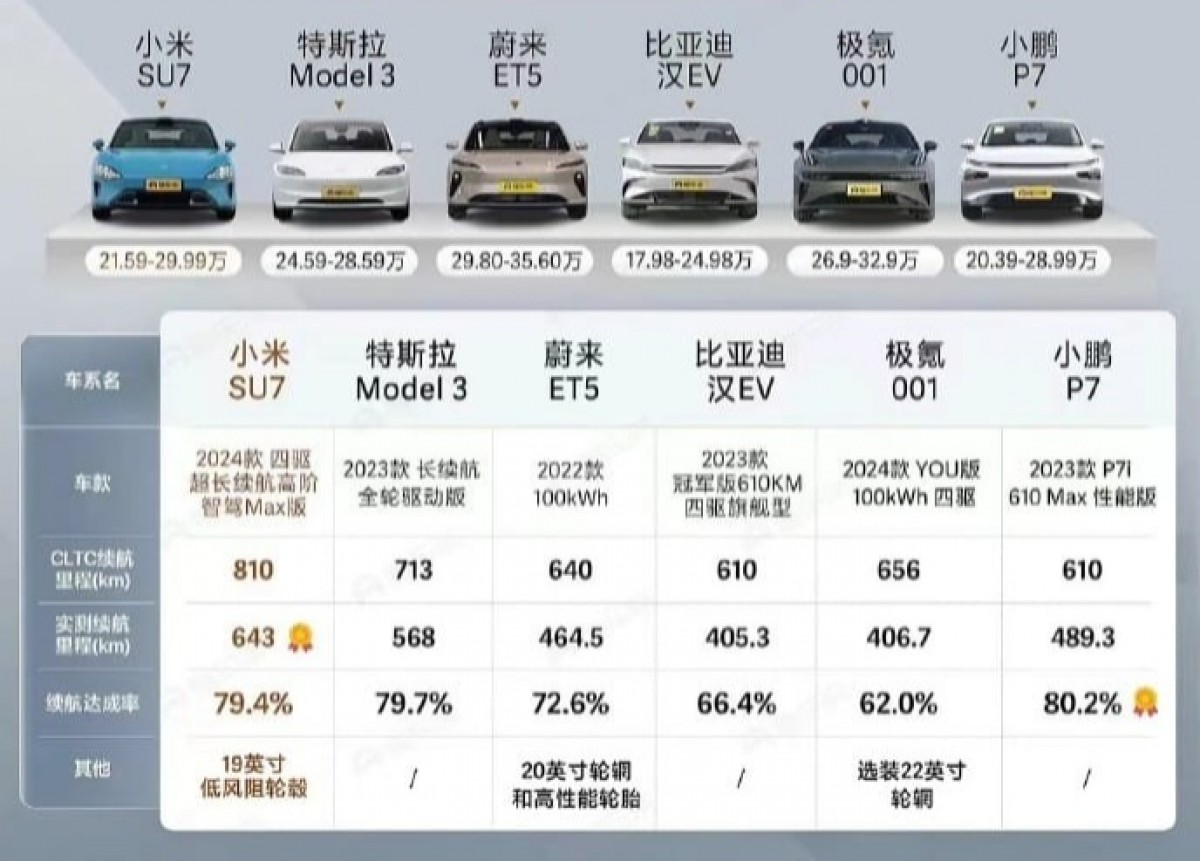 Real-life range test results for Xiaomi SU7 and its competitors
The Xiaomi SU7 isn't just focused on efficiency; it packs a surprising punch under the hood. In 0-62 mph acceleration tests, the SU7 Max left competitors in its rearview mirror, clocking an exhilarating 3.24 seconds. This puts it well ahead of the Tesla Model 3 LR (4.62 seconds) and the Nio ET5 LR (3.83 seconds). In the quarter-mile dash, the SU7's dominance continued with a time of 11.17 seconds, proving this newcomer isn't afraid to flex its muscles.
While lab-measured EV ranges can often be overly optimistic, the Xiaomi SU7 delivered a respectable real-world performance. Xiaomi claims a massive 497 miles range on the China Light-Duty Vehicle Test Cycle (CLTC). In the road test conducted by Dongchendi, the SU7 achieved a still-impressive 400 miles. While the XPeng P7 delivered a range even closer to its CLTC rating, this shows Xiaomi's newcomer has enough endurance for those longer journeys.
In the hotly contested EV market, the Xiaomi SU7 has some tricks up its sleeve. Not only does it boast exciting performance and solid range, but it also undercuts rivals with a more budget-friendly price tag. Depending on the configuration, the SU7 starts at around $29,900 in China. This makes it significantly cheaper than both the Tesla Model 3 (starting around $34,050) and Nio ET5 (starting around $41,300).
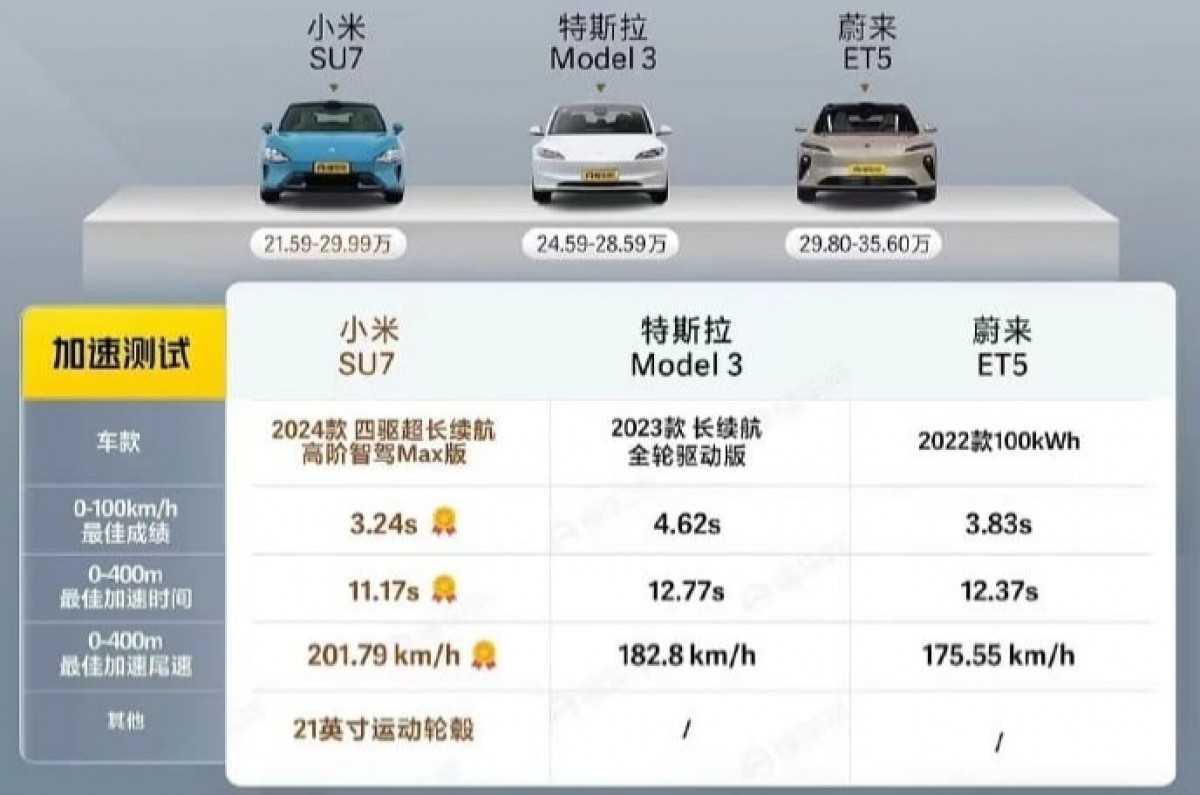 Real-life Xiaomi SU7 acceleration test results
This affordability means something other than skimping on features. The SU7 boasts a sleek, futuristic interior with a large infotainment screen and advanced driver assistance systems. Its commitment to tech mirrors Xiaomi's smartphone philosophy, potentially appealing to a tech-savvy audience.
The Xiaomi SU7 turns out to be no mere pretender – it's shaping up as a legitimate new player in the EV game. Xiaomi's entry into the automotive world is impressive with its blend of thrilling acceleration, respectable real-world range, tech-focused features, and a highly competitive price point.




Reader comments
- Anonymous
- d@B
It's in the test, 79,4% of the CLTC claimed range. Pretty much same as tesla. And Xpeng is slightly better. I mean, if they mesured by WLTC or EPA, the numbers would be lower, and real-world range would be closer. Nothing unusual. This does...


From the team behind
GSMArena.com
Facebook
Twitter
Instagram
RSS
Settings
Log in I forgot my password Sign up