Alpine A310 Vision revives Dieppe’s icon with limited production on the cards
When the original Alpine A310 was revealed back in 1971 in Dieppe, it was quite a bit of a shock, really. The motorsport scene adored the A110 Berlinette - but the A310 was a sharp, angular wedge that looked like a knife pointed at the heart of the Porsche 911. It was eccentric, and very French, especially once it grew flared arches and got the growling PRV V6 in 1976. Alpine decided that the best way to celebrate 55 years of the four-cylinder pioneer and the golden jubilee of the V6 is to poke that exact hornet's nest again.
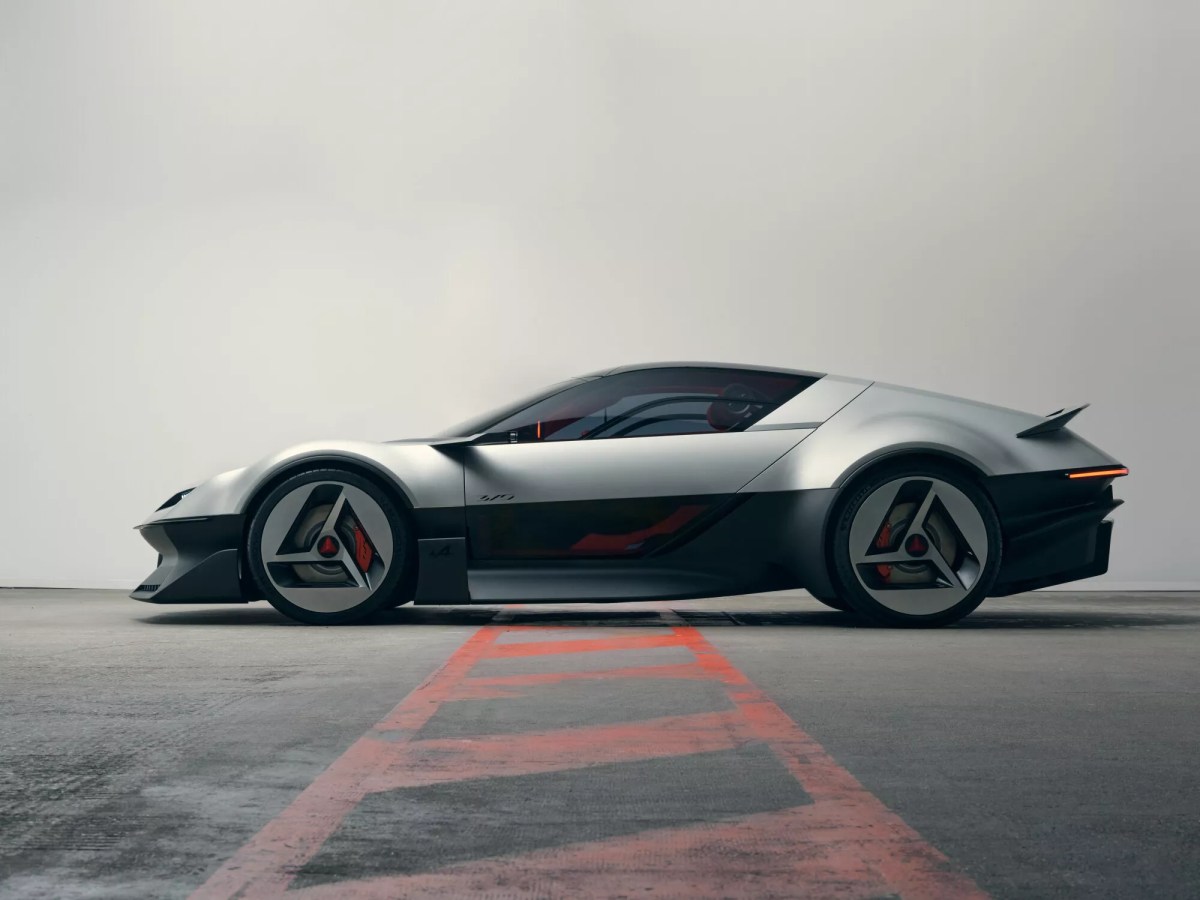
I went to the Paris Motor Show to watch the unveiling, and I stood there staring at A310 Vision's liquid-aluminum coachwork, and I have to admit - the visual drama of this concept was like nothing else at the show. I think Alpine's styling director Antony Villain and his design studio must have parked the original 1970s A310 right in the center of their workshop as a living muse. They didn't want to clone the classic, but to amplify its attitude using modern aerodynamics and clever proportions. You still get that geometric arrowhead silhouette, but the lower half of the vehicle shows off black aerodynamic channels straight out of Formula 1. Even the wheels send a message - the triangular three-spoke alloys tip their hat to the stamped steel wheels of the earliest rear-engined berlinettes.
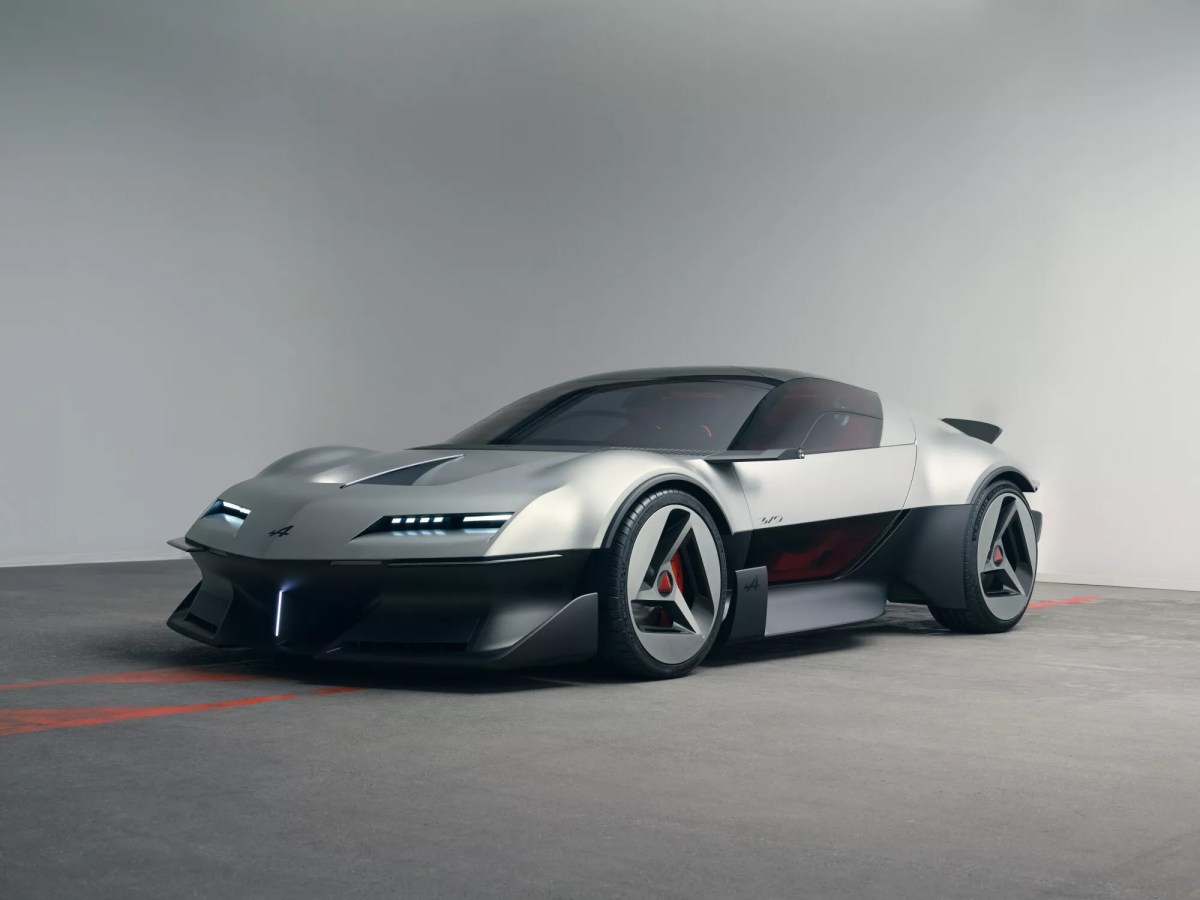
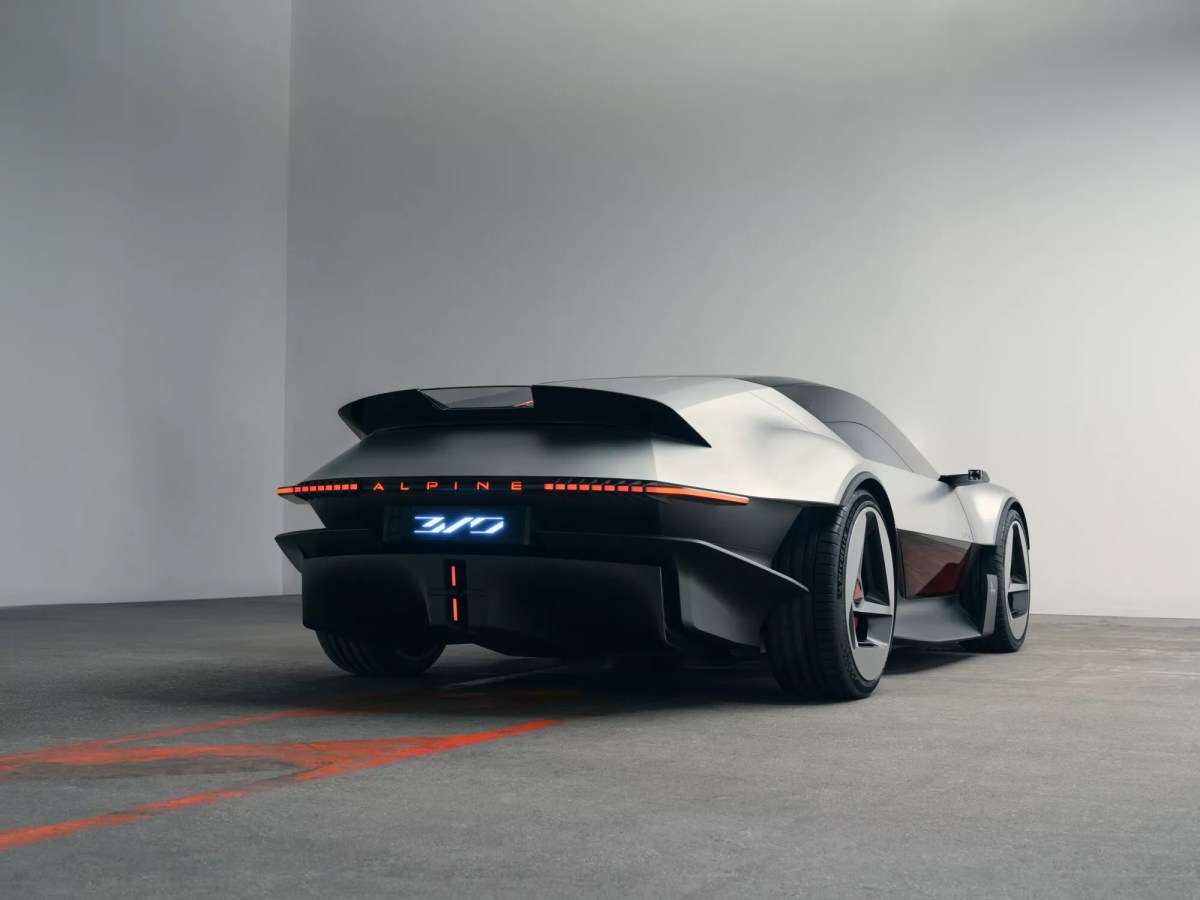
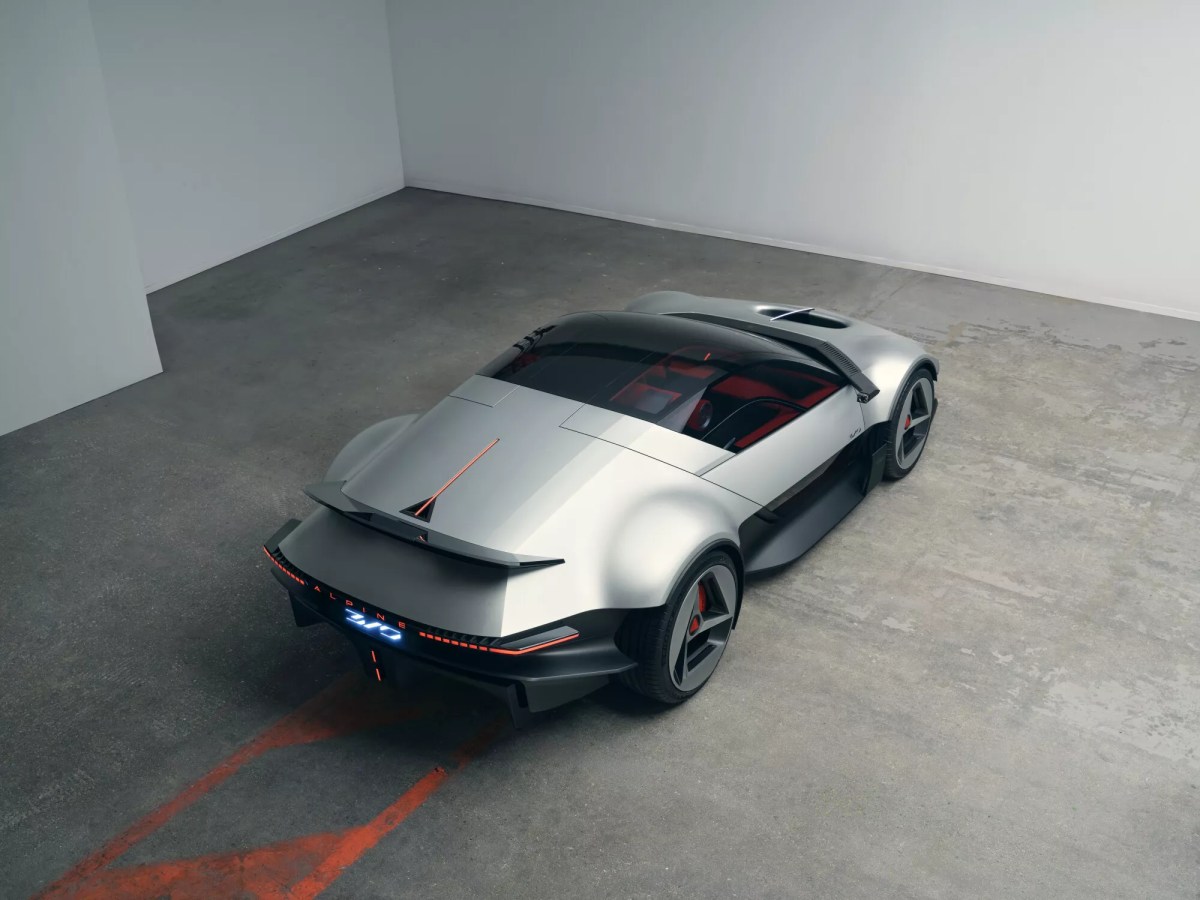
The exterior details go way beyond the usual concept car window dressing. Up front, the nose tapers to a shark-like prow (Corvette Stingray C3 comes to mind) with an aggressive S-duct to channel high-pressure air up and over the low-drag windshield. The headlights appear entirely absent at rest - Alpine engineered a clever "pop-down" mechanical effect where the slim light elements only drop into view when you switch the ignition on. A central dorsal blade (called "Y zero") runs along the center of the car, before terminating at a dramatic split rear wing. Interestingly, even the taillights generate high-speed downforce rather than just looking pretty.
The A310 Vision is 179.1 inches long, it sits shockingly low at 46.5 inches, it is 79.9 inches wide, and rides on a 96.5 inches wheelbase. Its natural historical nemesis is the Porsche 911 Carrera, which is 177.9 inches long, stands 51.1 inches tall, and is 72.9 inches wide. The low-slung French missile sits over 4.33 inches closer to the road and is 7 inches wider than a standard Carrera - it is even wider than the widebody Porsche 911 Turbo S (74.8 inches). Lotus Emira (173.7 inches long, 74.6 inches wide, and 48.2 inches tall) and the current Alpine A110 (164.6 inches long, 70.8 inches wide, and 49.3 inches tall) are both much shorter and taller than the A310 Vision.
Peering through the seventies-style amber-tinted glass reveals an interior philosophy that delivers a much-needed antidote to the modern obsession with touchscreens. Instead of the cramped 2+2 layout that compromised the rear seats of the 1970s production car, this concept is a pure two-seater. The cabin is a masterclass in minimalism: deeply sculpted bucket seats wrapped in high-contrast textiles, door panels with lower viewports that show the road rushing past - not needed but so cool. The interface abandons software menus in favor of knurled, heavy switchgear inspired by vintage Japanese and European high-fidelity audio sets. Snapping a satisfying mechanical toggle or twisting a heavy aluminum dial is something that glass slabs simply cannot replicate.
Under the dramatic bodywork is the real reason for this project: the all-new Alpine Performance Platform - the APP. When Renault Group parted ways with Lotus on their joint electric platform project, Dieppe's engineering team developed their own extruded, bonded aluminum chassis from scratch. The APP architecture is modular, rigid, and engineered specifically for the next-generation electric A110 sports car due sometime next year. The biggest difference here is how the batteries are arranged. Electric cars rely on heavy "skateboard" battery packs glued flat under the passenger cabin - it's a neat solution for most use cases, but it is actually a packaging compromise that forces drivers to sit on a jacked-up perch. The APP architecture is designed to split its energy storage into dedicated compartments, allowing the driver to sit really low.
That split-pack engineering brings huge dividends for vehicle dynamics and chassis. By stuffing battery cells into a vertical chest behind the seats and tucking secondary modules into the central structural tunnel, Alpine can plant the driver's hips inches above the road. Fitting batteries in that way concentrates the car's heaviest components within the wheelbase and within its center, giving it a rear-biased weight distribution somewhere around 42% to 44% up front and 56% to 58% out back. That setup is almost identical to the mid-rear engine dynamics of Dieppe's most legendary road-racers, keeping the inertia minimal. Sure, putting high-voltage batteries into a sports car pushes total mass toward 3,307 lb - a huge jump from the 2,429 lb of the outgoing four-cylinder petrol A110 - but it still undercuts electric cars that regularly crush the scales at over 4,850 lb.
It's all great so far, but the best bit is the gossip that Antony Villain dropped to journalists on the show floor. Officially, Alpine refuses to quote power, torque, or drive configurations for the A310 Vision, treating it as a pure styling exercise. But behind the scenes, Villain confirmed that the APP platform can support both rear-wheel drive and dual-motor all-wheel-drive setups pushing well over 500 hp. He even admitted the APP architecture can package internal combustion powertrains if needed.
Internally, Alpine codenamed this build "PS1" - shorthand for Projet Spécial 1. That is no random clerical tag. The company has already confirmed an upcoming 2+2 grand tourer that will join the lineup later this decade, but Villain made it clear that this concept does not preview that family-friendly model. Instead, the A310 Vision points the way toward a strictly limited-run, coachbuilt halo project. The message between the lines is clear: if enough wealthy collectors step up, Alpine has both the platform and the appetite to put an ultra-exclusive run of these road-going spaceships into production. And because ultra-low-volume boutique vehicles can be sold under small-series carbon legislation, that prospect of a limited-run track weapon is technically viable.
The A310 Vision arrives just as Alpine's high-stakes modern renaissance kicks off. Following the launch of the A290 electric hot hatch and the slow rollout of the larger A390 crossover, the French brand needs to scale up from a niche, single-car sports car manufacturer into a full-fledged global premium automaker. In that high-pressure moment, it would have been tragically easy to play it safe, stick to predictable market trends, and let heritage gather dust in a museum. Instead, Alpine took the wedge that ruffled feathers in 1971 and transformed it into a low-riding electric sculpture, reminding us of what French performance cars do best: daring to be different.

From the team behind
GSMArena.com
Facebook
Twitter
Instagram
RSS
Settings
Log in I forgot my password Sign up