Hyundai Mercury Concept previews the 2027 battery-swappable IONIQ M
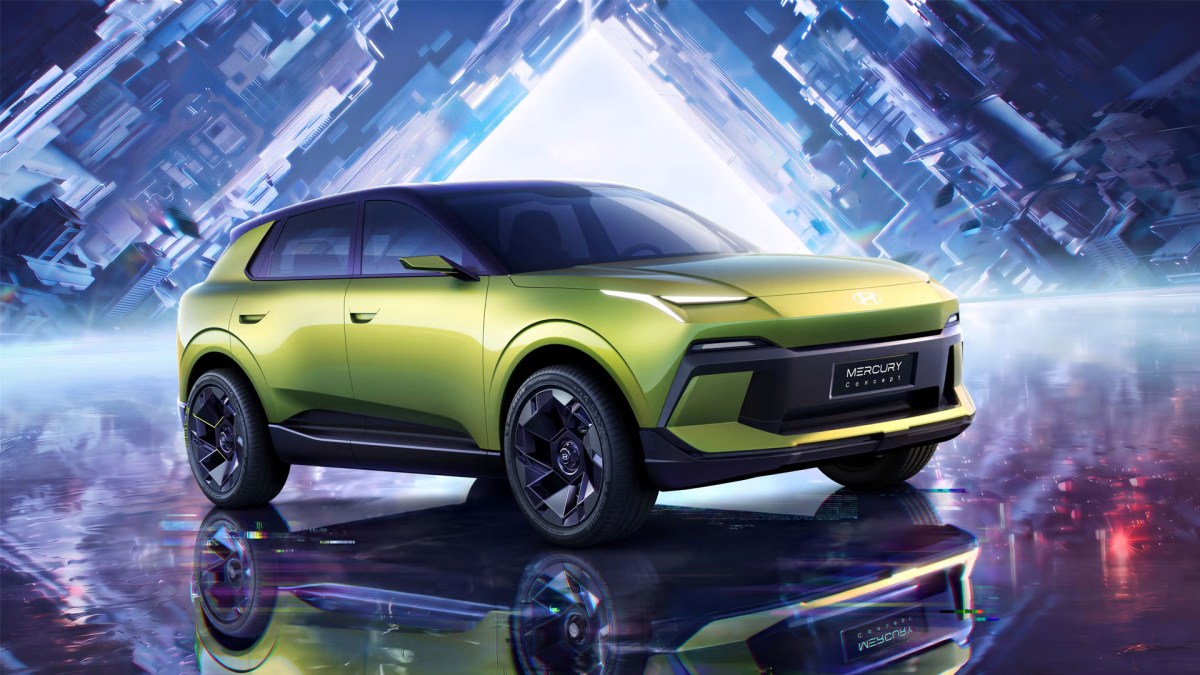
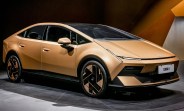
Guangzhou Auto Show 2026 is in full swing, and Hyundai had a surprise for everyone - the Mercury Concept. Painted a jarring yellow-green shade they call Citrine Neon, it is actually a bit more than yet another styling exercise never to be seen in a showroom. It previews the upcoming IONIQ M, and Hyundai says this will be the most affordable model in their electric universe when it hits the streets in 2027. Unfortunately, you won't see it in Europe, and you won't find it in the US. The Korean giant has handed the entire design and engineering project over to a local team who understand the chaotic demands of Chinese mega-cities. That tells us exactly how desperate Hyundai is to reclaim the lost market they once took for granted.
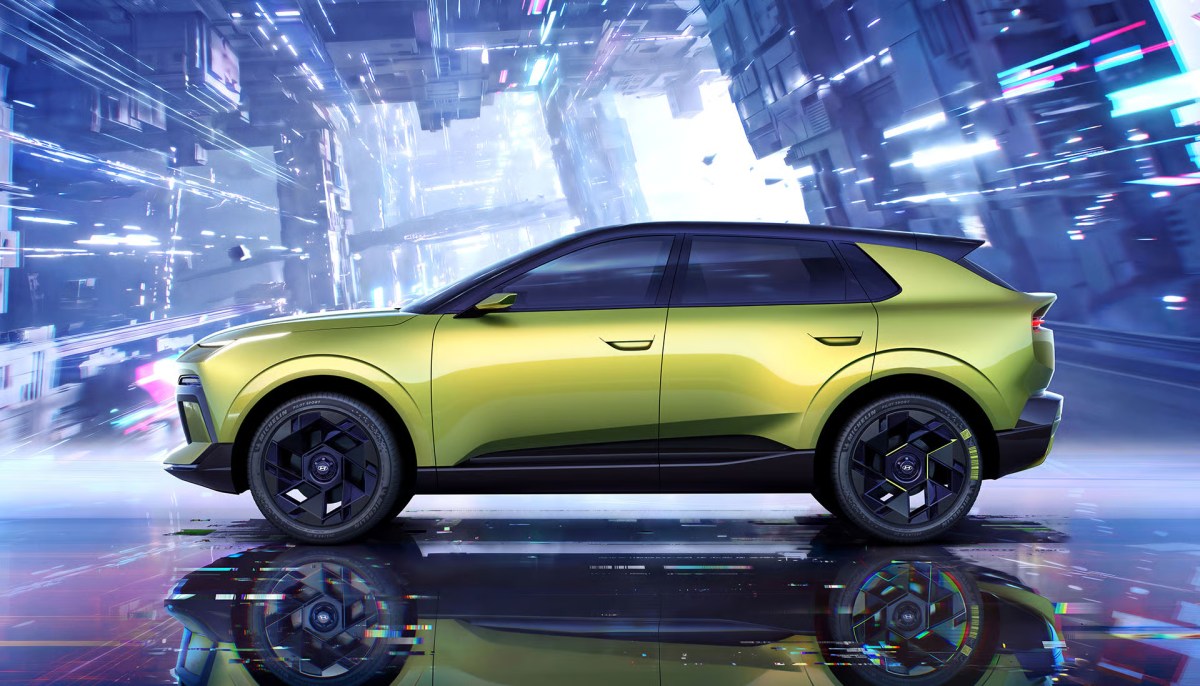
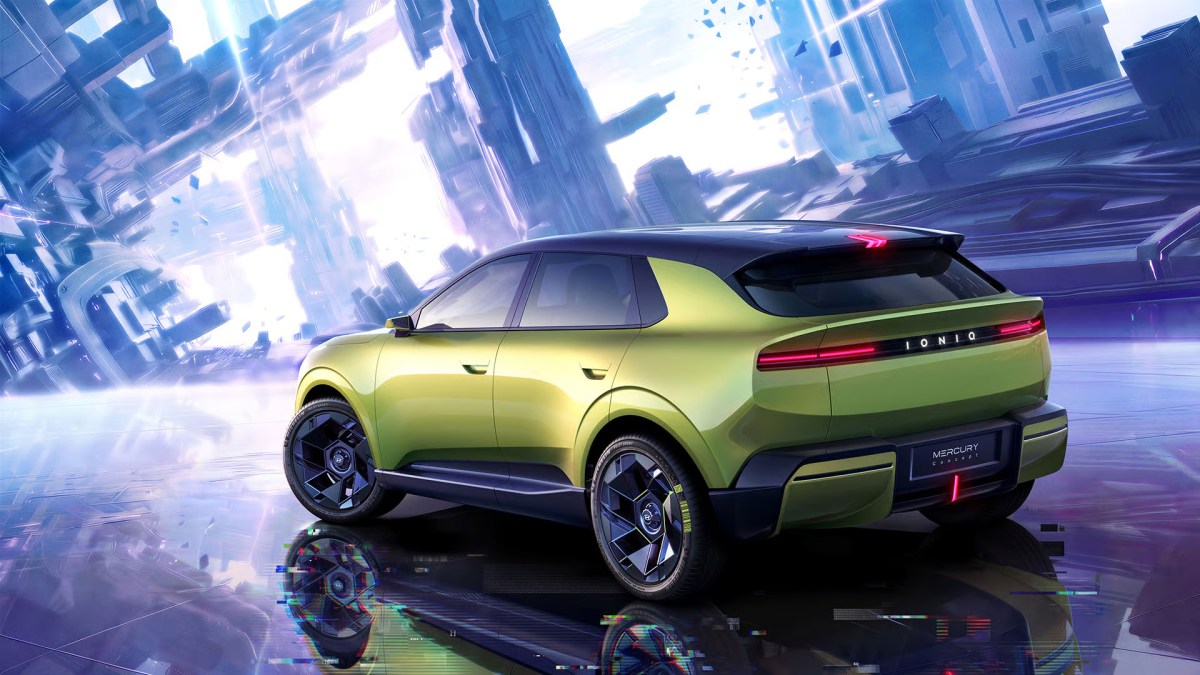
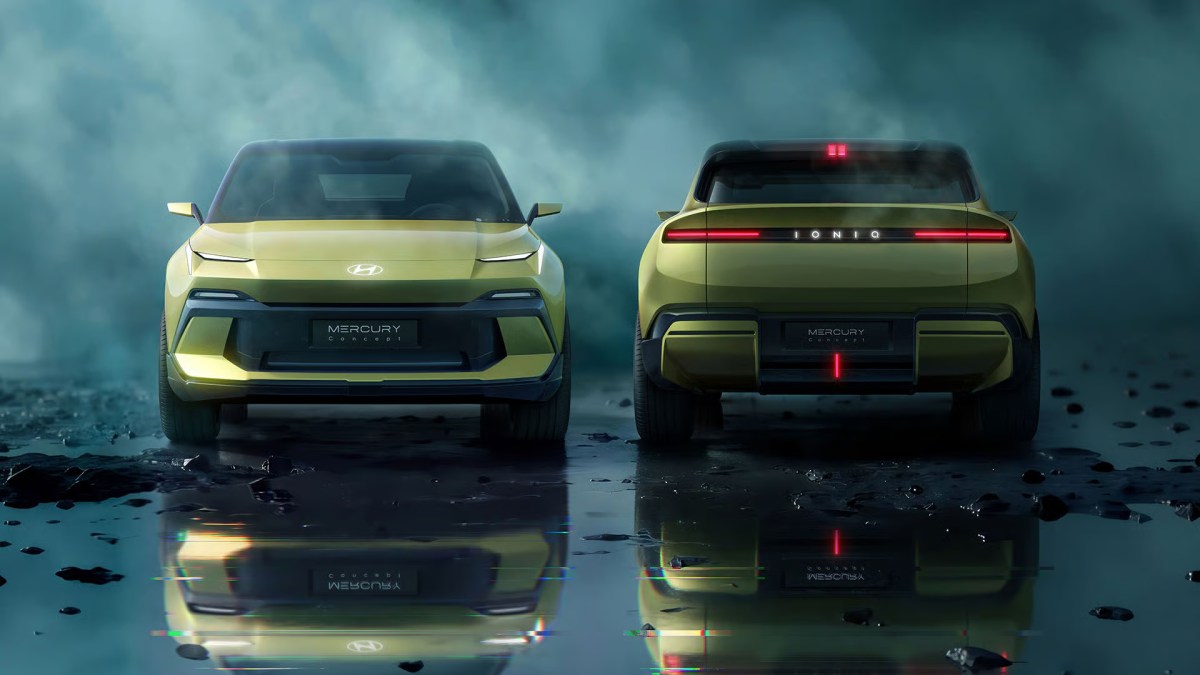
There’s a lot going on here - the aggressive shark-nose profile and slim lighting, an illuminated H badge. It sits low for a crossover. The steeply raked windscreen and integrated rear spoiler create a compact, sporty silhouette that avoids the jellybean aesthetic plaguing so many modern small crossovers. Hyundai claims the low-slung shape is inspired by Mercury's swift orbit around the sun. I’m not sure about that but it looks sharp.
Hyundai has been losing its market share in China for a very long time. First they missed the initial tidal wave of domestic electric adoption, then they tried selling electric versions of old ICE models, which buyers mostly ignored. In the end, Hyundai had to close a relatively new Beijing-Hyundai factory and sold it to Changan. The Mercury Concept shows the company is finally done trying to force Western market tastes onto Chinese buyers. The brand is building a localized IONIQ lineup from the ground up, starting with the larger IONIQ V that went on sale earlier this fall. The Mercury, or IONIQ M, will be the smaller, but ever-important volume driver.
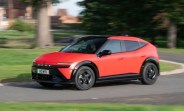
Hyundai is hiding the dimensions of the Mercury, but we know it will go head-to-head with the BYD Yuan Up (169.7 inches long and weighs 3,395 lb). Then you have the Geely-built Volvo EX30. The Volvo is shorter than the BYD at 166.7 inches but way heavier at 4,034 lb. The production IONIQ M needs to land between BYD's aggressive volume pricing and the Swedish brand's premium punch if it wants to survive.
Price dictates everything in this segment. The larger IONIQ V starts at RMB 109,900, which converts to roughly $16,500. That leaves plenty of runway for the IONIQ M to drop in right around the RMB 99,000 mark. That is an asking price of $15,000 for a premium-badged electric crossover built from scratch in China.
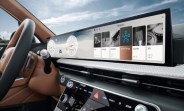
Western buyers would empty dealerships for a car like that. Hyundai is handing the Mercury's digital brain over to local tech giants, relying on Zhuoyu - formerly DJI Automotive - for its L2++ advanced driver assistance suite. The smart cockpit runs on ByteDance's Doubao AI model. This means native integration of local applications, aggressive lane-keep programming uniquely suited for chaotic commutes, and voice assistants that understand regional dialects.
Hyundai is keeping the battery and motor specs locked away, but there’s already enough info out in the open. The IONIQ V uses CATL lithium iron phosphate packs. The base V gets a 53.5 kWh battery paired with a 188 hp rear motor, returning a claimed 336 miles of range on the optimistic CLTC cycle. The larger 66.8 kWh option pushes 225 hp and stretches the range to 404 miles. The smaller, lighter IONIQ M will likely borrow the base 53.5 kWh setup, providing plenty of performance for urban driving.
But the real ace up Hyundai's sleeve is a variant of the production IONIQ M with swappable batteries. Hyundai partnered with CATL to use the Choco-Swap infrastructure network. CATL already has over 2,500 swapping stations across China. They plan to expand that footprint to 6,000 stations covering 297 cities by the time the IONIQ M officially launches in 2027. You literally drive in, the machinery unbolts the empty pack from under the car, hoists a fresh one into place, and sends you back onto the road in 99 seconds - apparently. You don't have to ever plug in.
CATL introduced its new 30# Choco-Swap battery architecture with a 100 kWh pack capable of delivering over 435 miles of driving range. If you do decide to use a traditional plug, the cells can accept 249 miles of added range in just 10 minutes. The system monitors insulation status, thermal runaway risks, and voltage differences fifty-three separate times while the car is driving, and runs another thirteen in-depth health checks during the 99-second swap. CATL even provides lifetime warranty and free repairs as long as the battery stays in the network. Putting the IONIQ M into this infrastructure gives buyers total immunity from battery degradation anxiety.
This rapid infrastructure scaling makes European and American charging networks look amateur. CATL wants drivers in urban areas to always be within a ten-minute drive of a swap station, alongside lining 11 north-south and nine east-west highway corridors with these automated bays. When the IONIQ M hits this ecosystem, it will (in theory) have the cross-country usability of a long-range luxury cruiser. You just swap and go.
Hyundai's broader China roadmap shows a complete brand reinvention. Following the Mercury's transition to the IONIQ M, they plan to launch an extended-range electric version of the IONIQ V in 2027. An EREV uses a small combustion engine as a generator, eliminating range anxiety for rural buyers. A production model of the larger Earth Concept SUV arrives in 2028. Two more new energy vehicles will join the stable in 2029.


From the team behind
GSMArena.com
Facebook
Twitter
Instagram
RSS
Settings
Log in I forgot my password Sign up