CATL’s new 100 kWh “Chocolate” battery changes the EV math
Ninety-nine seconds isn't enough time to buy coffee at a motorway services, let alone drink it. Yet that is exactly how long CATL says it takes to physically remove and replace the new 100 kWh 30# Chocolate (yes - that’s the name of it, following the 25# NMC model) battery - all while you sit and wait inside the car.
You pull up with a 5% battery left - the anxiety usually peaks right here. But swapping the battery changes the dynamic of the road trip and the psychology of vehicle ownership. You don't baby the throttle to preserve cell degradation. You don't obsess over deep discharging it on a freezing morning. The 30# block promises 435 miles of CLTC range - which translates to more realistic 342 miles in the real world - and you don't even own it. It’s an idea started by NIO, and it’s a big shift in how we view energy storage. The battery isn't a permanent, depreciating organ anymore. It's just a highly engineered AA battery you cycle out before it degrades.
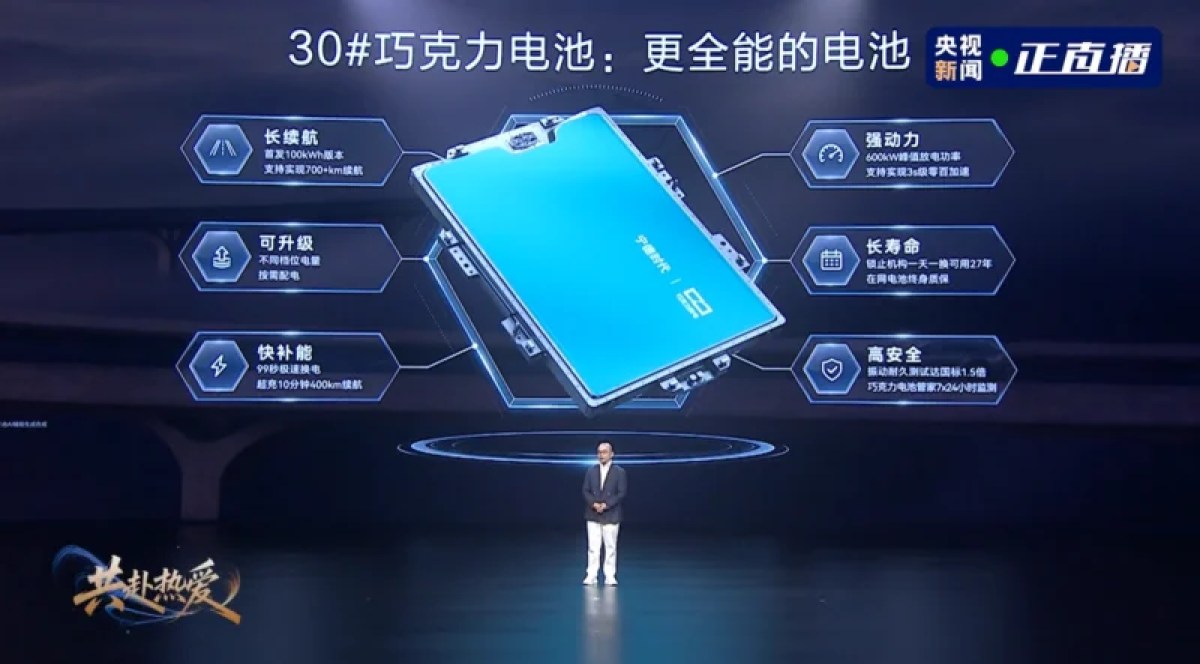
Peak discharge sits at 600 kW. That apparently translates to sub-three-second sprints to 62 mph for any EV - sure, we can theorize here, but I think what CATL is trying to say here is that - given the rest of the EV components can deliver the output - this battery can deliver the juice.
We need some context here - the Porsche Taycan is a good example. The older model had a discharge rating of 560 kW, but the new model can sustain discharge of 736 kW for up to 10 seconds. Maserati GranTurismo Folgore is a great example of what happens when battery tech doesn’t keep up with the motors - the three electric motors here are rated at 900 kW in total, but the battery can only deliver 610 kW peak and 560 kW continuous. So CATL is saying that the new battery can support 600 kW output for a short burst, but most likely about 450 kW continuous - which in a medium-sized EV should result in that sub-three-second sprint.
But that’s violently fast for a family vehicle. A supercar acceleration from a platform that you don't actually own the most expensive part of. You just rent the violence. You can pin the throttle as often as you want without worrying about cooking the lithium cells. Renting removes the sympathy we tend to have for high-performance EVs.
What cars can we get with that size of a battery? The BMW iX3 - it is 195 inches long, 77.4 inches wide, and 66.7 inches tall, tipping the scales at 5,534 lb, and it uses every bit of its 564 lb-ft of torque to hustle that weight. Or take the Mercedes-Benz EQE SUV, sitting at 191.5 inches long with a massive 119.3 inches wheelbase and weighing 5,644 lb. If you buy one for $111,300, you are married to that battery forever. If a module fails a week out of warranty, you are looking at a repair bill that can write off the entire car. CATL's (and NIO’s) approach means a vehicle of similar size could theoretically run a lighter 42 kWh pack for daily city commuting, dropping hundreds of kilos of dead weight, and only snap in the dense 100 kWh block when heading cross-country.
The whole battery-swapping ecosystem started much smaller. CATL rolled out the initial 20# and 25# blocks in late 2024. They had capacities spanning 42 kWh to 70 kWh. The 56 kWh LFP version quickly became the default workhorse across their entire network. But 56 kWh feels small when some Chinese plug-in hybrids get 87 kWh batteries just to stay relevant in today's market.
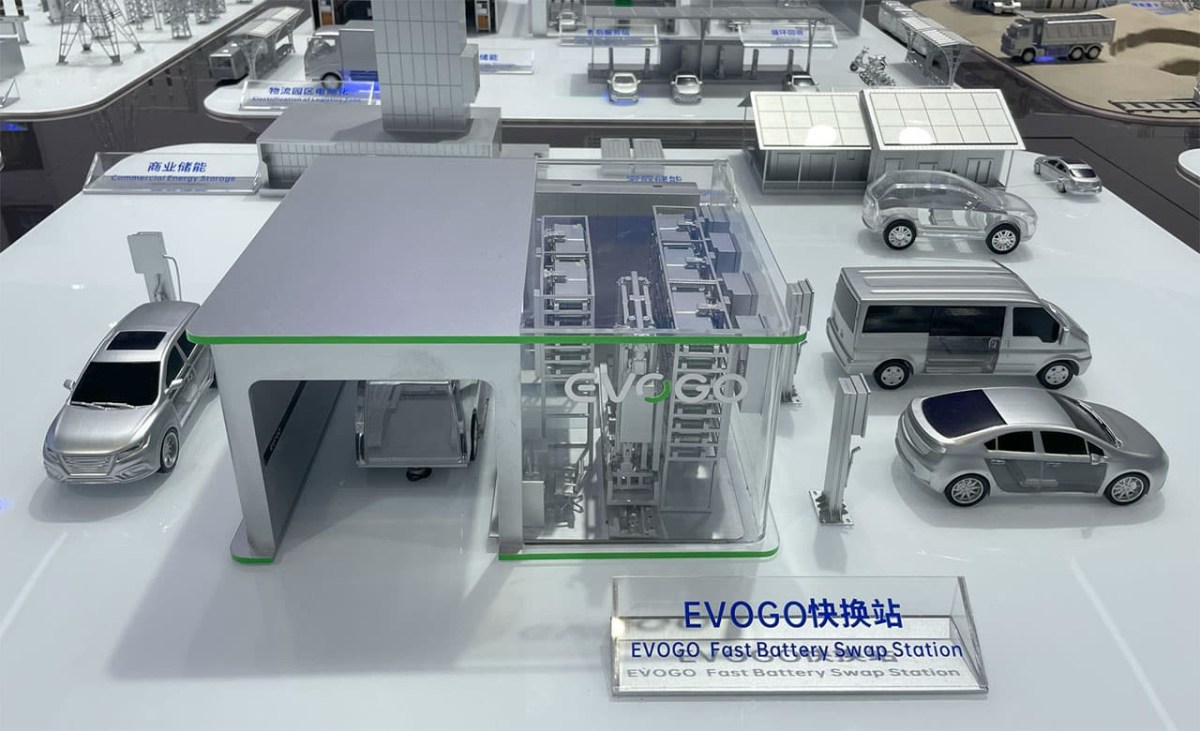
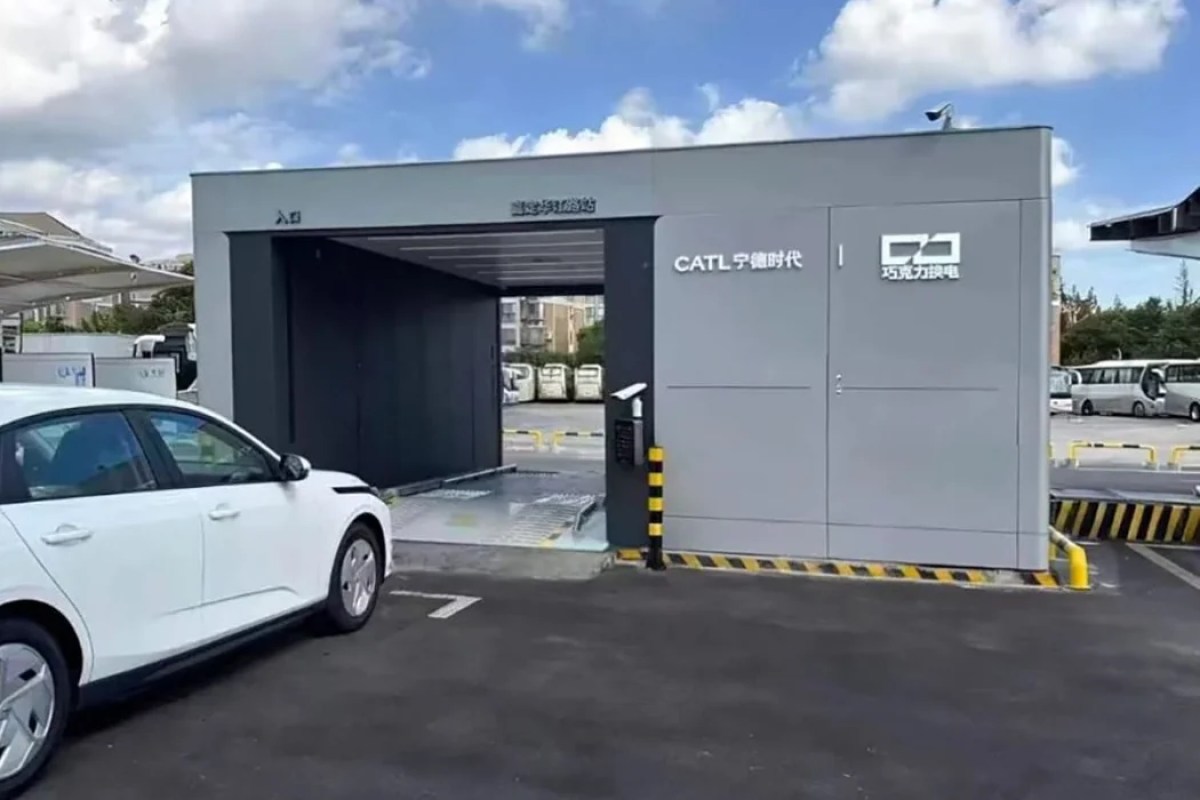
It’s clear that CATL is after NIO. CATL operates over 2,500 swapping stations in China right now - they want 30,000. By the end of 2027, they plan to have 6,000 passenger-specific stations online. NIO built the battery swapping religion from the ground up, but CATL has the manufacturing scale to blanket the country in automated stations faster than anyone else. They are turning the battery into a utility that any manufacturer can license. That’s one way to make sure everyone buys their batteries.
The whole system is a bit smarter than just rocking up and hoping there's a fresh 100 kWh pack sitting on a shelf. The car talks directly to the Chocolate Battery Butler (that is its name - no joke) cloud system. It predicts your arrival time and schedules the battery you need. CATL is automating the swap entirely so you don't have to input any commands on a touchscreen - you pull up, and the car, together with that swap station, takes care of everything - in under two minutes.
Legacy automakers aren’t too happy about this since they rely on battery specifications as the main premium differentiator. BMW and Mercedes sell you a bigger battery for a serious markup. If everyone uses the same CATL battery, how does a premium brand justify its asking price? The commoditization of the battery pack strips away a major profit center for many brands. Some are already in - BAIC signed on, integrating the swaps into their Arcfox Beta T1. Hyundai is caving too - they announced a B-segment Ioniq SUV for the Chinese market in 2027 that will use these swappable blocks. When a Korean giant admits fixed batteries aren't the answer, it’s the mother of all earthquakes.
And what if you don't want to swap?. If you find yourself out in the countryside miles from a station, the 30# block accepts DC fast charging. CATL claims you can add 249 miles of range in 10 minutes flat. That, of course, depends on the voltage of the plug, but the capability is baked right into the battery. The mechanical locking mechanism itself is rated for daily physical swaps and has a theoretical lifespan of 27 years. They even throw in a lifetime warranty for the batteries circulating in the network. The system is even designed to accept future sodium-ion or liquid-solid cells without changing the physical dimensions. You buy the car today. In five years, you swap in a solid-state battery that wasn't even invented when your EV rolled off the production line.
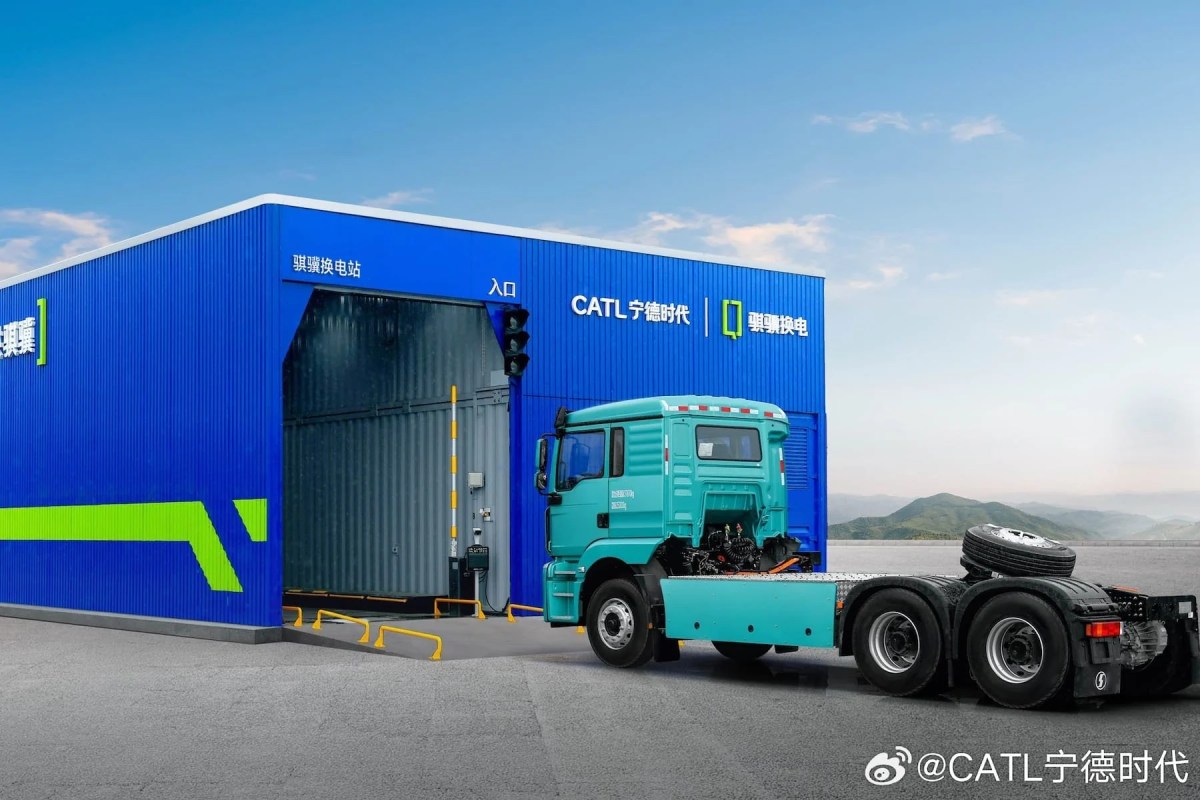
CATL dominates the Chinese heavy truck swapping market, and they are eyeing up Europe. They recently spun up a joint venture called Swaptopus with British energy firm Octopus Energy. The name is ridiculous - but the threat to European charging networks is absolutely serious. I've spent hours debating charging curves and thermal management with engineers. CATL just bypassed the entire argument. You pull up, wait 99 seconds, and drive away.
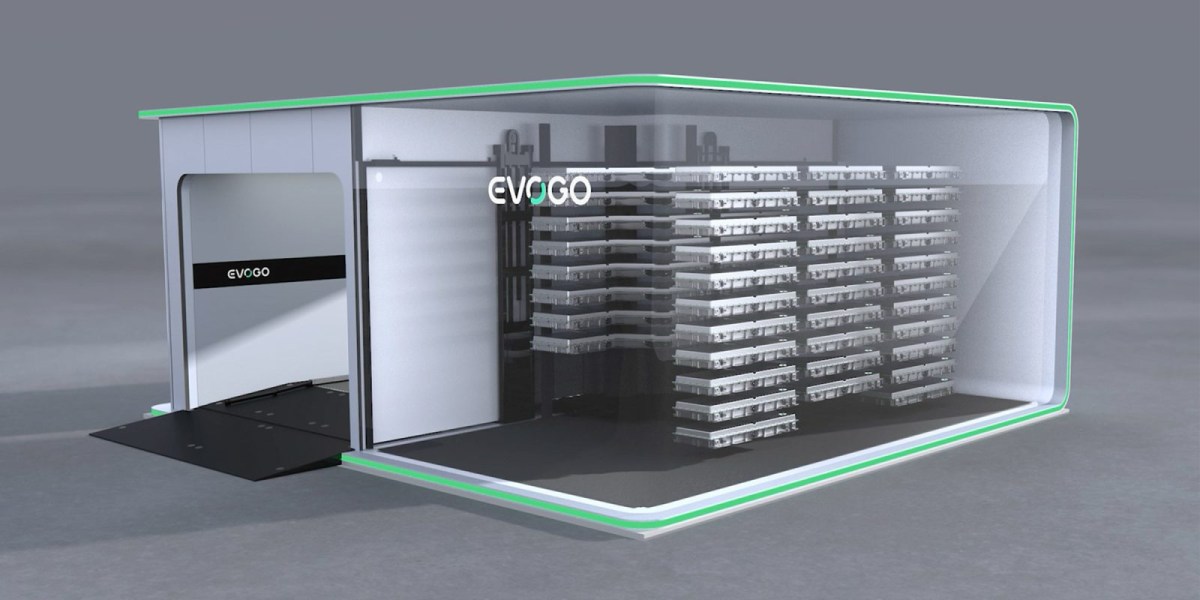
As always - the tech is great. I argued about swapping batteries being the right choice from the day NIO came up with that idea. The real issue is the infrastructure buildup. The swap stations (in theory) are easier to put up, they have around 20 batteries being charged constantly and ready for deployment, and they take much less space than equivalent 20 charging bays.
But they need industrial grid connections that can support well over 1 MW draw - and that is a huge problem in Europe. China was preparing for it for decades, but Europe is nowhere near being capable of rolling out country-wide battery swap stations. NIO is trying hard, but so far it has managed to open 62 stations (most in Germany and Norway) since it began the rollout back in 2022. The tech is really great, but for it to work, Europe would have to rebuild its entire grid - it will happen, it has to happen, but it won’t be ready tomorrow.





From the team behind
GSMArena.com
Facebook
Twitter
Instagram
RSS
Settings
Log in I forgot my password Sign up