Li Auto i9 is a living room that knows how to sprint
Building a battery-electric vehicle that weighs close to three metric tons, stretches longer than a London townhouse, and can carve up corners like a hot hatchback has become the norm. Manufacturers desperately try to convince us that a living room on wheels can also be a Nürburgring weapon. Sometimes, a car shows up that leans so hard into this madness, that you cannot help but smile.
Li Auto's latest idea is a rolling manifesto of excess that is hellbent on reshaping how families consume miles on the highway. Unveiled to a market saturated with crossovers trying to look like spaceships, the Li i9 steps forward as the brand's new pure-electric flagship. It starts at RMB 369,800 (equivalent to $54,400), right at the very end of the premium segment where buyers expect everything short of a personal butler hiding in the glovebox.
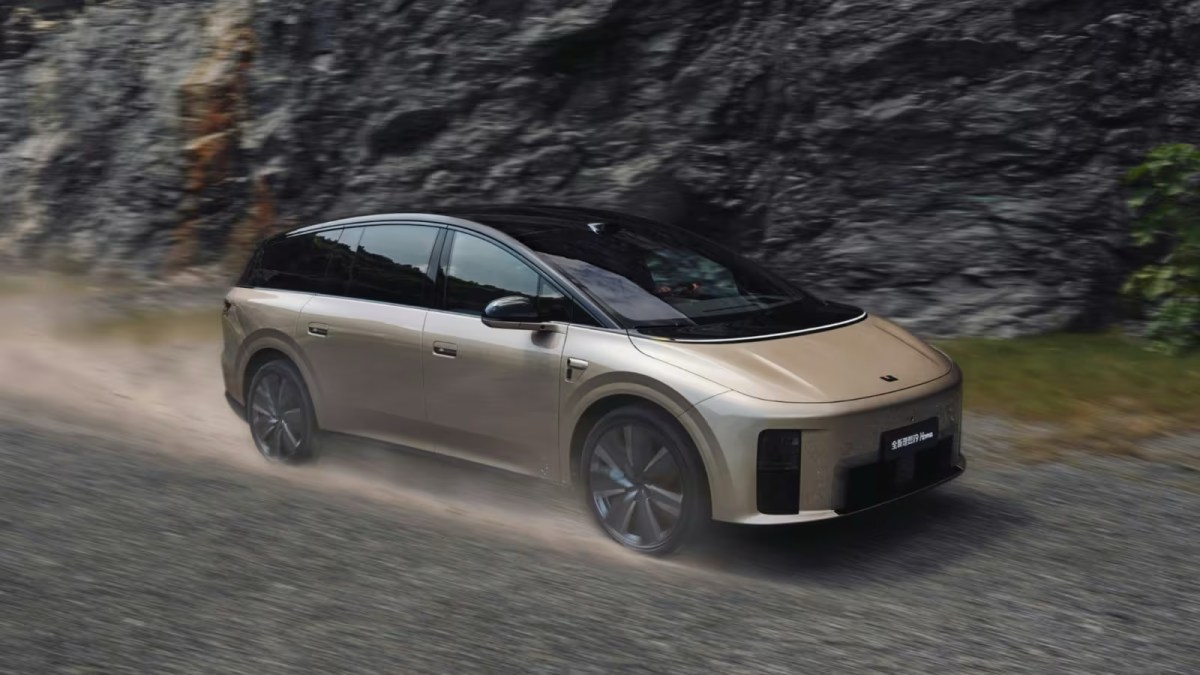
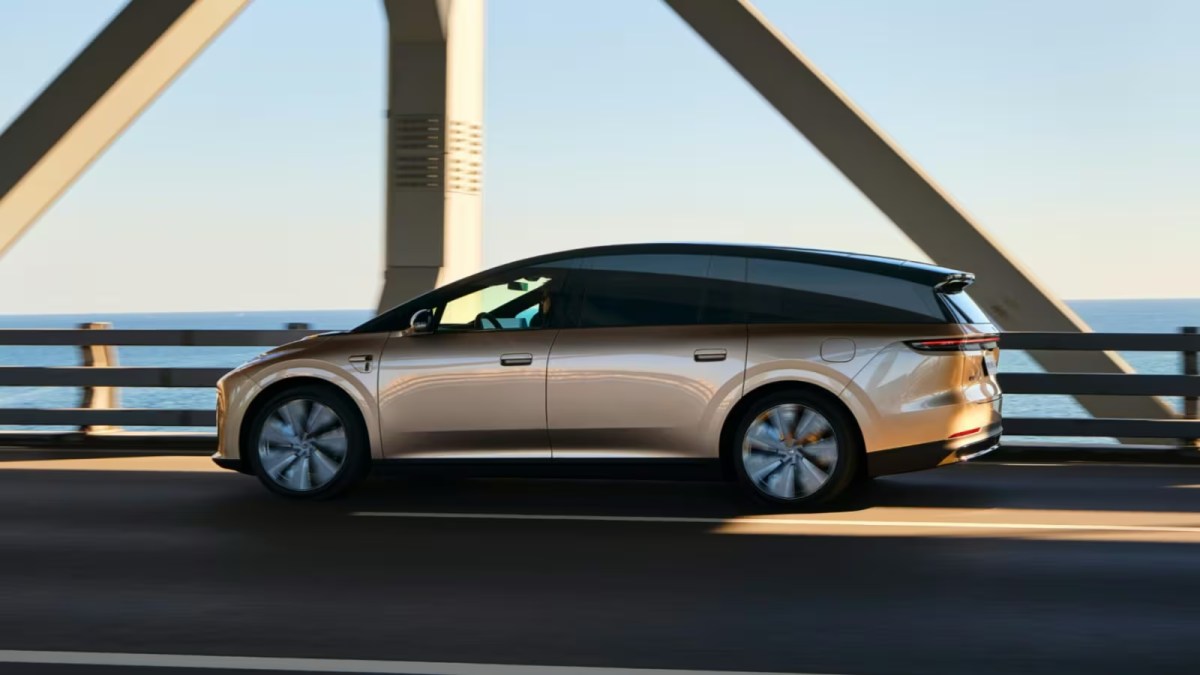
The exterior is vast, but the aerodynamic sorcery is far more impressive than the size of this giant EV. Ignore the design chatter, and you find a shape slippery enough to slice through a headwind with a drag coefficient of just 0.215 - the most aerodynamic mass-produced SUV on earth.
Though - is it an SUV really? That teardrop shape avoids the awkward, bloated proportions that we usually see in oversized haulers - the i9 is wearing its huge footprint with surprising poise. The 205.7 inches-long i9 spans 77.6 inches in width, and stands 69 inches tall, and it sits on a sprawling wheelbase of 124.7 inches.
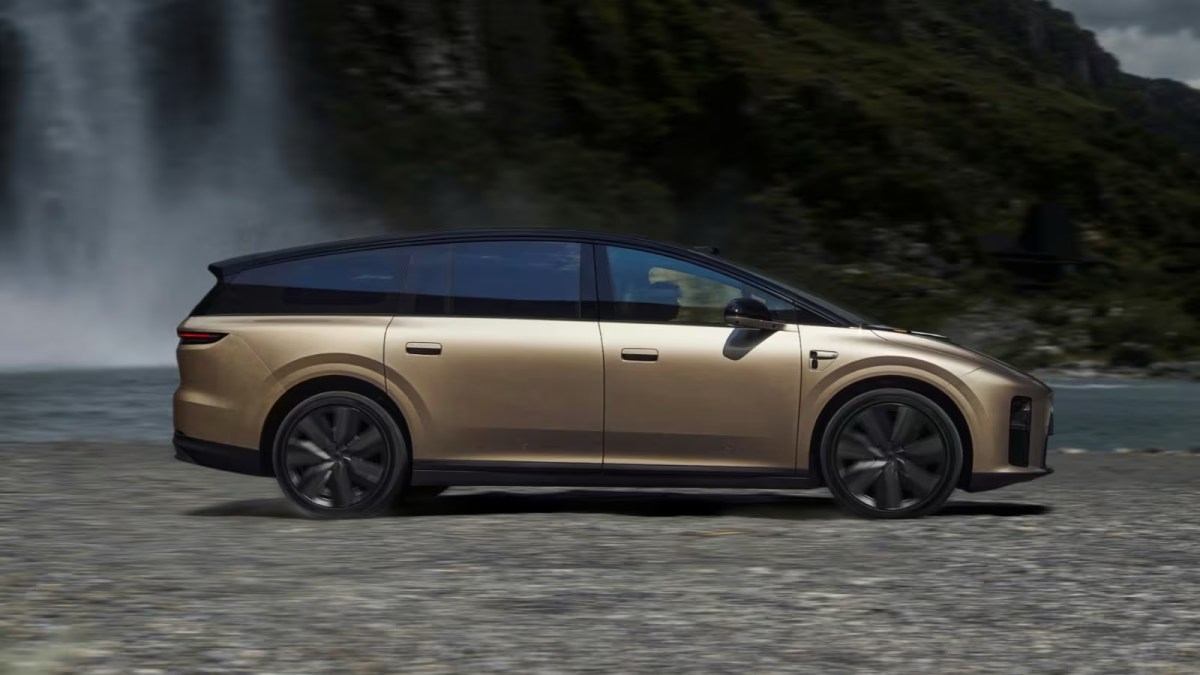
It literally eclipses its smaller sibling, the Li i8, by 5.5 inches in overall length and 4.65 inches between the axles. When parked next to the class rivals like the Tesla Model X or the Nio ES8, the i9 out-stretches both in axle-to-axle acreage, offering a cabin layout that makes traditional three-row SUVs feel like budget airlines.
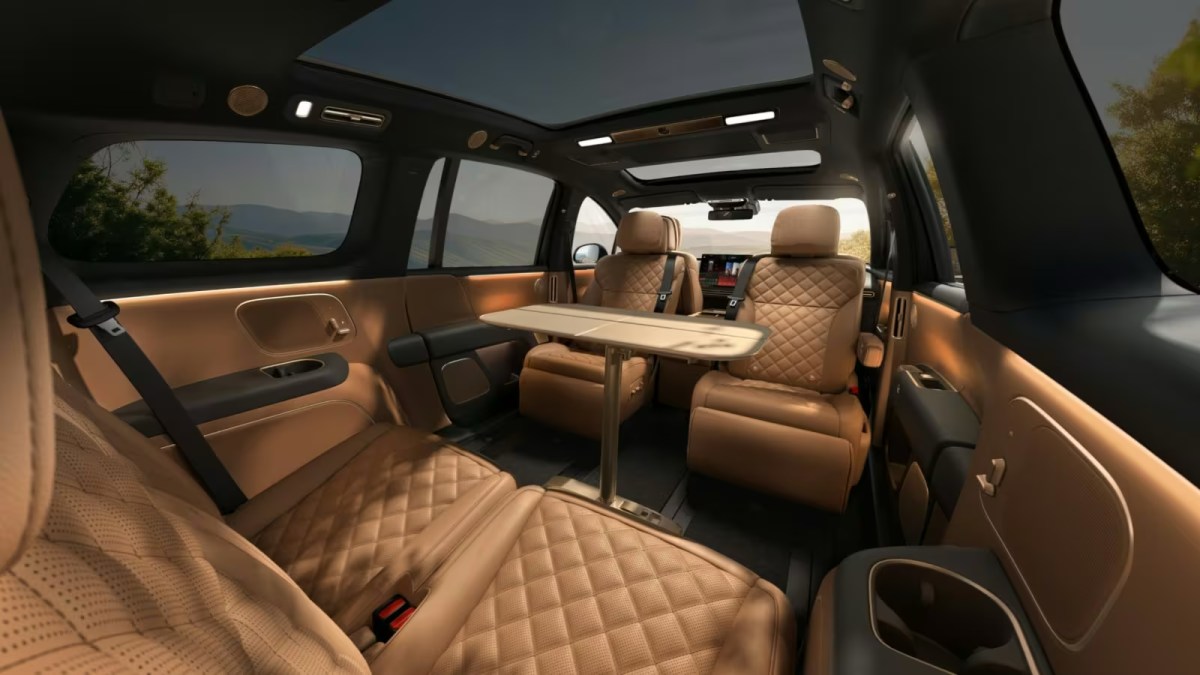
Climb up into the cabin, and the definition of luxury gets completely rewritten. Li Auto packed this interior with four zero-gravity seats that can be deployed simultaneously, with power-swiveling second-row thrones that spin around to create a mobile boardroom or a cozy family lounge. Drop a table between them, and you have a workspace, a cinema, or a quiet retreat from the gridlock outside.
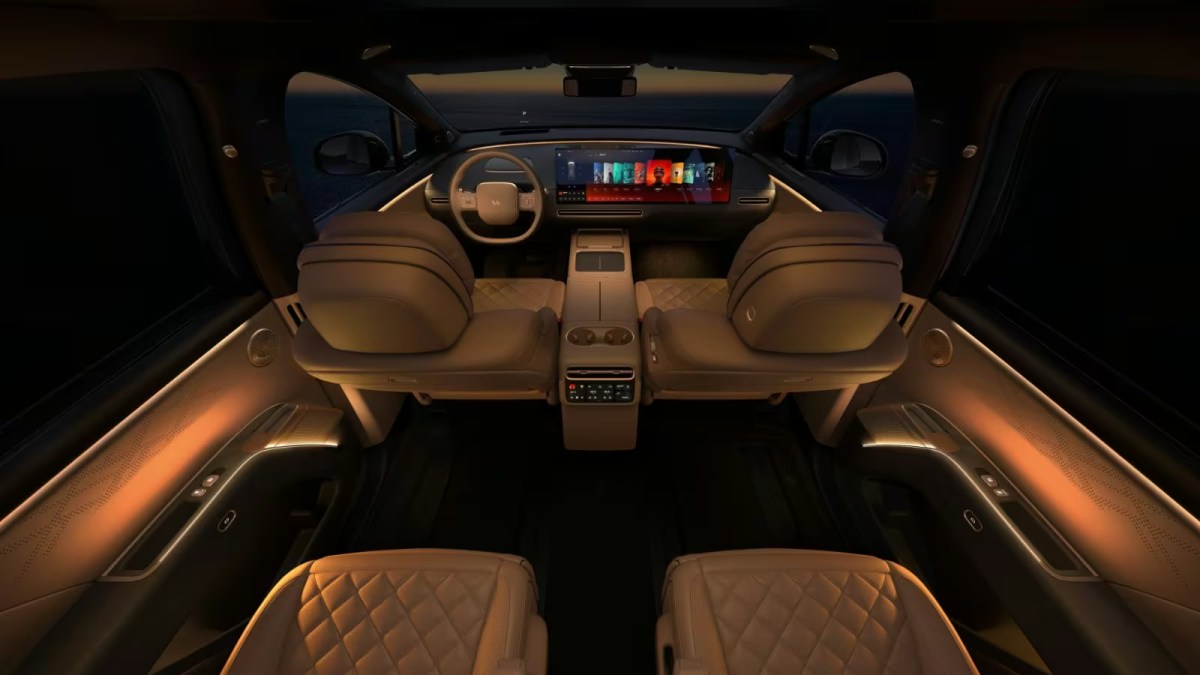
There is, of course, a built-in 0.35 ft³ electric refrigerator handling hot and cold duties, complemented by a 9.3.6-channel home theatre sound system packing twenty-nine speakers and pushing a peak output of 4,960 W. It is a palace on wheels that treats long road trips as a five-star hotel stay.
As you'd expect, a vehicle designed to ferry pampered passengers needs serious muscle to get moving. A dual-motor all-wheel-drive architecture (front asynchronous induction motor plus a rear permanent magnet synchronous unit) spits out a combined output of 400 kW (536 hp) and 487 lb-ft of torque. Mash the throttle, and it defies physics by catapulting from zero to 62 mph in 4.9 seconds - that's enough thrust to turn highway on-ramps into roller-coaster drops.
Keeping all that power fed means a serious energy store, and the i9 delivers with a heavy-duty 101 kWh ternary lithium battery pack. First production units are using CATL cells, but the company plans to transition to its own in-house developed batteries manufactured by Sunwoda down the road.
Even more impressive than the raw capacity is the charging - thanks to its 5C ultra-fast system, plugging into a high-capacity DC charger can pump 311 miles of range back into the battery in about ten minutes. Total CLTC range sits at 438 miles, meaning the real-world number sits much closer to 311 miles - still impressive for a vehicle this size.
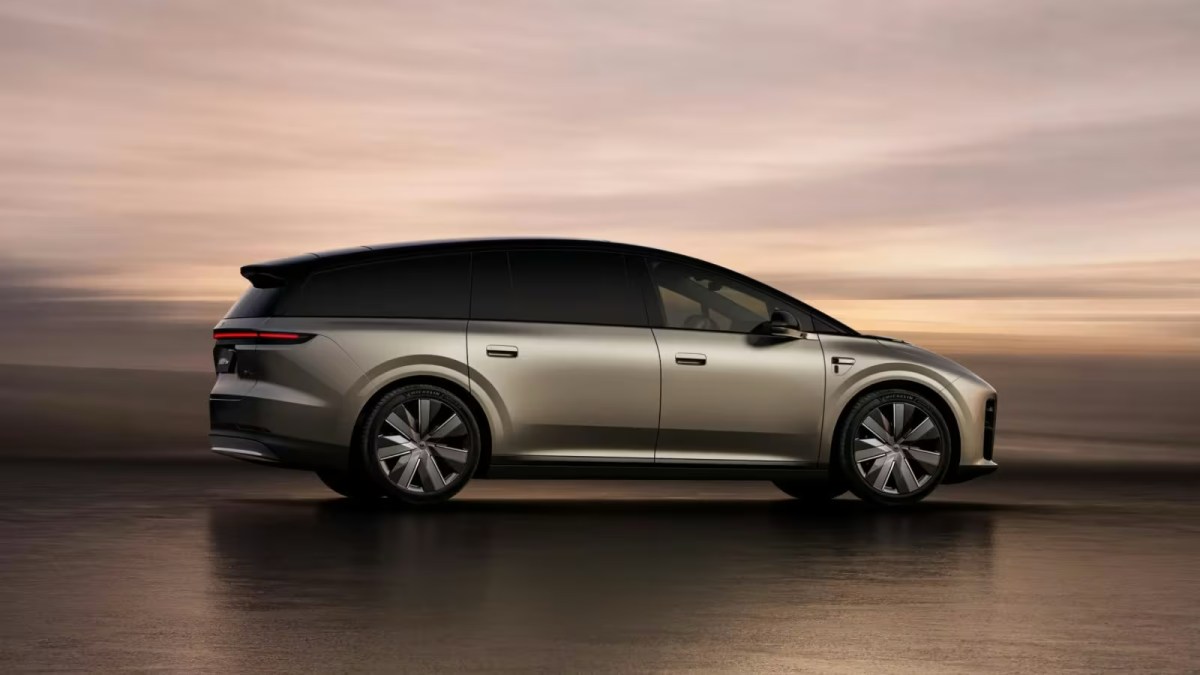
Standard kit includes dual-chamber, dual-valve air suspension that flattens out road scars, paired with advanced steer-by-wire and rear-wheel steering systems. This mechanical wizardry shrinks the vehicle's footprint in tight spaces, giving it a tight turning diameter of 34.8 ft.
On the technology and safety front, the i9 is a supercomputer on four wheels. The cabin centers around a 29-inch 6K panoramic front screen and a sliding 21-inch 4K rear entertainment display, all powered by a snappy Qualcomm Snapdragon chip. Driver assistance is handled by an in-house developed Mach M100 chip, and buyers willing to tick the box for the optional embodied intelligence package get dual M100 chips pushing 1280 TOPS, four LiDAR sensors and the latest Mach VLA model.
The i9 arrives not a minute too soon for Li Auto. The company had a bumpy financial year, watching its vehicle profit margins slide to 9.4% in the second quarter compared to 19.4% only twelve months ago (plus a reported net loss of RMB 1.7 billion). Management prays that expanding into pure battery-electric vehicles like the i9 will refresh their sales mix and shore up profitability. Fortunately, the showroom momentum is already showing signs of life, with August deliveries bouncing back to 37,679 vehicles - a solid 32.07% year-on-year increase that ends a three-month slump.
Is the Chinese market ready to embrace a high-end, pure-electric family cruiser of this magnitude, and at this price point? It's interesting to see the EREV pioneer move into BEVs, just as Xiaomi jumps across into EREV space. It takes engineering courage (or madness) to build a vehicle that is a high-speed bullet train, a luxury lounge, and a nimble urban runabout all at once. It's a cliché, but China truly is a different world altogether.

From the team behind
GSMArena.com
Facebook
Twitter
Instagram
RSS
Settings
Log in I forgot my password Sign up