Inside Tesla's redacted record crash surge
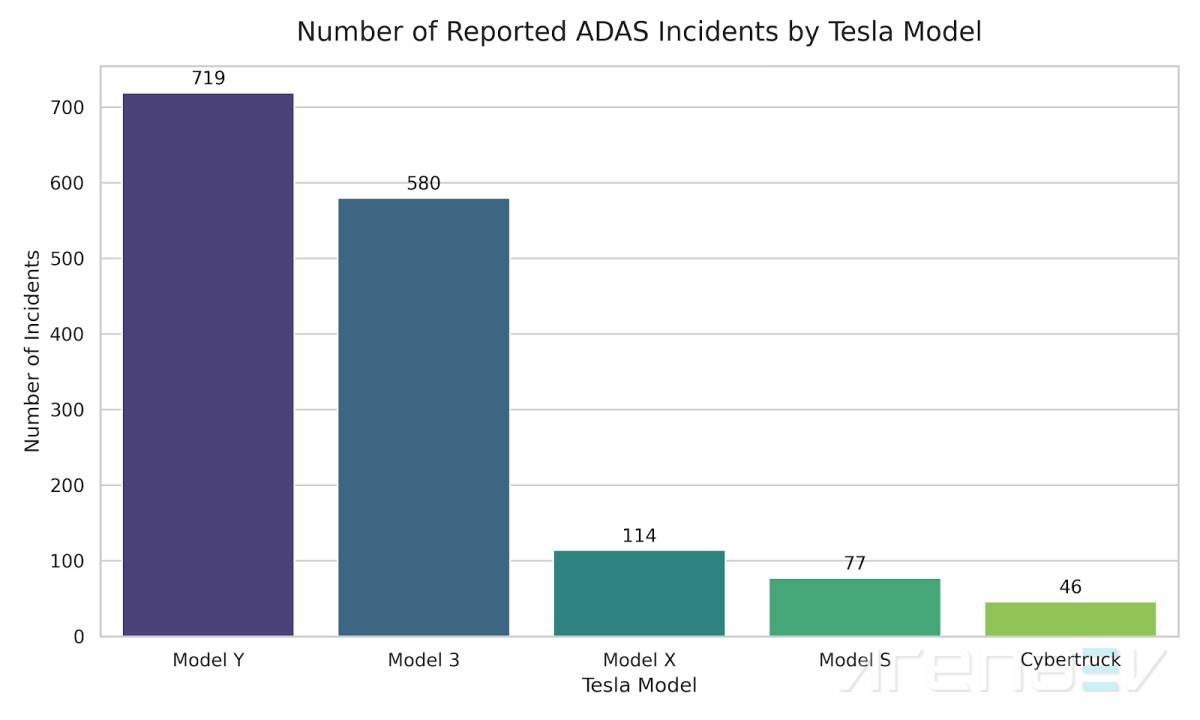
I spent the last couple of days dissecting the news of a Tesla Robotaxi ending its journey abruptly against a tree stump, but it turns out the real story isn't a lonely not-so-autonomous prototype bending metal in a quiet cul-de-sac. The true jaw-dropper is buried within fresh data mapping out the behavior of ordinary, customer-owned Teslas operating in the wild.
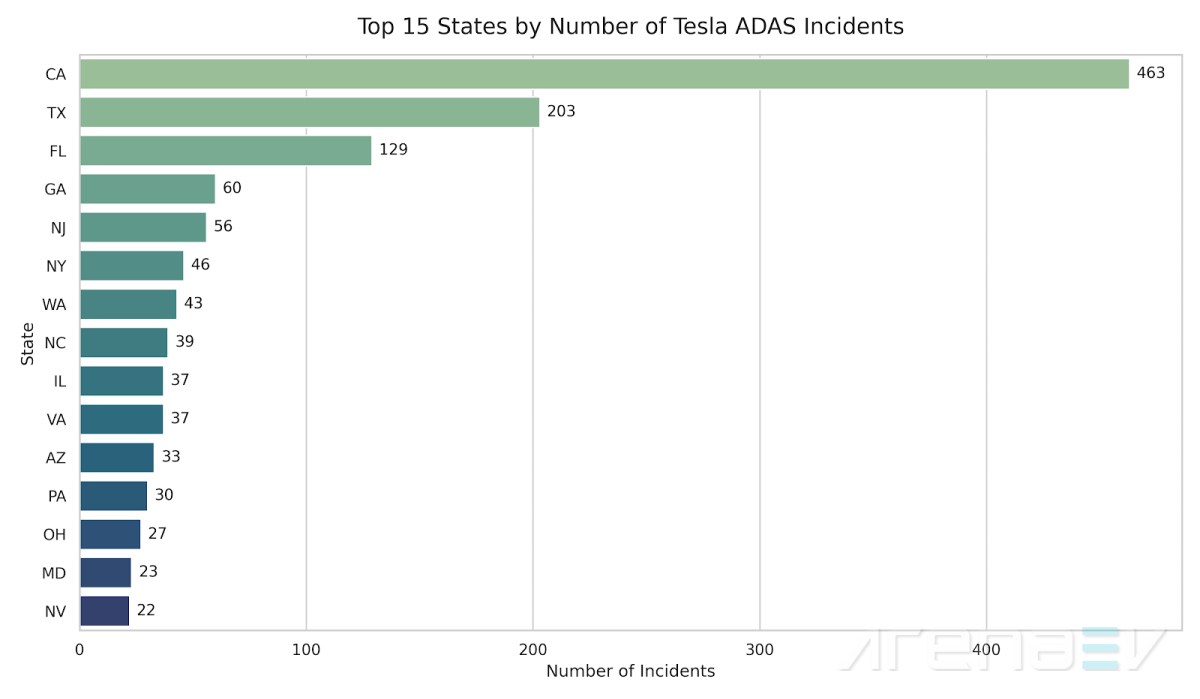
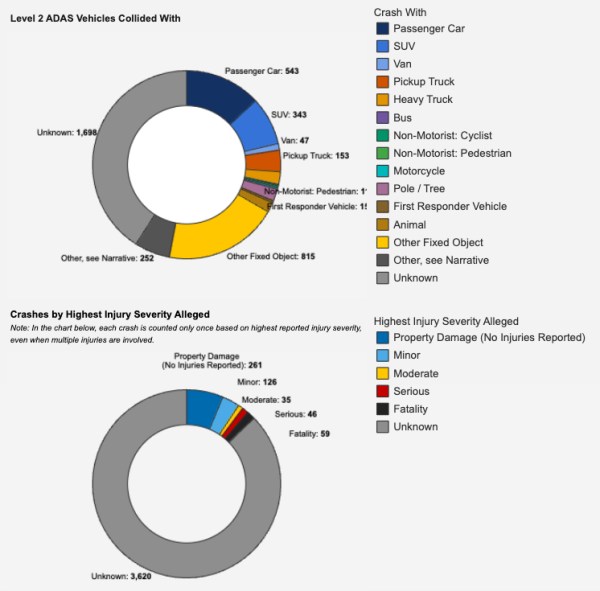
According to the latest filings submitted to the National Highway Traffic Safety Administration, Tesla logged 207 crashes involving its semi-autonomous driver-assist in a single month. That month was May 2026, and it is the darkest peak in the company's crash-reporting history. So far.
 NHTSA all-time data
To put that 207 figure into perspective, it helps to look backward. That single month of bent sheet metal and deployed nylon was actually larger than the entire crash count Tesla logged for the whole twelve months of 2021, which sat at 157. We are not talking about simple car-park dings or scratched alloy wheels here.
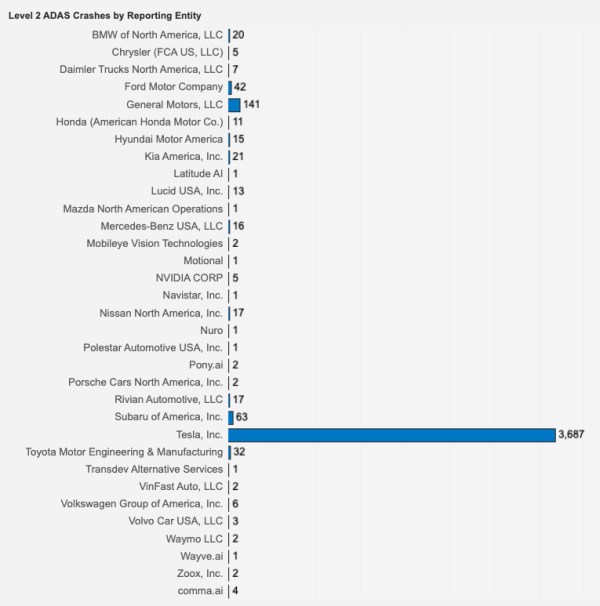
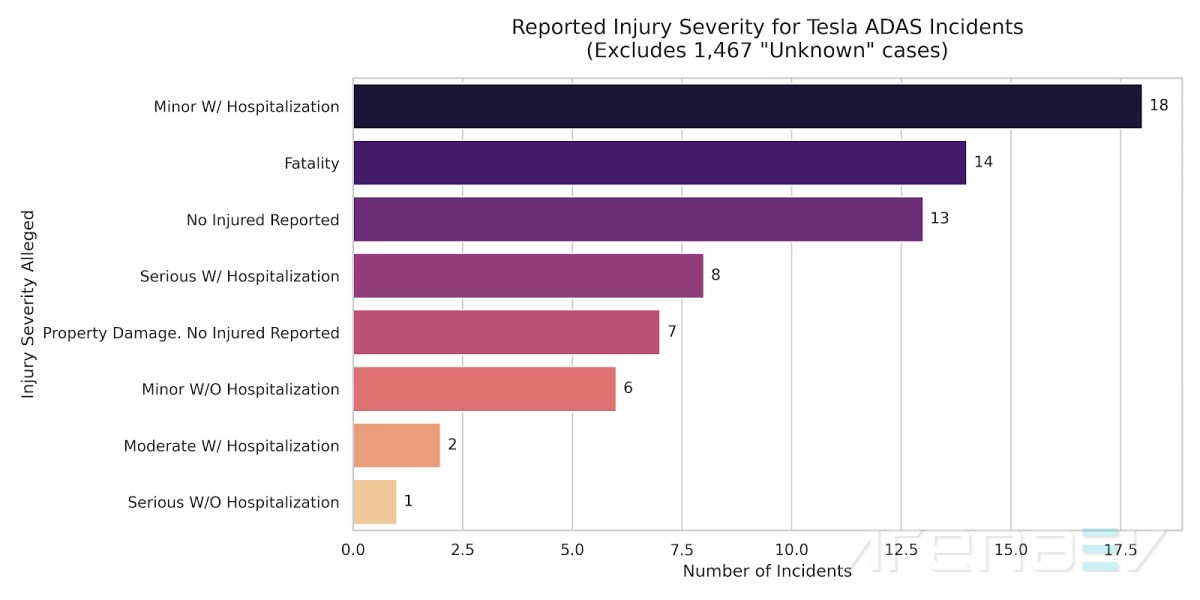
These figures come directly from the federal government's Standing General Order, a strict mandate that forces carmakers to report any incident where an advanced driver-assistance system was running within 30 seconds of an impact serious enough to trigger airbags, the car needed a tow truck after, there were injuries, or worse, a pedestrian or cyclist was involved.
 June 16, 2025 - June 15, 2026
The moment these numbers hit the public eye, the defensive corporate machinery went into high gear. The counter-argument from the tech faithful is the "denominator problem" - the perfectly logical reason that crash counts will naturally climb as more vehicles hit the road and more owners activate the FSD. Tesla has sold millions of cars, meaning there are more EVs with Autopilot and Full Self-Driving engaged than ever before. If the total miles driven explodes exponentially, you could theoretically see an escalating pile of crashes even if the software is getting safer per mile.
But the maddening truth is that nobody outside the glass walls of Austin can actually verify that math. Tesla still refuses to publish independently auditable, transparent data regarding the total miles its customers accumulate under automated supervision, and its glossy quarterly safety reports have been routinely shredded by its own internal AI trainers as deeply misleading.
 June 16, 2025 - June 15, 2026
Instead of opening the books, the company pulls down a heavy iron curtain. Tesla has completely redacted the narrative descriptions on an astonishing 99.9% of its 3,763 crash reports stretching back to 2019, citing confidential business information. It even blacks out the exact software versions involved, leaving the public unable to separate standard highway Autopilot mishaps from urban FSD blunders.
This total blackout stands in almost comical contrast to how the rest of the automotive world behaves. When you look at legacy manufacturers reporting under the exact same federal guidelines, heavy hitters like GM, Ford, Honda, and Toyota choose to redact essentially zero percent of their incident narratives. They show their homework, even when it is messy. Tesla treats it like state secrets, shrugging off the scrutiny with a defensive legal posture, arguing to regulators that it would suffer financial harm if the public learned what happened right before the sensors went dark.
 June 16, 2025 - June 15, 2026
And there's another thing - look at the actual trajectory of the data, and the accelerating curve becomes impossible to ignore. The year-over-year climb is literally turning the dial to 11. The year 2025 was the very first time Tesla breached the four-figure mark, racking up 1,043 driver-assist crashes. The first six months of 2026 alone have already racked up 826 incidents.
Looking at the identical January-through-June window across recent years reveals an undeniable escalation: the counts move from 180 to 261, flatline briefly at 269, jump to 476, and finally rocket to 826. That is a brutal 73% to 75% jump year-over-year. What makes the issue even worse is a chronic reporting lag - the record-breaking May figure of 207 is only a conservative floor that will be revised upward.
 NHTSA all-time data
But what we are looking at here isn't actually a failure of code - it's rather a catastrophic human failure born from the dangerous phenomenon of complacency. As driver-assist systems get more competent at handling routine highway cruises, human beings naturally check out. Drivers game the steering wheel monitors, scroll through their phones, and treat a legally restricted Level 2 assist system as if it were a robotaxi.
If the technology was truly ready to let the electric ponies go wild without a human holding the reins, Tesla would be expanding its commercial driverless fleets rather than shifting the entire legal and physical burden onto the person behind the wheel. My guess is that until the marketing matches the real-world capability, the numbers will carry on telling an unredacted story of their own.


Reader comments
- Anonymous
- mVE
Why not normalize numbers by miles driven? or at least number of cars on the road? I'm openly curious how often Toyota or GM self-driving is actually used.
- nonrev
- TgG
Tesla was always doomed to fail full L4/L5 level self drive because Musk has always insisted that camera/video was sufficient. Its not and will never be. Bottom line is that video only sensor input is not sufficient for safe and effective and relia...
- volume control
- kmq
Excellent post. I submit that persistent nagging and mandated nannies can be crushing to one's daily mental makeup.

From the team behind
GSMArena.com
Facebook
Twitter
Instagram
RSS
Settings
Log in I forgot my password Sign up