Afeela 1 hands-on review at the CES Las Vegas
Afeela is the new brand founded by Sony and Honda that aims to offer premium electric mobility and combine Honda’s vehicle manufacturing prowess with Sony’s technological know-how. On paper it sounds like a wonderful idea and not that it's about to go on sale we'll finally see how well it works in real life.
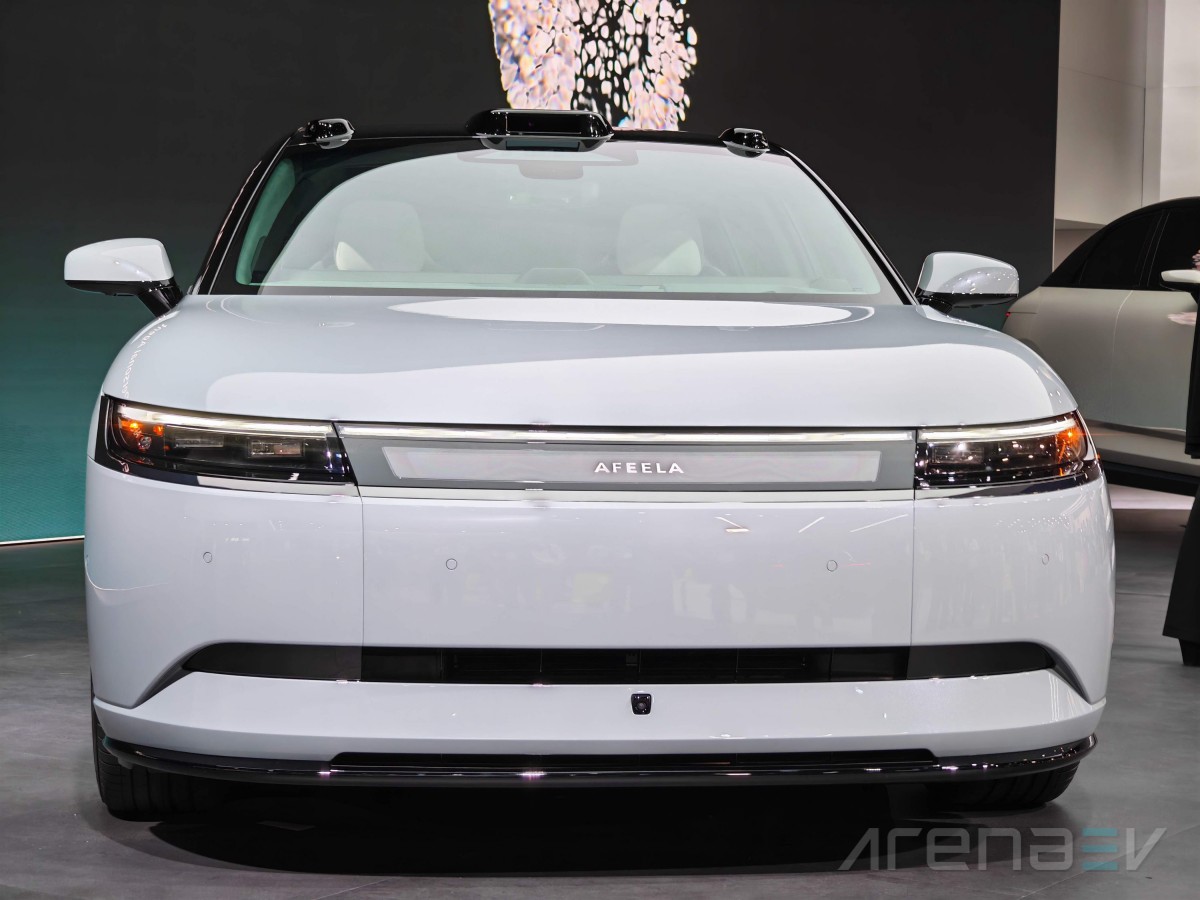
The Afeela 1 will launch in two trim levels, the Afeela 1 Origin and the Afeela 1 Signature, priced at $89,900 and $102,900 respectively. Both versions include a three-year subscription to a range of connected in-car features, highlighted by an AI-powered personal assistant and advanced semi-automated driver assistance systems, underscoring the Afeela 1’s focus on technology-led premium mobility.
The Afeela 1 uses a dual motor AWD system, with each motor producing 241 horsepower for brisk acceleration. A 91 kWh lithium-ion battery delivers an estimated EPA range of up to 300 miles. Charging is handled via a NACS style port, with DC fast charging supported at speeds of up to 150 kilowatts.
Exterior
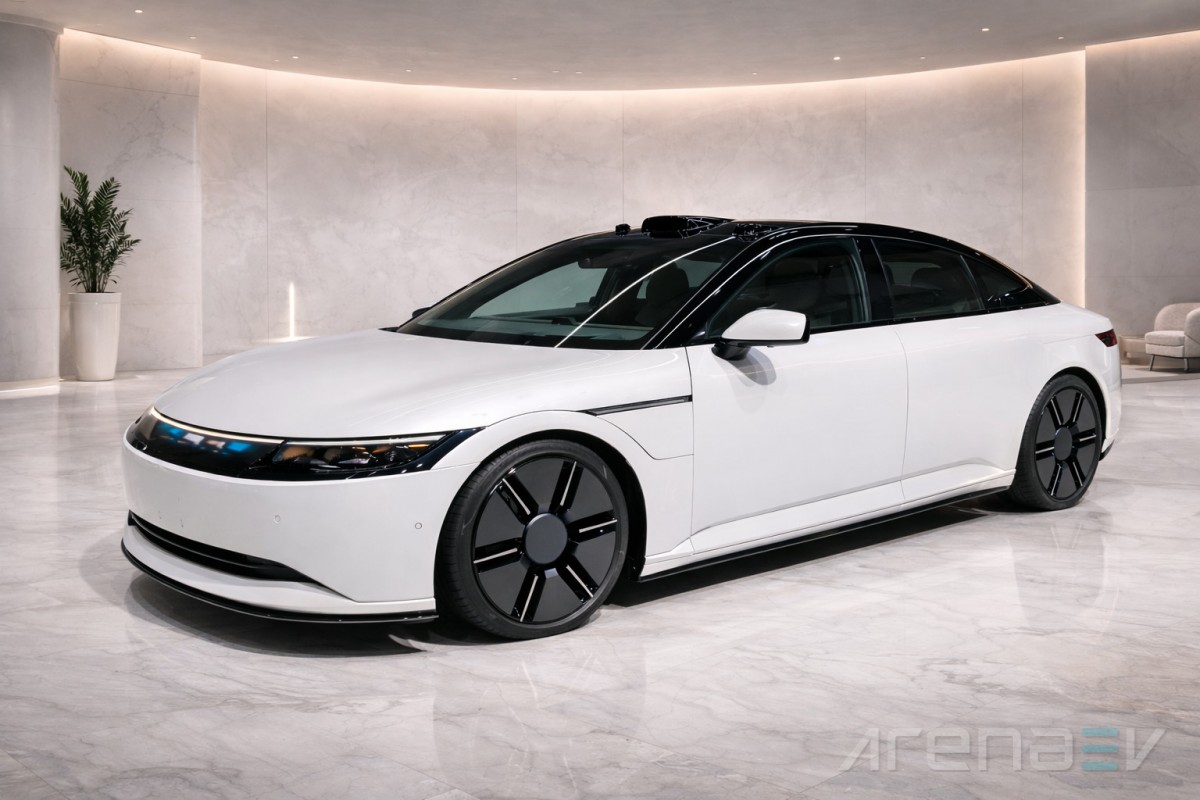
Visually, the Afeela 1 struggles to project the sense of occasion its price tag implies. Rather than signaling luxury, the exterior design leans toward anonymity, offering few distinguishing elements to linger on after a first glance. Its smooth, flat surfaces and restrained lines create an aesthetic that fades into the background, leaving the vehicle easy to overlook moments after it rolls past.
In place of a traditional front badge, the Afeela 1 features a full-width display embedded between the headlights. Capable of projecting everything from cheerful emojis to journey information, images, or even birthday messages, the screen is fully customizable. We are not sure of its practicality and it's bound to increase repair costs in case of an accident, but it undeniably draws the eye and adds a layer of flair to an otherwise restrained exterior.
Above the windshield, a prominent LiDAR module sits in clear view, accompanied by two smaller sensors at either end. Their job is to monitor the road and enable autonomous driving. For now, due to legislative reasons, driver supervision is mandatory and drivers will likely receive the fully autonomous driving upgrades later on as an update. Overall, there are 40 cameras and sensors throughout the exterior.
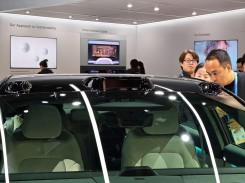
The front has some distinct features.
The minimalist approach continues with the absence of traditional door handles. Instead, a touch-sensitive surface between the door panel and the window releases the door automatically. Once activated, it opens fully, allowing occupants to enter without physically pulling a handle, a feature that was once reserved for the most exclusive luxury vehicles.
The wheels of the Afeela 1 may not be everybody’s favorite as they also look bland and don’t even have a logo in the center cap like virtually any other car has.
The charge port door is cleverly hidden behind the front wheel arches, continuing the minimalist theme.
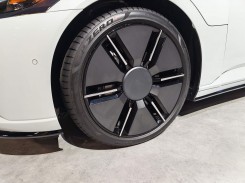
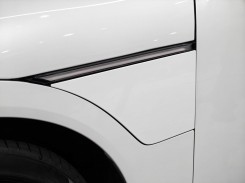
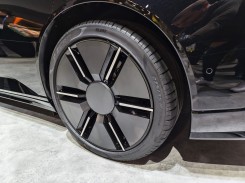
The side profile offers almost nothing noteworthy.
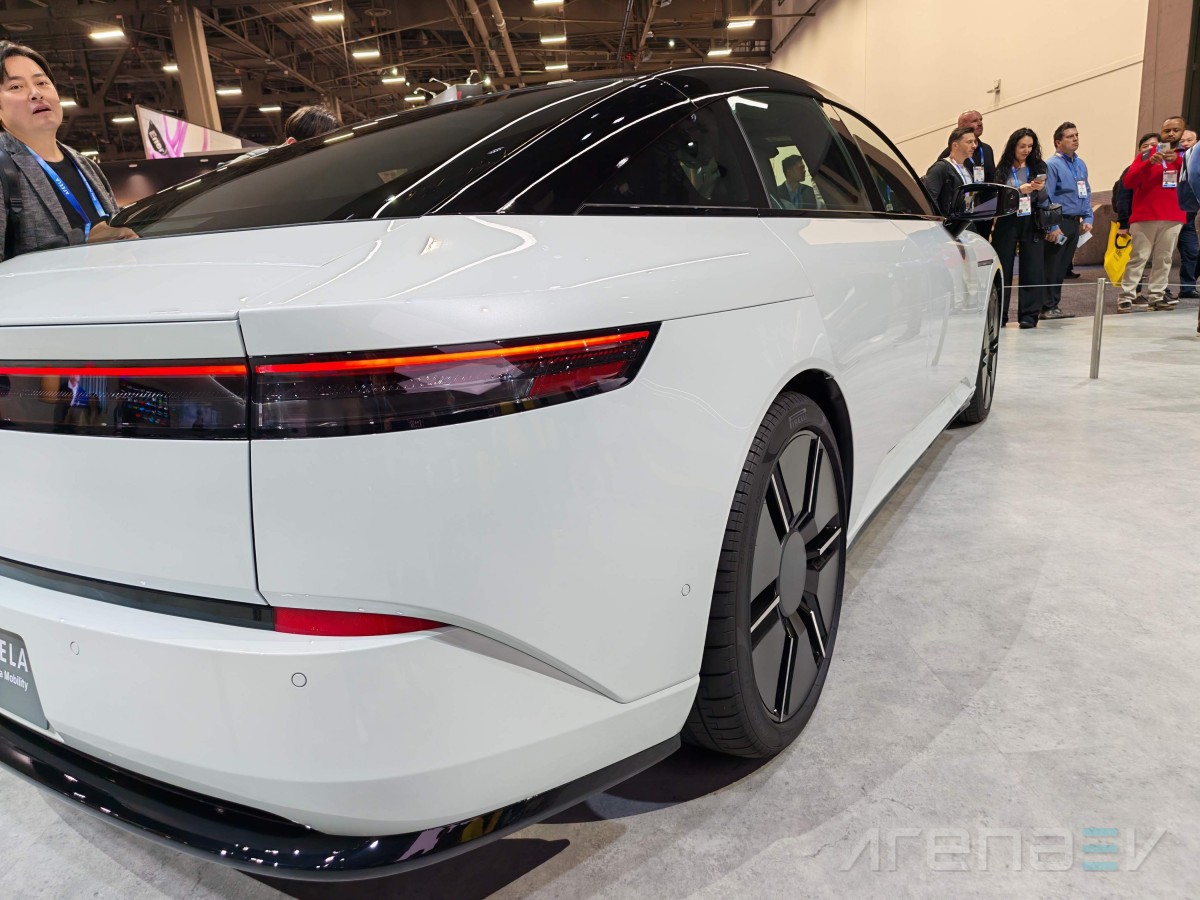
The rear of the Afeela 1 does little to alter the first impression. A thin full-width LED light bar stretches across the tail, with a discreet Afeela script at its center. As with the rest of the bodywork, the surfaces are smooth and efficiency driven, prioritizing aerodynamics over visual drama and offering few distinctive design elements or memorable forms.
There is, however, a subtle aerodynamic feature worth noting. An integrated rear spoiler remains neatly concealed when the car is stationary, blending into the body. After certain speeds, it deploys automatically to generate additional downforce, adding functionality to an otherwise restrained and deliberately understated rear-end design.
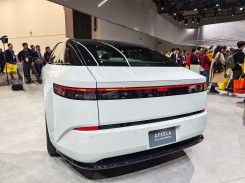
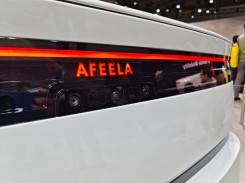
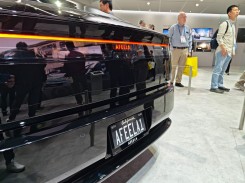
The tail is overly minimalist.
Interior
Once we open the doors of the Afeela 1 we notice they spent more time developing it than the exterior. It offers modern design with lots of screens but they’re well thought-out and placed within easy reach. The materials used inside are soft and feel great to touch, whereas the built quality seems nice and sturdy.
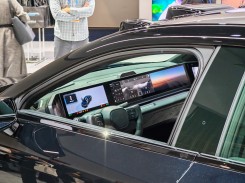
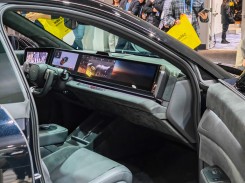
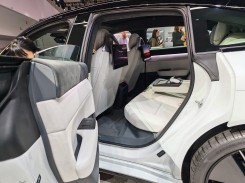
The inerior justifies the pricetag!
The most immediately striking element inside the cabin is the steering wheel, or rather the yoke controller popularized by Tesla. Lacking an upper rim entirely, it presents a radical departure from conventional design and one that is unlikely to prove intuitive in daily use. While the design clearly aims to improve forward visibility and create an unobstructed view of the digital displays, it also introduces practical challenges that could complicate low speed maneuvering and more involved driving situations.
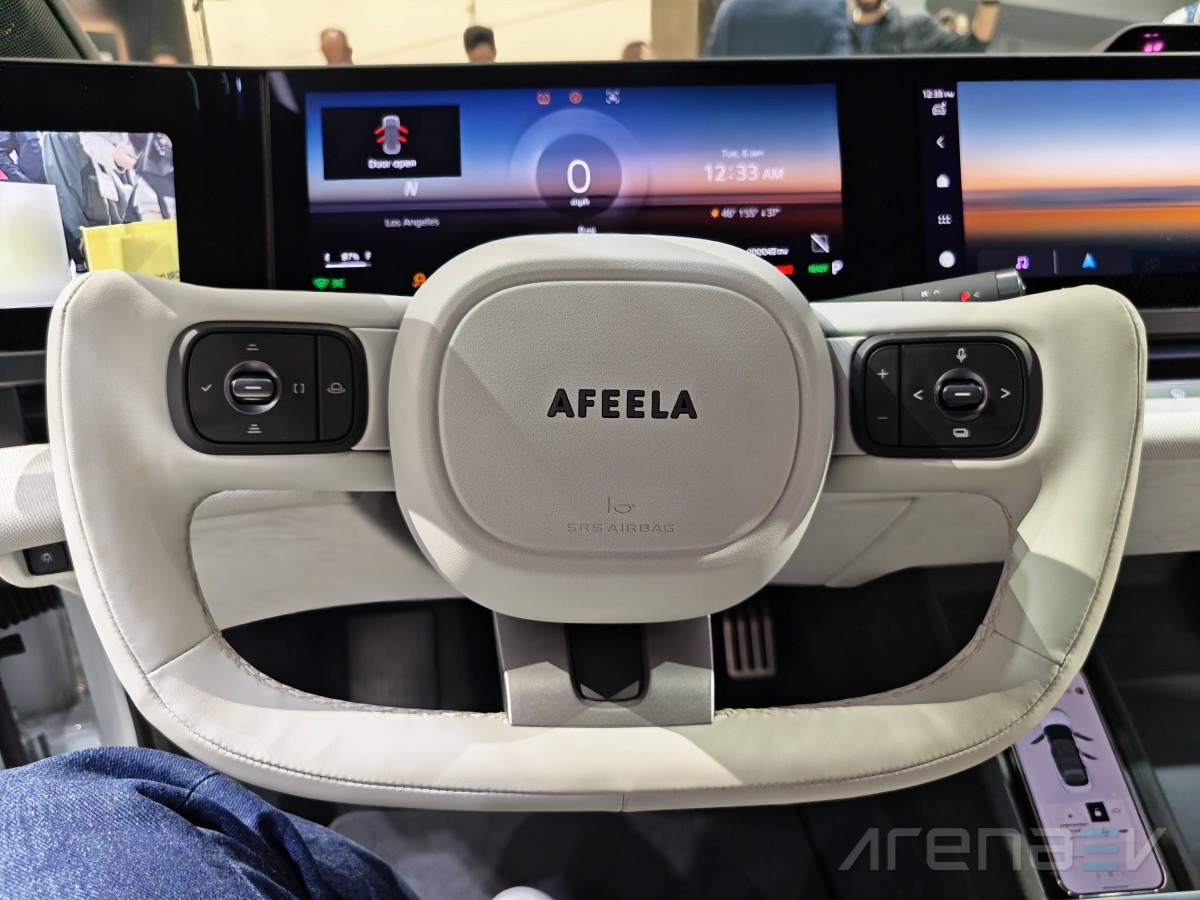
The Afeela 1 adds two displays at the ends of the dashboard, angled toward the driver to show footage from the wing mirror cameras. Unlike some rivals that ditch the traditional mirrors for aerodynamic reasons, this car keeps the glass mirrors and also provides the digital feed. The result is a redundant setup that leaves drivers to choose between digital and traditional reflections, raising questions about necessity rather than innovation.
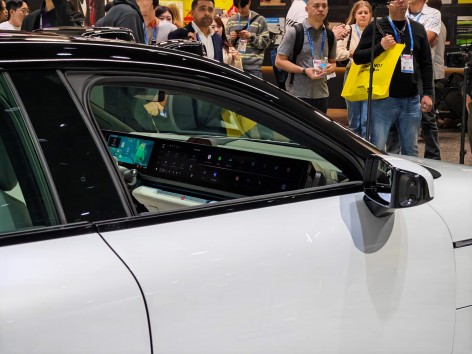
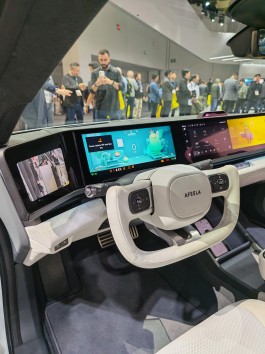
No excuses for blind spots with two mirror options per side.
We didn’t get enough time to play around with the infotainment, but from what we saw it responds quickly, has wonderful resolution and is styled with attention to detail in all the menus.
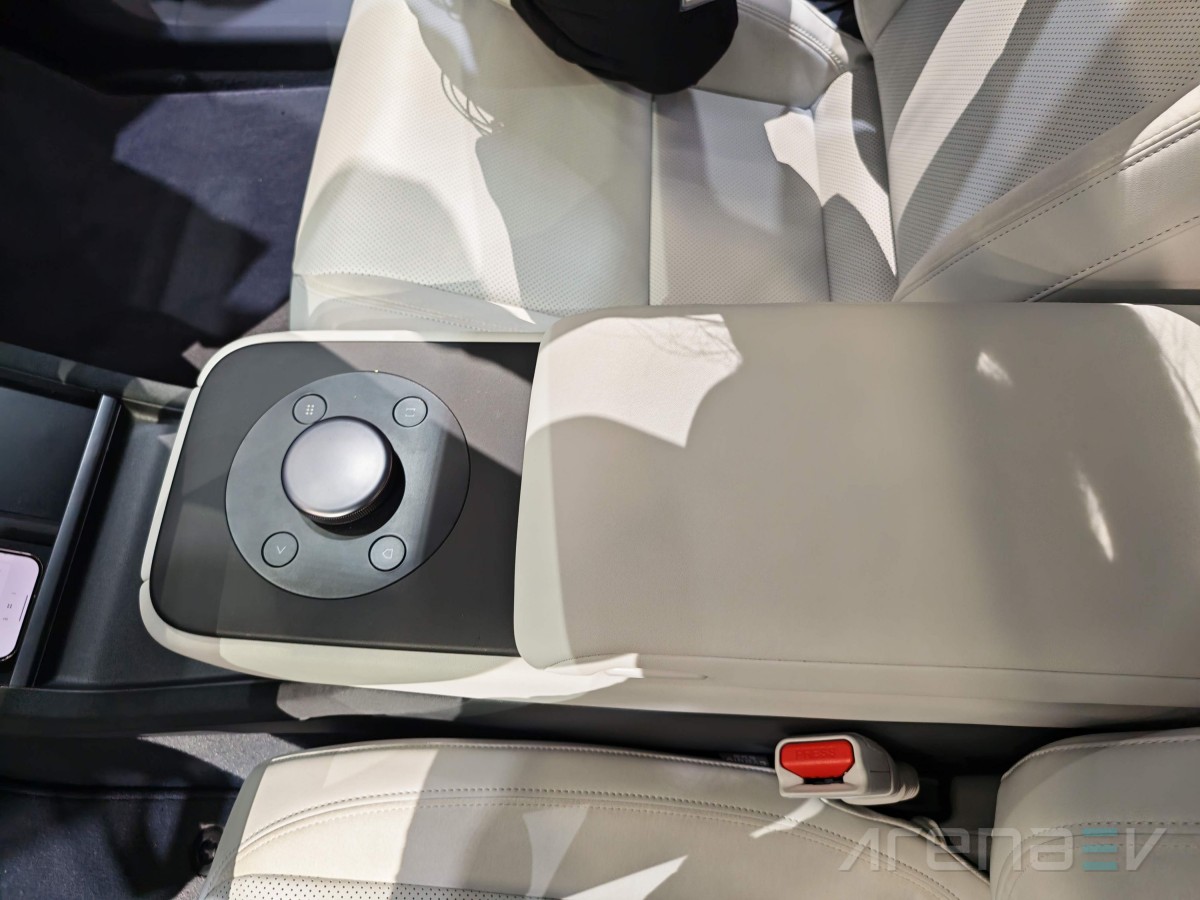
The center console is highly reminiscent of BMW models and their iDrive controller. A big wheel in the middle with a few buttons on the side controls the entire multimedia in case you don’t want to use the touchscreen. It is a wonderful concept we welcome in the Afeela and shame BMW for straying further away from it.
In the rear, the Afeela 1 most clearly reflects Sony’s influence on the project. The rear occupants sit comfortably with plenty of room to spare, allowing them to enjoy the rear entertainment units.
Dominating the experience are the large rear seat displays, which come with PlayStation 5 installed as standard. Passengers can play their favorite games while on the move using a PlayStation controller provided for the purpose. Curiously, however, there is no dedicated storage solution for the controller when it is not in use.
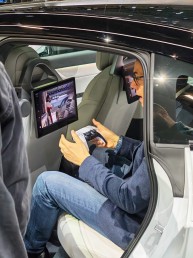
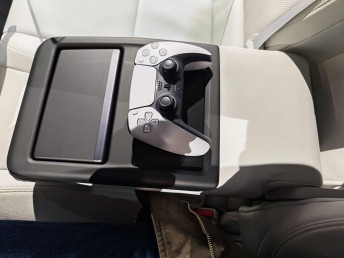
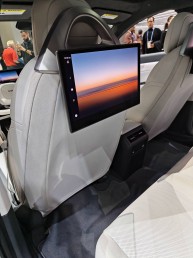
PlayStation 5 for the rear passengers.
Verdict
The Afeela 1 is more of an exercise rather than a mass-produced product that will achieve volume sales. Once it reaches production, it will be an expensive car at $89,900 before taxes. At a time when global demand continues to shift away from sedans in favor of SUVs, the Afeela 1 offers few standout features or defining moments that would clearly set it apart from established rivals.
Sony and Honda are both careful brands in their respective fields and are known for their careful approach to innovation. The Afeela 1 is restrained in its design, its technology, and its overall execution. It avoids risk and refrains from bold statements, which also means it avoids major flaws or polarizing opinions.
However, in a segment defined by strong identities and emotional appeal, restraint alone is not enough. At this price point, buyers expect character, flair, and a sense of individuality, qualities that the Afeela 1 struggles to convincingly deliver.



From the team behind
GSMArena.com
Facebook
Twitter
Instagram
RSS
Settings
Log in I forgot my password Sign up