The new Range Rover Sport swaps V8 thunder for high-voltage muscle
The Range Rover Sport has been the bad boy of the luxury SUV world for good two decades. A rebellious, leather-lined battering ram equally good at doing burnouts outside Harrods as it was at scrambling up a muddy Scottish hillside. For three generations, and more than one million sales, its defining party piece was the supercharged V8 soundtrack that announced your arrival three postcodes in advance. It was loud, antisocial, and intoxicating.
But now, Range Rover is asking us to embrace a different kind of personality. With a starting price of $150,800, the new Range Rover Sport Electric strips out the petrol tanks and wants to prove that instant torque can deliver just as much personality as an old-school V8 exhaust note.
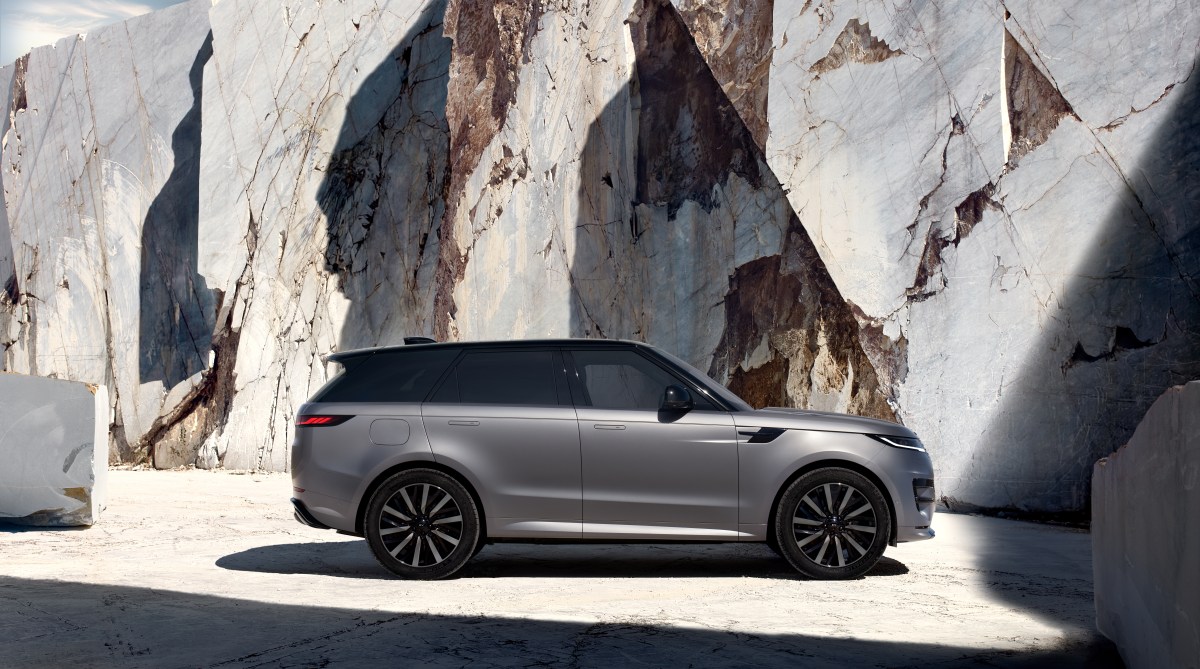
I'll admit, the numbers make a good opening argument. A pair of 260kW electric motors - one per axle - deliver an all-wheel-drive clout of 550PS (542 proper brake horsepower). But the bigger number is the monumental 627 lb-ft of torque from a dead stop. That is 74 lb-ft more twist than the flagship 4.4-liter twin-turbo V8 SV model can manage.
Engage Dynamic Launch Mode, and this silent monolith lunges from zero to 60mph in 4.3 seconds (or zero to 62 mph in 4.5 seconds). Sure, the petrol SV still pips it by seven-tenths of a second - mostly because the giant battery adds a hefty 628 lb weight penalty. But catch this electric bruiser rolling between 50 mph to 75 mph, and the torque delivery promises to be brutal. You see an overtaking gap, flex your right toe, and the car simply teleports past slower traffic. The V8 would still be downshifting two cogs and clearing its throat.
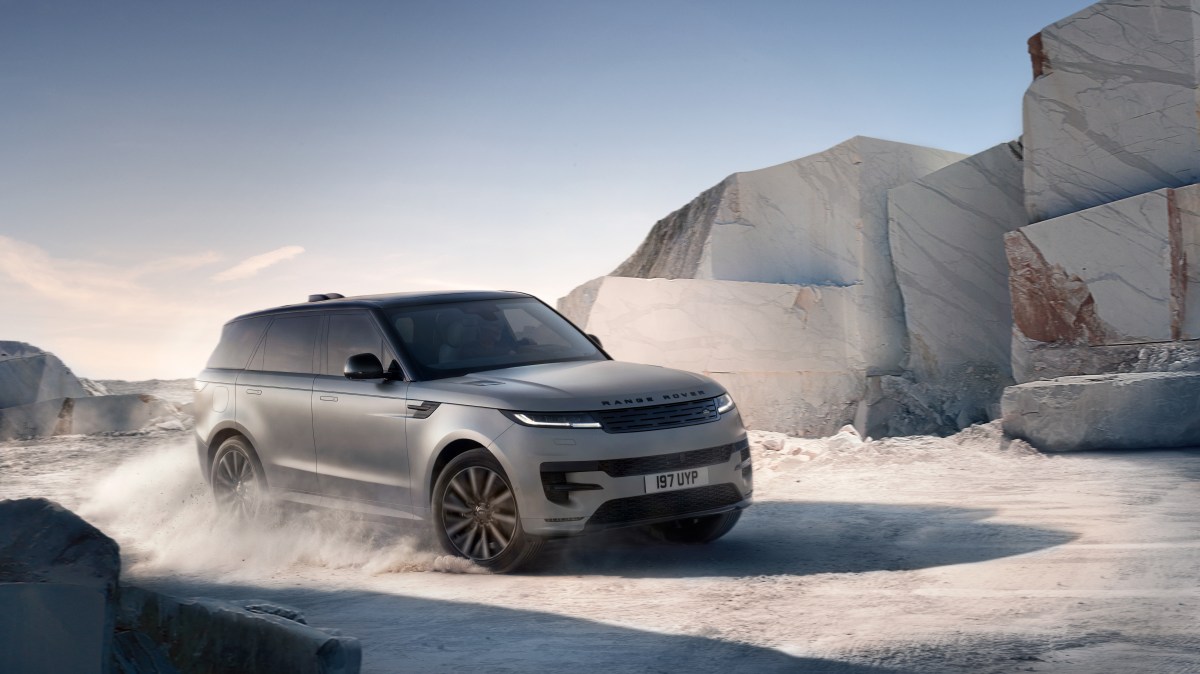
That powertrain comes with multiple personalities. Put the drive selector into Dynamic, and all 542 horses go wild; slip into Comfort, and the system calms to a velvety 493bhp; click over to Eco, and output drops to 276bhp to nurse your electrons to the next charger.
Apparently, the silence of a battery-powered Rangie posed an existential crisis for Gaydon's engineers. How do you replace the roar of an eight-cylinder engine without sounding like a cheap speaker job? The bigger Range Rover Electric has gentle, soothing notes originally composed on a grand piano, but the Sport's acoustic designers went for mechanical menace. They layered a low-frequency synthesized bassline that "mimics the guttural whine" of an old-school Roots-type supercharger spooling under heavy load. It should give the cabin an industrial pulse rather than sterile silence.
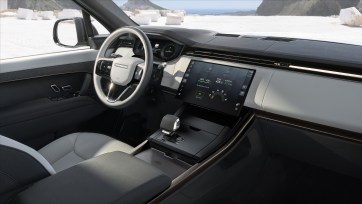
Straight-line theatrics are easy in the EV era, but making a three-ton luxury tank go around corners means serious chassis engineering. The foundation here is JLR's modular MLA-Flex platform, which gains a massive 61% boost in torsional rigidity thanks to the massive, structural battery casing bolted between the axles. Even better, that underfloor pack drops the vehicle's center of gravity by 2.87 inches compared to its plug-in hybrid siblings.
To keep that immense momentum from heaving like a cargo ship in choppy seas, the Sport has dual-chamber air suspension with active twin-valve Bilstein dampers, and a trick electro-hydraulic Active Roll Control system. That electronic anti-roll setup can fire up to 1,033 lb-ft of bracing torque across each axle in milliseconds. Tip the nose into a fast, off-camber bend, and the Sport Electric stays flat, refusing to wash out or wallow.
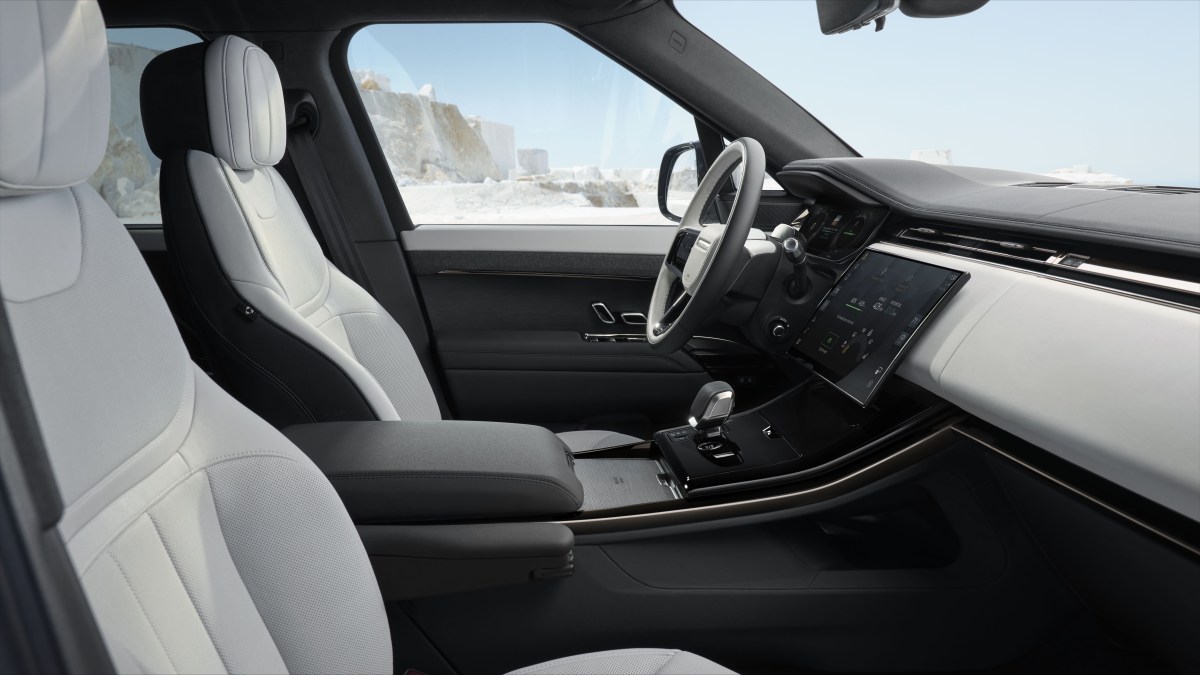
The all-wheel steering is standard, making this large SUV feel much smaller in tight situations. The system turns the rear wheels by up to 7.3 degrees counter to the fronts, and effectively shortens the wheelbase, tucking into tight hairpins with the agility of a hot hatch. It of course helps to stabilize high-speed motorway lane changes as well.
A lot of clever stuff is happening in the brake department - a calibrated brake-based torque vectoring system pinches the inside rear disc to sharpen turn-in. The regenerative braking setup uses fast-switching silicon carbide inverters for smooth one-pedal driving, and that allowed engineers to fit smaller, lighter brake discs than those on the V8 SV. Downsizing the discs cuts unsprung mass at the wheel hubs - a big win for steering feel and ride comfort. And to stop those underused discs from oxidizing into an ugly orange crust, Land Rover coats them in a nitrogen finish, eliminating the friction scrub used by other automakers.
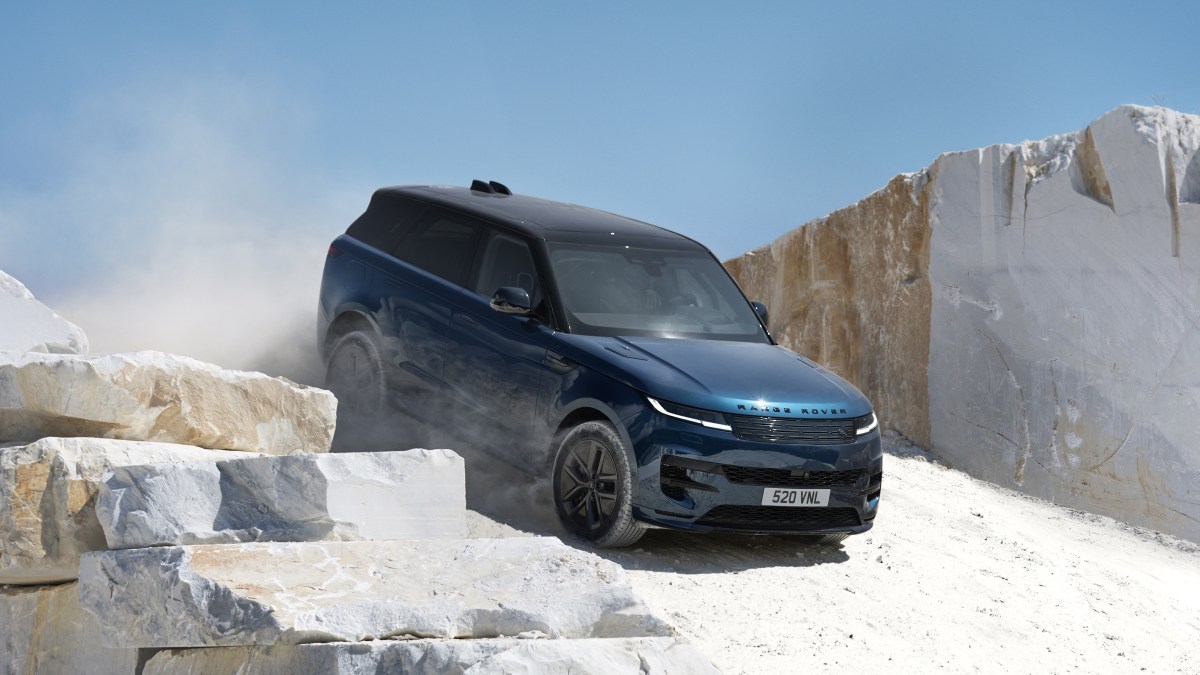
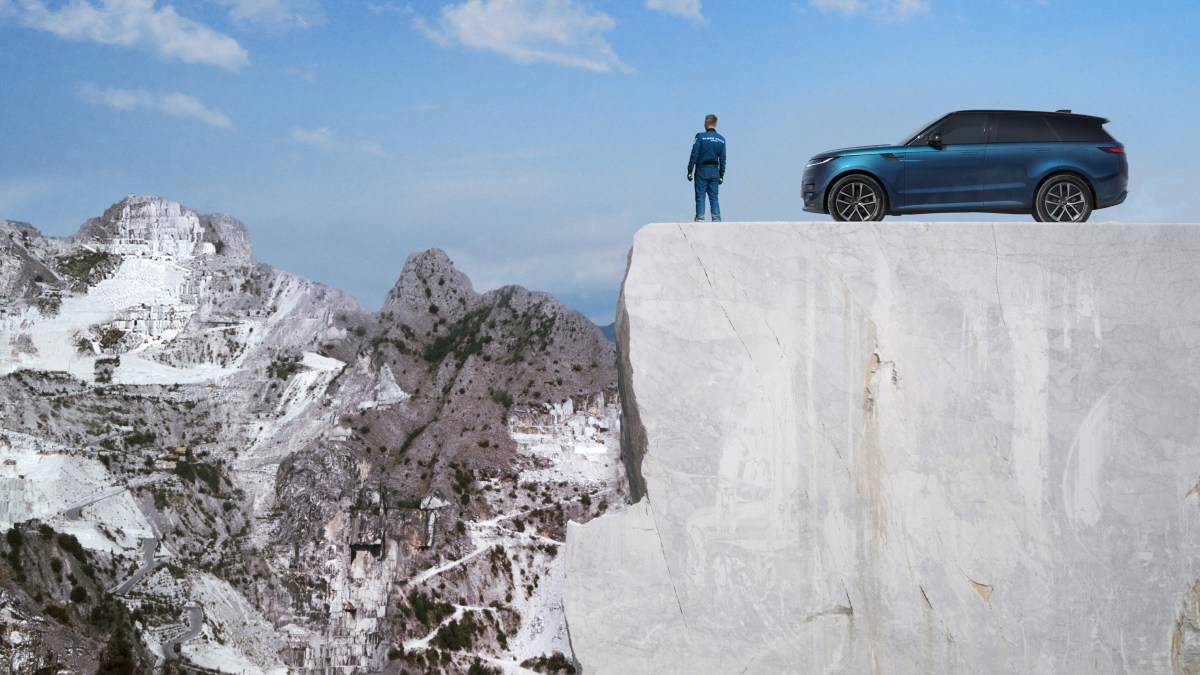
Of course, the old guard will ask if swapping cylinders for battery cells turns the Sport into a boulevard cruiser. Gaydon's response was a bit over-the-top: they shipped prototypes to Italy's Carrara marble quarries, and told the drivers to scale {{3,000 ft}} mountain peaks and navigate 45-degree inclines slick with polished stone and powdery marble dust.
This follows a proud lineage of off-road stunts, including the legendary record run up the {{14,110 ft}} Pikes Peak hill climb, conquering the 999 steps at China's Heaven's Gate, and crawling up a flooded Icelandic spillway. Lacking traditional mechanical transfer cases and physical locking differentials, the EV550 uses an all-wheel-drive system that dishes out torque across both axles fifty times faster than any mechanical clutch pack could ever dream of. Add to it a battery enclosure sealed tightly enough to wade through 35.4 inches of standing water, and the new Sport will scramble through terrain that most boutique electric off-roaders would struggle with.
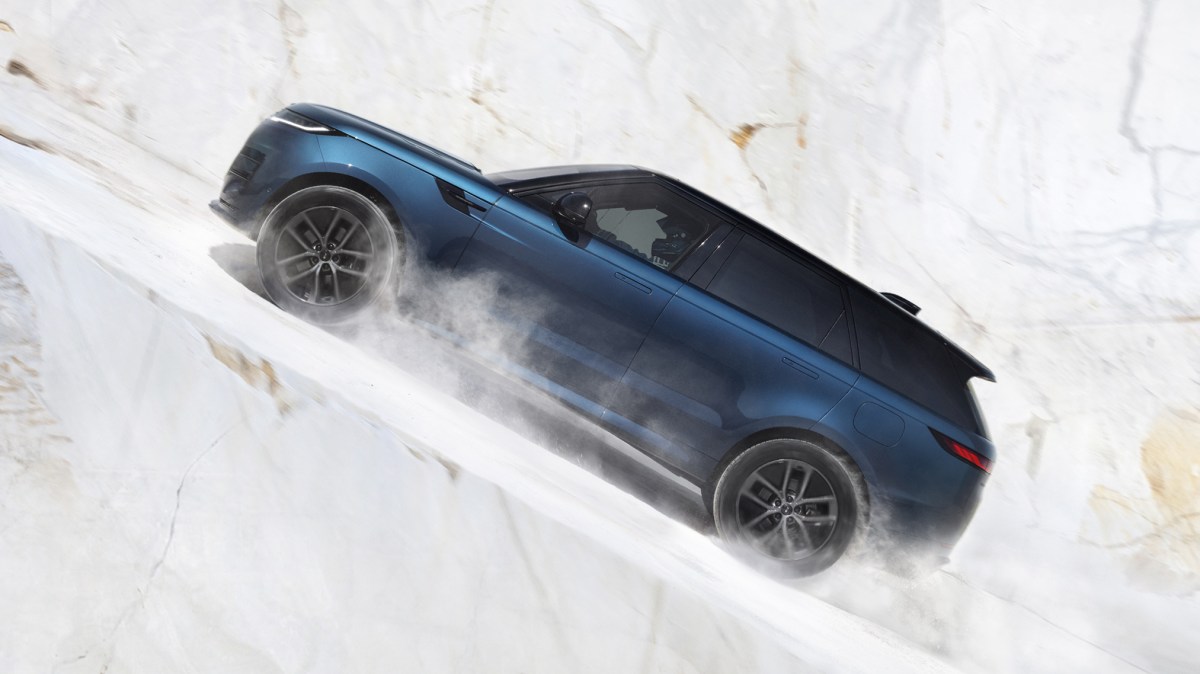
The new electric Range Rover Sport is 194.7 inches long, 80.6 inches wide with mirrors tucked in, and rides on a generous 118 inches wheelbase. And it tips the scales at around 6,107 lb. For comparison, the Anglo-Chinese hyper-SUV Lotus Eletre is 200.9 inches long and an enormous 87.8 inches wide. Lotus starts from $122,900 and delivers 524 lb-ft of twist in standard form, but it feels engineered for smooth asphalt and track-day lap times. The BMW iX M70 is 195.5 inches long and starts from $159,300 and delivers 749 lb-ft of torque, but its polarising styling and street-biased air suspension lack the square-shouldered elegance of the Range Rover.
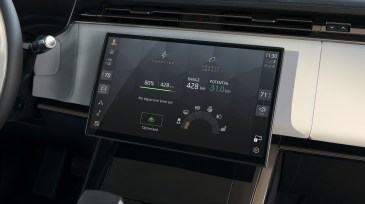
The whole experience depends on an enormous 118.5kWh usable lithium-ion pack. On the standard European WLTP cycle, Range Rover claims an official range of up to 378 miles. In a refreshing bout of corporate honesty, the firm also quotes a realistic real-world expectation of 333 miles, reflecting what happens when you actually run the climate control and cruise at genuine motorway speeds. When the juice runs low, the 800V architecture comes into its own: hooked to a 350kW DC fast-charger, the battery can swallow 136 miles of fresh range in about 10 minutes, or sweep through the 10 to 80% charge bracket in 22 minutes, transforming a long-distance family tour from a logistical headache into a single-stop routine.
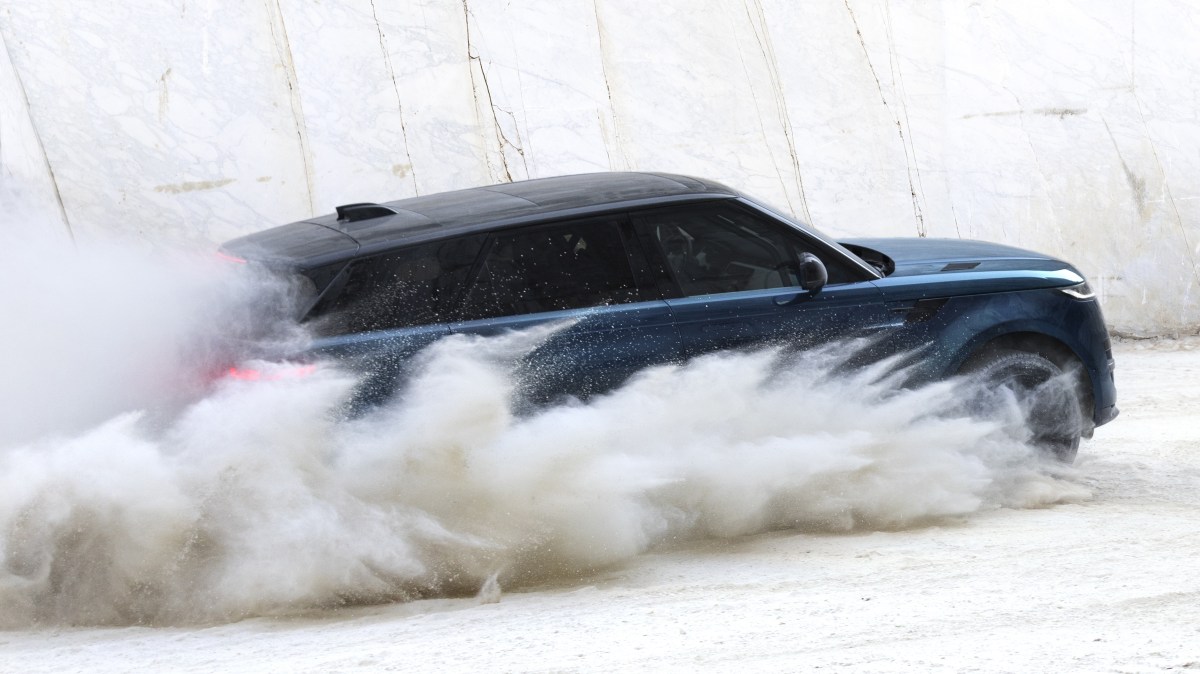
When it comes to visuals, Range Rover had the good sense not to spoil a winning recipe. The silhouette is pure Range Rover Sport, with its taut body lines, flush glazing, and that signature hunkered-down stance. The electric tells are very discreet: a blanked-off front grille with active vanes, unique wheel designs to help trim drag, and a cleaned-up rear apron without any exhaust tips. Those aero tweaks alone are responsible for clawing back up to 10 miles of highway range.
Inside, the trim hierarchy kicks off with the Dynamic SE at $150,800 - which undercuts the flagship full-size Range Rover Electric by literally the entire mid-size EV at $61,800 - before moving up to the Dynamic HSE, the $168,610 Autobiography, and the launch-spec First Edition at $173,430. If you have limitless funds and an appetite for excess, the bespoke commissioning program offers custom hand-stitched hides, one-off paint blends, and exotic veneers. You can easily inflate the final invoice into orbit with a few casual box ticks.
JLR is building the Sport Electric on the existing Solihull production lines alongside petrol, diesel, and plug-in hybrid variants. It gives them flexibility as global EV adoption tends to be unpredictable. It also is a leap forward from the pioneering, contract-built Jaguar I-Pace of years past. With real-time battery monitoring over the air and an eight-year or 100,000 miles battery warranty, the brand is targeting traditionalists who love the badge but fear the charging cable.
The Range Rover Sport didn't forge its reputation by playing nice with the competition. This SUV rebel carved its niche by blending aristocratic luxury with ruthless capability. Britain's favorite tarmac brawler swapped petrol for instant torque and an ironclad chassis, and is entering the electric era with its swagger pretty much intact. Let's see which footballer buys it first.

From the team behind
GSMArena.com
Facebook
Twitter
Instagram
RSS
Settings
Log in I forgot my password Sign up