The new Hyundai IONIQ 3 goes on sale in UK, production kicks off in Turkiye
The electric vehicle transition used to feel like an exclusive club with entry needing a second mortgage. Real enthusiasts, who appreciate the joy of a sorted chassis and modest dimensions, were largely left out in the cold. But this year has been different, with more and more truly affordable EVs finally arriving in the showrooms. Hyundai is one of the brands that decided it was about time to give people what they've been asking for all along - an aerodynamic, pixel-infused hatchback.
Thanks to securing Band 1 qualification under the UK government's Electric Car Grant, every variant of the new IONIQ 3 benefits from a full $5,150 deduction straight off the top. That slashes the on-the-road price for the Advance 42 kWh model down from $30,549 to $25,399. Even if you step up to the big-battery Advance 61 kWh model, you are looking at $30,206 instead of $35,356.
Existing reservation holders who originally signed up for a modest $2,100 factory saving are automatically bumped up to the full grant, and monthly personal contract purchase deals kick off at $488 per month with an identical $488 deposit over 48 months at 8.9% APR representative. In an era where a moderately optioned petrol supermini casually goes for twenty-five grand, that is a bargain.
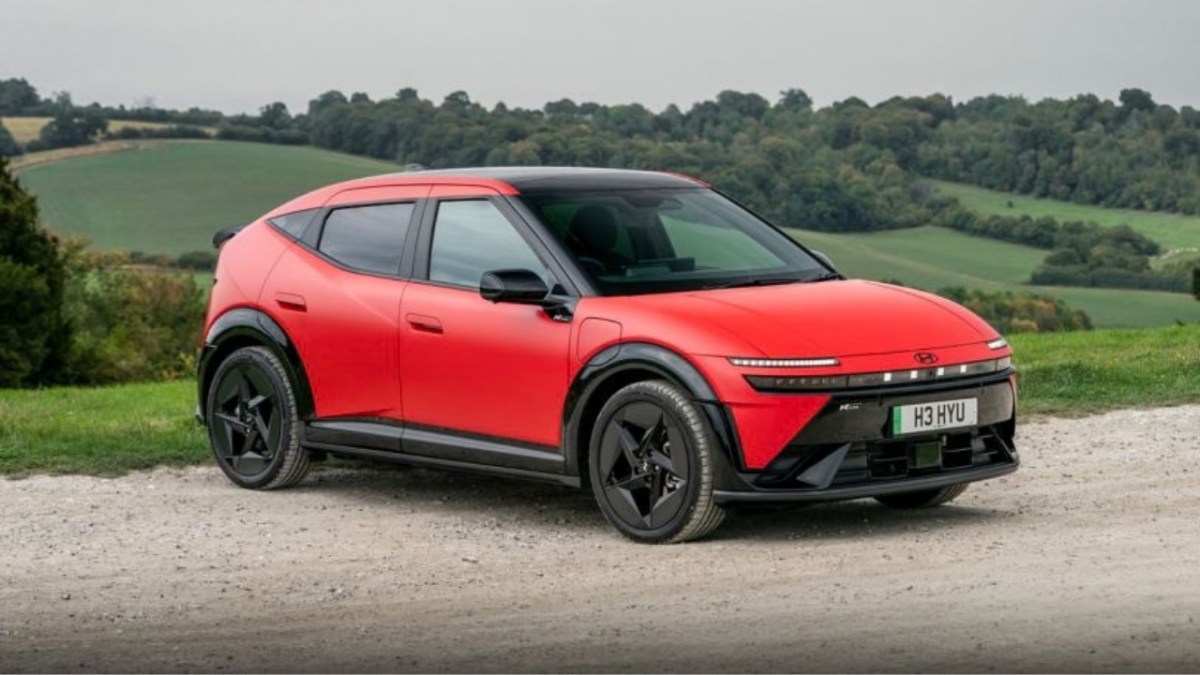
Hyundai has cleverly resisted the temptation to build yet another blob-shaped pseudo-crossover. Instead, the design team sculpted what they call an "Aero Hatch," courtesy of their latest "Art of Steel" styling philosophy. It cuts a strikingly low, razor-sharp silhouette with a raked windscreen, clean surfacing, and an integrated rear ducktail spoiler. The end result is a drag coefficient of 0.263 - slippery enough to cut through head-winds without guzzling precious electrons.
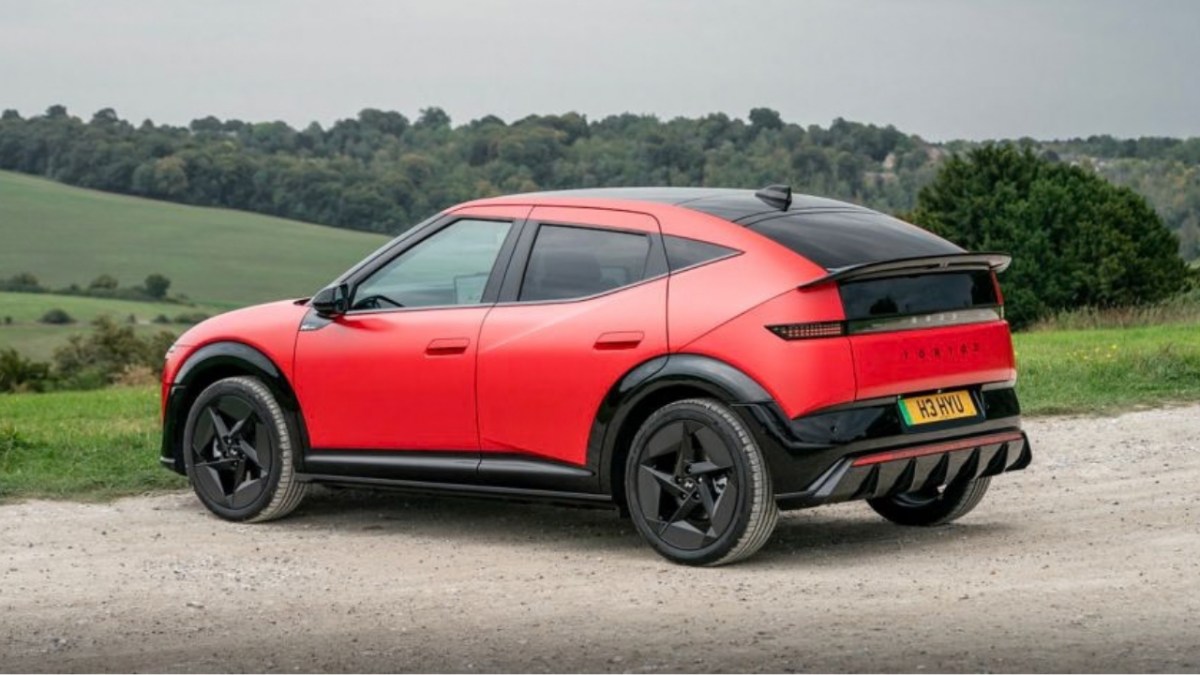
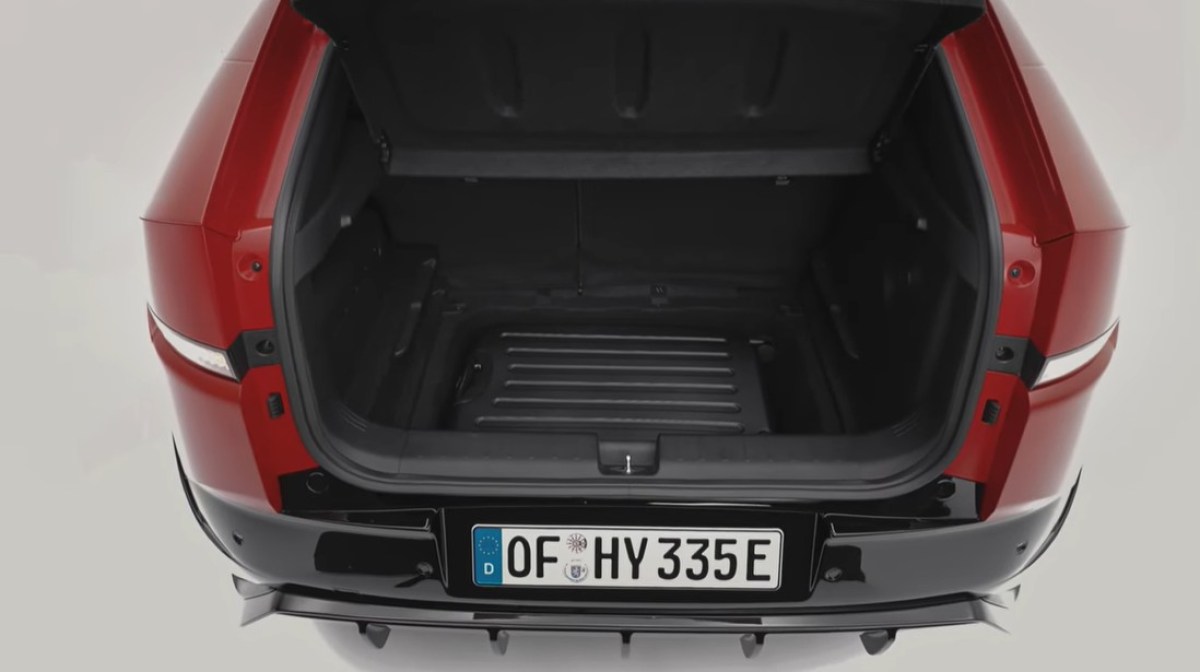
Despite measuring a tidy 163.6 inches in overall length, 70.9 inches in width, and standing 59.3 inches tall, Hyundai's engineers managed to pull the front and rear axles apart to create a generous 105.5 inches wheelbase. That wheelbase gives five adults genuine room, with rear legroom that punches well above the standards in this class. The trunk swallows an impressive 15.6 ft³ of cargo. That volume is cleverly split between a 11.4 ft³ upper deck and a sunken 4.2 ft³ "Megabox" compartment hidden under the floor - the ideal hiding spot for muddy charging cables, hiking boots, or a week's worth of groceries.
For comparison, the VW ID.3 Neo is 167.9 inches long, it has a smaller 13.6 ft³ trunk, but it starts north of $48,100 with equivalent range. The MG4 EV - long celebrated as Britain's reigning budget EV darling - measures 168.8 inches with a 106.5 inches wheelbase, but has only 12.8 ft³ of luggage volume and starts near $37,100. The stylish Renault Megane E-Tech stretches to 165.4 inches with a 15.5 ft³ boot, but demands at least $46,700 to play. Even BYD’s quirky Dolphin measures a longer 168.9 inches while squeezing out only 12.2 ft³ of trunk space for around $35,700 to $41,000. The IONIQ 3 either matches or embarrasses the class establishment while undercutting them on price.
The entry Advance 42 kWh model has a front-mounted motor pushing 147 PS (107 kW), and promises a WLTP driving range of 214 miles. If long-distance cruising is your jam, the 61 kWh pack steps in. Curiously, Hyundai recalibrates the motor slightly to 135 PS (99 kW) to focus on efficiency and thermal management, unlocking an official range of up to 308 miles. Both versions deliver an identical 184 lb-ft of instant torque. With kerb weight sitting between 3,417 lb to 3,483 lb, the IONIQ 3 promises quick corner turn-in, and agile road manners without the heavy-battery inertia.
Moving from the Advance into the Premium trim costs $32,540 after the grant, and the Ultimate grade sits at $35,974 grant-inclusive. The Ultimate throws the whole technological toybox at you, including glare-free Matrix LED headlights, Highway Driving Assist 2, and the winter antidote of heated front seats and a heated steering wheel. At the top of the range is the IONIQ 3 N Line Evo, costing $38,720. It adds menacing 19-inch alloys, sculpted aero diffusers, a 14.6-inch infotainment panel, a 360-degree Surround View Monitor, and Memory Reverse Assist.
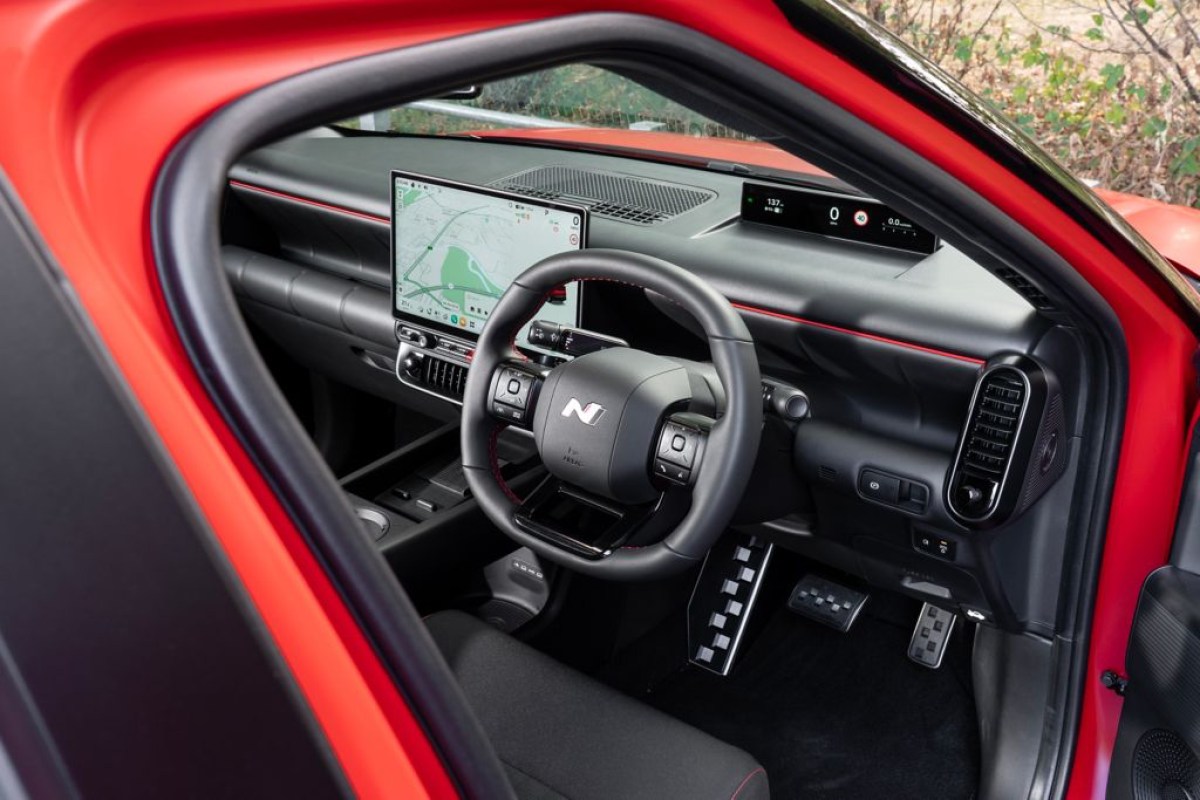
The IONIQ 3 is the first European Hyundai to run the Pleos Connect infotainment system, built on Android Automotive OS. It boots up instantly, mirrors maps flawlessly, and works alongside Hyundai SmartSense active safety aids. Refreshingly, Hyundai's cabin architects chose not to bury essential climate dials into fiddly touchscreen submenus. The split-level center console features an airy lower storage tray, and the gear selector sits neatly behind the steering wheel, freeing up elbow room and making the cabin feel like a lounge rather than a cramped cockpit.
The smallest IONIQ is manufactured at Hyundai Motor Turkiye's sprawling İzmit facility - the brand's longest-running overseas production plant, operational since 1997. Over nearly three decades, cumulative investments in the complex have climbed to $1.39 billion. To transform the Turkish outpost into a high-tech electric plant for Europe, Hyundai injected a fresh $293 million investment package, modernizing over 50 percent of the facility and retraining upwards of 1,000 technicians. Working closely with Hyundai Mobis, the factory now has its own Battery System Assembly facility, avoiding painful supply-chain bottlenecks and ensuring swift delivery to European and UK dealerships.
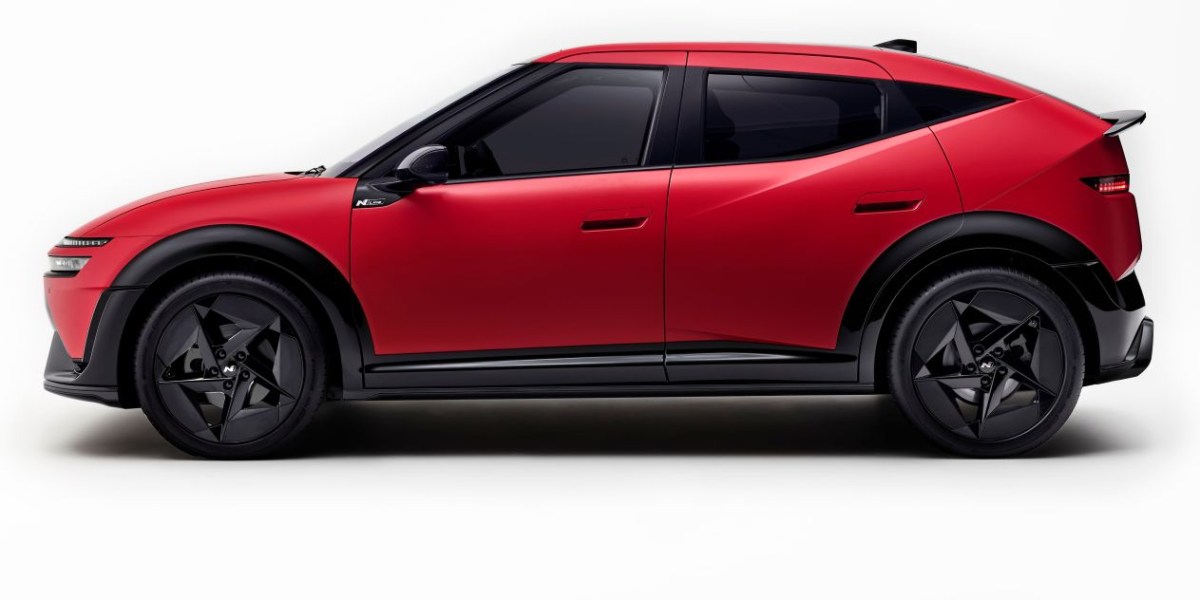
Under its 'Progress for Humanity' banner, Hyundai expanded its collaboration with the Healthy Seas Foundation. Divers scoured four historic Gallipoli shipwreck sites, hauling out 231 lb of underwater rubbish that included 190 lb of abandoned nylon nets. Across regional operations, teams collected 320 lb of marine litter, contributing to an international total of 320 tons recovered across 10 countries. All that nylon waste is shipped to Aquafil and used in a high-grade ECONYL yarn, which provides 30% recycled content for the carpets of the IONIQ 3's floor mats. Add to it 25,000 trees planted under the local IONIQ Forest program and over $1.29 million in educational scholarships, and the little Hyundai has a real ecological impact.
Decades ago, Hyundai arrived on Western shores as an underdog peddling cheap runabouts to drivers who could not afford a Ford or Volkswagen. Today, the Koreans are dictating the tempo of the industry. From the original Ioniq to the retro-futuristic Ioniq 5 and the elegant Ioniq 6, Hyundai has established technical authority. The IONIQ 3 takes all of that and puts it into the hardest automotive challenge of all: an affordable family hatchback that ordinary motorists actually want and can buy.


From the team behind
GSMArena.com
Facebook
Twitter
Instagram
RSS
Settings
Log in I forgot my password Sign up