Tesla Model 3 and Model Y batteries from China show 'catastrophic' failure rates
The story of electric cars might as well have been the story of Tesla's supply chain muscle. Over the years, the automaker has worked hard to get its batteries from many different places, and for the most part, this strategy has been a big success. The LFP packs from CATL in China are known to be strong and long-lasting, basically like tanks on wheels.
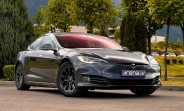
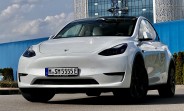
But a serious warning is emerging about a different type of battery pack used in some Tesla Model 3 and Tesla Model Y vehicles, especially those sold in Europe and parts of Asia. A top European repair shop specializing in EVs is ringing the alarm on certain Long Range and Performance versions with the batteries supplied by LG.
Media hype around “Made in China” battery systems being the “best” has never been confirmed in real-world practice.
— EV Clinic (@evclinic) November 29, 2025
We are raising serious concerns about Tesla Model 3/Y LG NCM811 battery packs (LGES Nanjing), which show extremely high failure rates and a noticeably shorter… pic.twitter.com/PHi83UCixl
The problem centers on the Nickel Manganese Cobalt (NMC) cells, known as NCM811, that come from LG Energy Solution's Nanjing, China, factory. EV Clinic, a respected, independent repair and research facility located in Croatia, has released data from its shop that paints a worrying picture of these specific battery packs. The firm is claiming "catastrophic" failure rates and much shorter lifespans compared to the Panasonic packs Tesla uses.
The comparison is stark. The shop's data suggests that the US-made Panasonic NCA packs are generally durable and can be repaired, often lasting around 249,000 miles before a cell breaks down. In contrast, the LG equivalents are often nearing the end of their useful life at only about 149,100 miles.
What is even more troubling is how the LG packs fail. EV Clinic reports that in over 90% of the LG battery cases they examine, repairing a single cell is "impossible." The issue isn't one bad apple but rather widespread and uniform degradation across multiple modules, which are like small battery blocks inside the larger pack.
Apparently, the LG cells show extremely high internal resistance, which is basically the battery's opposition to the flow of electric current. A healthy Panasonic cell typically measures around 10 mOhms, but a failing one hits about 28 mOhms. The problem? That 28 mOhms measurement is what new LG cells start at.
When the technicians open a failing LG pack, they often see a module of 46 cells where 15 of them have an internal resistance over 100 mOhms, and the remaining 30 cells are still above 50 mOhms. Because the cells are so equally weakened, replacing a single faulty module becomes pointless. The remaining, older cells are likely to fail very soon afterward, creating a domino effect and making the repair "operationally unsustainable."
The repair specialists report they are actually losing more than $23,000 each month trying to figure out how to fix these packs that are essentially dead weight. They've had to start charging a special "feasibility fee" just to check if the repair is even possible.
EV Clinic's blunt advice to owners whose LG packs have failed is simple: find a used Panasonic pack to swap it out or go straight to Tesla for a full replacement. This report is a serious concern for the automaker, especially as many of these China-made LG NCM packs were sent to Europe.
Tesla's strategy of using multiple suppliers has been generally positive, but the quality differences between battery chemistries - specifically the praise for the US-made Panasonic NCA packs versus the dire warning about the LG NCM811 packs - suggest a big headache for the company and its customers.
Reader comments
- Bob
- 0U0
The problematic Xiaomi scooters: LG batteries. The recall for Hyundai/Kia: LG batteries. The exploding ZOEs: LG batteries. The Taycans on fire: LG batteries. Now this. Can't we see a pattern?
- Anonymous
- gDP
… this is an LG factory. even if in china the business is managed by not chinese can only blame LG for going back to their roots on their battery quality
- mthrs
- yJt
Title is misleading, yet again. The factory is in China but is owned by LG, which is Korean. It sounds to me that is a design issue rather than a manufacturing issue. If that's the case, don't blame China as we are not hearing these kind...

From the team behind
GSMArena.com
Facebook
Twitter
Instagram
RSS
Settings
Log in I forgot my password Sign up