The second-gen BYD Seagull grows up, but keeps its price under $10,000
There's an obvious pattern whenever a carmaker releases a second generation of its cheap-n-cheerful city car. The original model hits the streets as a scrappy, compromised runabout with thin door cards, four seats, and just enough power to keep up with urban traffic. Then a rival builds something slightly bigger for the same money, buyers walk across the street, and the engineers have to go back to the drawing board. That is the exact story behind the second-generation BYD Seagull. The new version launched in Zhengzhou with a bigger footprint, a completely reworked rear-wheel-drive chassis, and a starting price that dips below the magic $10,000 mark.
BYD had no choice but to rework its entry-level hatchback, and the Chinese sales charts from the first nine months of 2026 explain why. Since the original Seagull debuted in April 2023, BYD has shifted around 1.55 million of them, including 529,537 units in 2025 alone. It has been a volume driver, known in overseas markets as the Dolphin Mini, Dolphin Surf, or Atto 1. But between January and September of this year, global Seagull deliveries dropped by 33% to 265,901 units, and domestic sales in China fell by a painful 66% to 83,600 cars. Monthly figures finally ticked upward again in August and reached 38,650 units in September, a modest 11.75% year-on-year recovery, but the underlying problem was obvious to everyone in Shenzhen.
That problem is called the Geely EX2, sold at home in China as the Geome Xingyuan. Between January and September, Geely handed over 310,000 units of the EX2, pushing it past the Tesla Model Y at 277,000 units to become the best-selling car in the country. Buyers were flocking to the Geely because it offered proper five-seat family practicality and rear-wheel drive in a package that made the old four-seat Seagull feel outdated. BYD decided that a mild facelift wouldn't simply do, and stretched the car in every direction to match the Geely millimeter for millimeter.
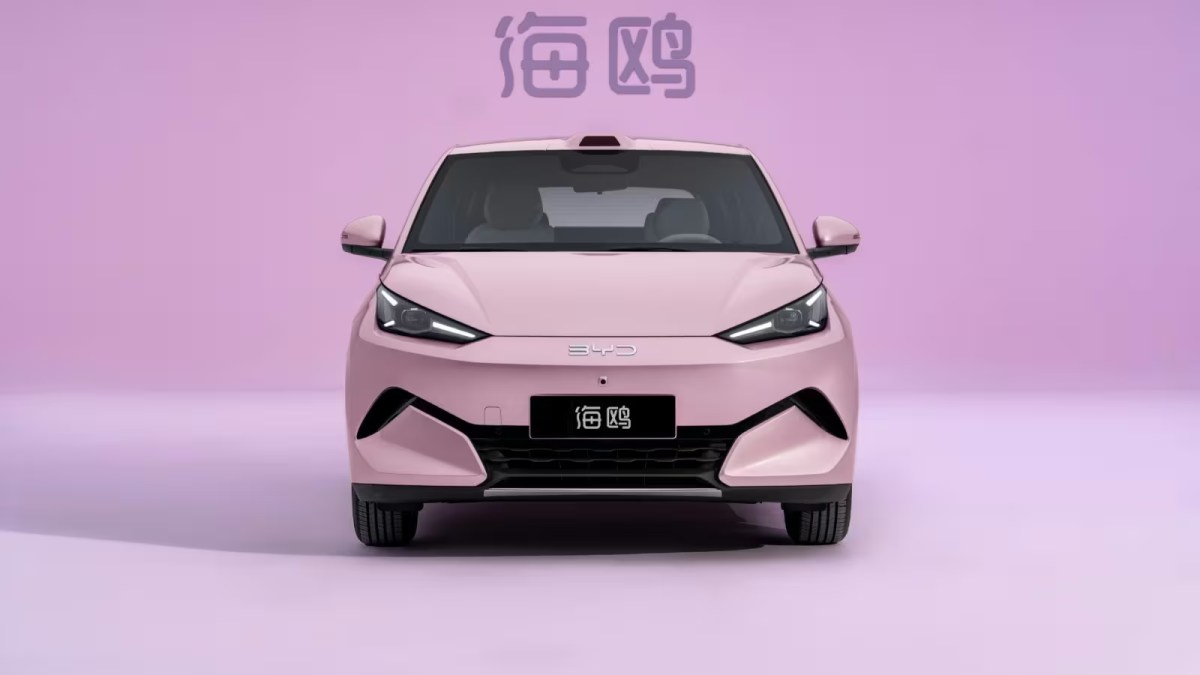
The new second-generation Seagull is 165.6 inches long, 71.3 inches wide, and 61.8 inches tall, riding on a 104.3 inches wheelbase. If you park it next to the outgoing first-generation car (148.8 inches long, 67.5 inches wide, and 60.6 inches tall with a 98.4 inches wheelbase), the new model is a full 16.7 inches longer with 5.9 inches extra between the axles. The Geely EX2 sits at 162.8 inches in length, 71.1 inches in width, 61.8 inches in height, and shares the exact same 104.3 inches wheelbase. The extra length brings the Seagull uncomfortably close to its bigger sibling, the BYD Dolphin, which is 168.9 inches long, 69.7 inches wide, and 61.8 inches tall, and has a 106.3 inches wheelbase.
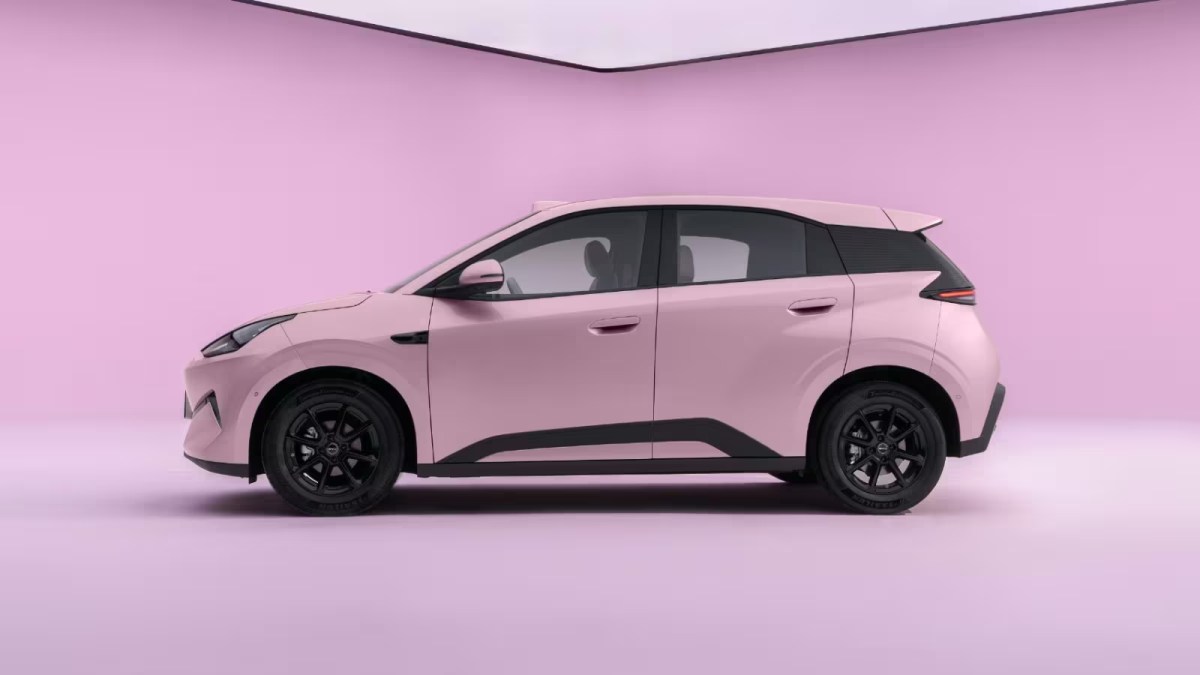
In everyday driving and family duty, those extra millimeters transform how you actually use the car. The cabin now seats five people instead of four, so taking three kids to school no longer means leaving someone behind. There is a new 3.32 ft³ front trunk that easily swallows charging cables and a weekly grocery bag, keeping them out of the main trunk. Fold the rear bench down and total cargo capacity expands to 48.7 ft³, which actually beats the 46.3 ft³ maximum cargo volume of the larger BYD Dolphin. Despite the longer body, BYD kept the turning radius down to a tight 16.24 ft.
The mechanical changes matter even more to anyone who enjoys driving. Anyone who has driven a light, front-wheel-drive electric hatchback on a wet road knows how easily the front tires scrabble for grip when you step on the throttle out of a junction. BYD has ditched the old front-mounted motor and basic torsion-beam rear axle altogether. In their place sits a rear-mounted motor driving the rear wheels, with a proper multi-link independent rear suspension. Together with a structural body cage built around ten horizontal and four vertical reinforcement beams, six airbags, and a tire blowout stabilization system, the chassis hardware reads like something from a class or two up.
An electric motor in the back and an independent suspension do two things - first, they free the front wheels to focus on steering, sharpening up the nose and getting rid of torque steer. Second, a multi-link rear end handles mid-corner bumps and broken asphalt with more composure than a torsion beam ever will, keeping the car settled rather than bouncing sideways over manhole covers. Entry-level models get an 85 kW motor (114 hp), and higher trims end up with a 95 kW unit (127 hp) - big jump over the old car's modest 55 kW output. Torque sits at 96 lb-ft across the lineup (slightly short of the 111 lb-ft in the 85 kW Geely EX2), so acceleration will feel swift around town, but it won't pin you down to the seat.
Battery takes a big step forward too - BYD's second-generation LFP Blade cells with a claimed energy consumption of 9.0 kWh per 62 miles are standard across the range. The lower two trims get a 30.1 kWh pack rated for 199 miles on the lenient Chinese CLTC cycle (expect around 161 miles on the more realistic European WLTP standard). Step up to the top three versions and you get a 39.2 kWh battery good for 261 miles CLTC (about 211 miles WLTP). Those upper three trims also unlock the headline party trick: Flash Charging that takes the battery from 10% to 70% in 5 minutes. A five-minute splash-and-dash sounds terrific on a spec sheet, though we should keep a level head about it - hitting those speeds means finding one of BYD's dedicated ultra-fast charging stations. To top it off, non-commercial buyers of the highest three trims get a year of free juice at those flash chargers.
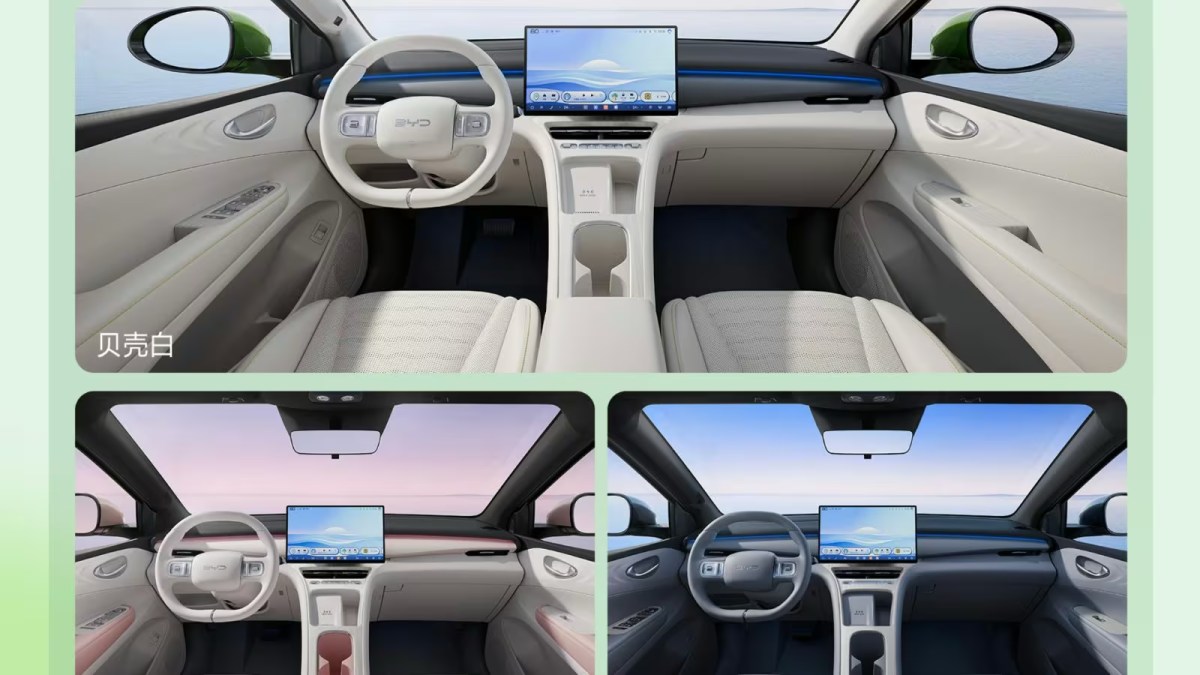
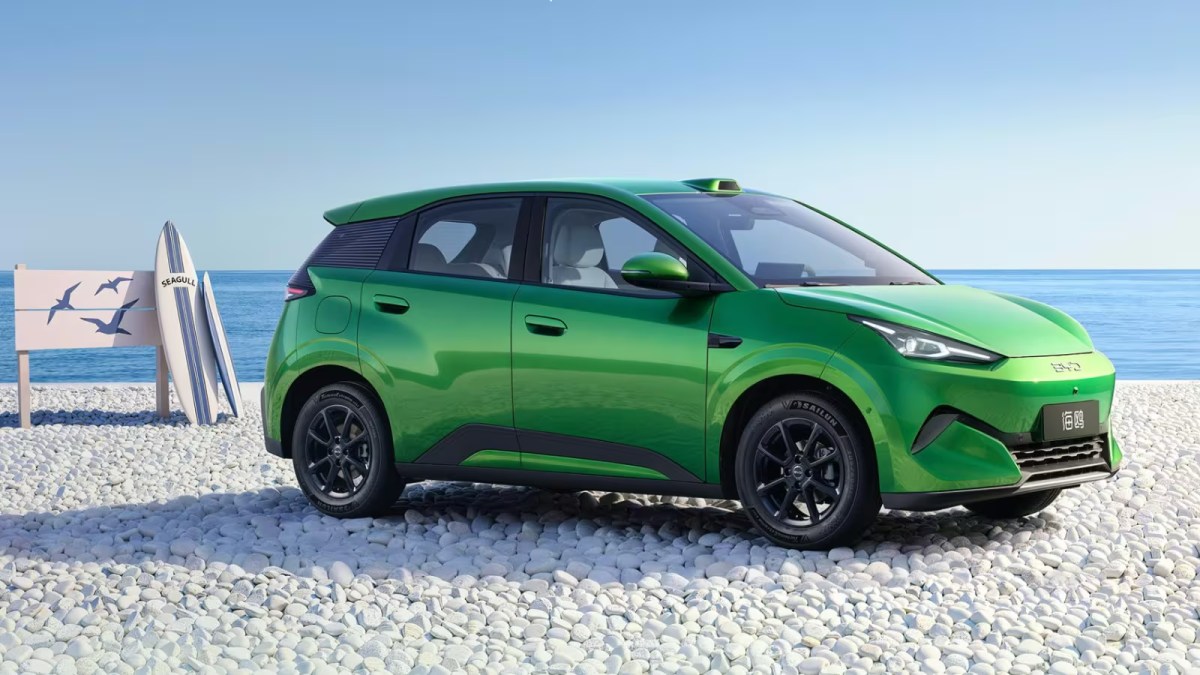
Inside the cabin, the budget roots are getting harder to spot under all the electronics. The 15.6-inch central touchscreen runs the DiLink 150 system with full DeepSeek AI integration, alongside a 50W wireless phone charger, an eight-speaker stereo, and 127-color ambient lighting. Depending on the trim, the front seats offer six-way power adjustment for the driver and four-way for the passenger, plus three-level heating, ventilation, and even a driver massage function - features you still have to pay extra for even when you buy an electric Porsche. Buyers can pick from six cheerful exterior shades (Lime Green, Berry Pink, Cream White, Mango Orange, Ice Coconut Blue, and Sesame Grey) paired with three interior palettes (Shell White, Clear Sky Pink, and Polar Star Grey).
The pricing sounds like a fever dream - the five-model lineup kicks off with the Vitality Edition at RMB 65,900 ($9,810), making it RMB 4,000 (about $700) cheaper than the outgoing version launched earlier in the year. From there, the range moves through the Freedom Edition at RMB 72,900 ($10,900), the Comfort (or Ease) Edition at RMB 75,900 ($11,300) - the cheapest entry point for the 39.2 kWh battery and Flash Charging - and the Flying (or Flight) Edition at RMB 82,900 ($12,400). Eligible domestic buyers handing over a trade-in get an extra RMB 3,000 knocked off every single trim, bringing the base street price down to RMB 62,900 and the range-topping Smart Edition down from RMB 99,900 ($14,900) to RMB 96,900.

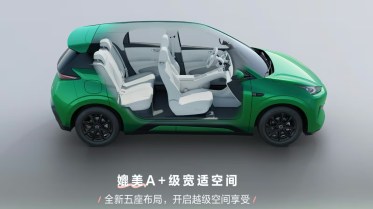
That flagship Smart Edition sits right under the RMB 100,000 mark and comes with BYD's DiPilot 300 "God's Eye" LiDAR system on the roof. Having LiDAR on a sub-$15,000 city car unlocks automated city and highway navigation, traffic light countdown recognition, and obstacle avoidance, though any roof-mounted sensors and fancy autopilots still need a human hand on the wheel. Even after shipping fees, import tariffs, and homologation costs double those domestic prices for export markets in Europe or the UK, a 165.6 inches rear-wheel-drive five-seater with five-minute charging leaves Western automakers with nowhere to hide…


From the team behind
GSMArena.com
Facebook
Twitter
Instagram
RSS
Settings
Log in I forgot my password Sign up