The Golden Wedge has arrived
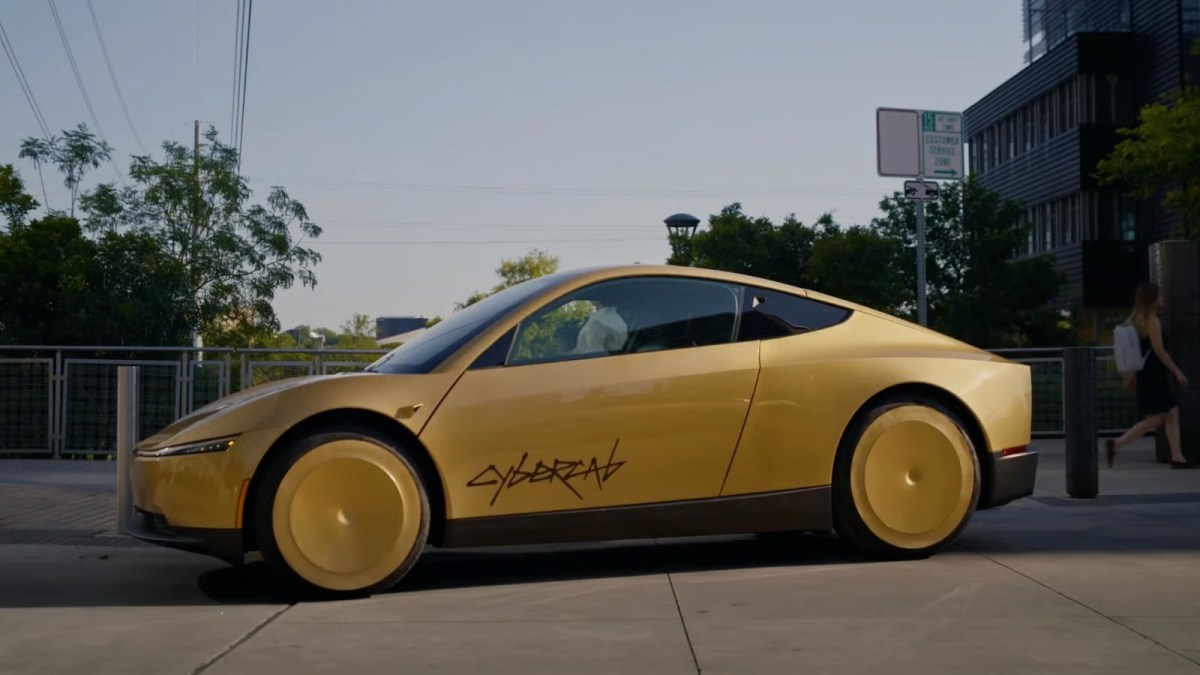
The whole world watched a golden wedge glide silently across the sunbaked Austin tarmac yesterday, its butterfly doors opened up against the Texas sky, and we all felt that familiar chill every car enthusiast gets when confronting the death of the steering wheel. No helm, no pedals, not even a rudimentary stalk to flick an indicator. Just two contoured buckets facing an expanse of minimalist trim and a large center screen rendering graphics via Epic Games' Unreal Engine.
For anyone who spent their youth learning the delicate dance of heel-and-toe downshifts and listening to tires chew into the asphalt at the limit of grip, looking at the Cybercab feels like staring across an evolutionary fault line. Tesla's newest invention has officially arrived, trading driver engagement for total digital surrender.
Cybercab is designed to be a great experience for every rider pic.twitter.com/wG0jrvJ6pX
— Tesla (@Tesla) September 3, 2026
Yet the way the Cybercab was introduced to the public felt completely un-Tesla-like. Anyone who remembers the smoke-and-mirrors spectacles of previous reveals - where Elon Musk routinely turned up with stadium-sized theatrics - expected a roaring circus. Instead, over two million viewers stared at blank feeds on social media waiting for a livestream that never happened.
The launch event in Austin wrapped up in about fifteen minutes, and Musk himself skipped the stage entirely. A handful of executives offered brief technical overviews, gave selected influencers a quick spin around town, and quietly closed the curtains. It was a strangely muted debut for a vehicle designed to shoulder the weight of an automaker with a $1.4 trillion market valuation.
BREAKING: Tesla has officially started offering Cybercab rides to the public.
— Sawyer Merritt (@SawyerMerritt) September 4, 2026
I’ve been waiting years to say that!
I took one of the world's first public rides. The cabin is comfortable and spacious, the suspension is soft, and FSD is VERY smooth. It’s an incredible vehicle.… pic.twitter.com/XBzJI9EVQm
Inside the cockpit, the engineering priorities finally revealed themselves. Stripping out the mechanical steering column, brake booster linkage, and pedal assembly hands a lot of real estate back to the occupants. The two-seat cabin treats passengers to an expansive 43.4 inches of legroom - more generous than the 41.8 inches you find in the front row of a standard Model Y.
Behind the seats, the deep trunk swallows 20.2 ft³ of cargo up to a maximum load rating of 220 lb, sufficient space for two full-sized checked suitcases and a pair of carry-on bags. A color-coded exterior lightbar signals to passengers which pod belongs to them, and a ceiling-mounted radar scans cabin occupants, capable of distinguishing between an adult passenger, a child seat, or an empty one to calibrate airbag deployment.
Cybercabs have no steering wheels or pedals. They are designed and built for maximally efficient autonomous operation. https://t.co/IClKVxpb7C
— Elon Musk (@elonmusk) September 3, 2026
Take two paces back, and the vehicle's low-slung, coupe-like posture throws conventional taxi design straight out the window. The Cybercab measures 175 inches nose-to-tail, spans 69.1 inches across the hips, and stands a modest 55.4 inches off the asphalt. It sits close to the pavement, looking far more like a personal sports coupe than a utilitarian city shuttle. To understand just how eccentric this packaging is, you only have to look at the competition.
Alphabet's Waymo approached the driverless puzzle from an entirely different angle, developing its custom purpose-built shuttle alongside Geely on the Zeekr Mix platform. That vehicle embraces a high-roof van silhouette measuring 184.6 inches in overall length, a massive 78.5 inches in width, and an upright 69.1 inches in height, with a 118.4 inches wheelbase to swallow four to five adults in lounge-like comfort alongside {{568 liters}} of luggage capacity.
Best of the Best - what an amazing #CyberCab Launch..... pic.twitter.com/3ZUlEw4Da5
— cybercab.news (@cybercab_news) September 4, 2026
Amazon-backed Zoox took urban packaging to another extreme with an upright, bidirectional carriage measuring just 142.9 inches long but standing an imposing 76.2 inches tall. The industry consensus defaults to tall, rolling living rooms built to carry multiple strangers, but Tesla built a snug, stylish two-seater coupe that assumes urban transit is a solo or paired affair.
Under that golden bodywork hides the real magic trick: Tesla's modular "unboxed" manufacturing architecture. Rather than stamping a single metal shell and marching it down a long assembly line, Tesla builds the Cybercab as large, pre-trimmed open modules that snap together during final assembly.
#CyberCab - first look pic.twitter.com/8GN9V3ZsNF
— cybercab.news (@cybercab_news) September 3, 2026
Company engineers claim this process slashes manufacturing floor space by 50% and boosts overall output. Backing up that efficiency is a heavily redesigned electric drive unit with fresh motor winding architecture and simplified fluid cooling and lubrication paths. In theory, this allows the factory to crank out dependable drive units with minimal overhead, ready to put up with twenty-four-hour taxi shifts.
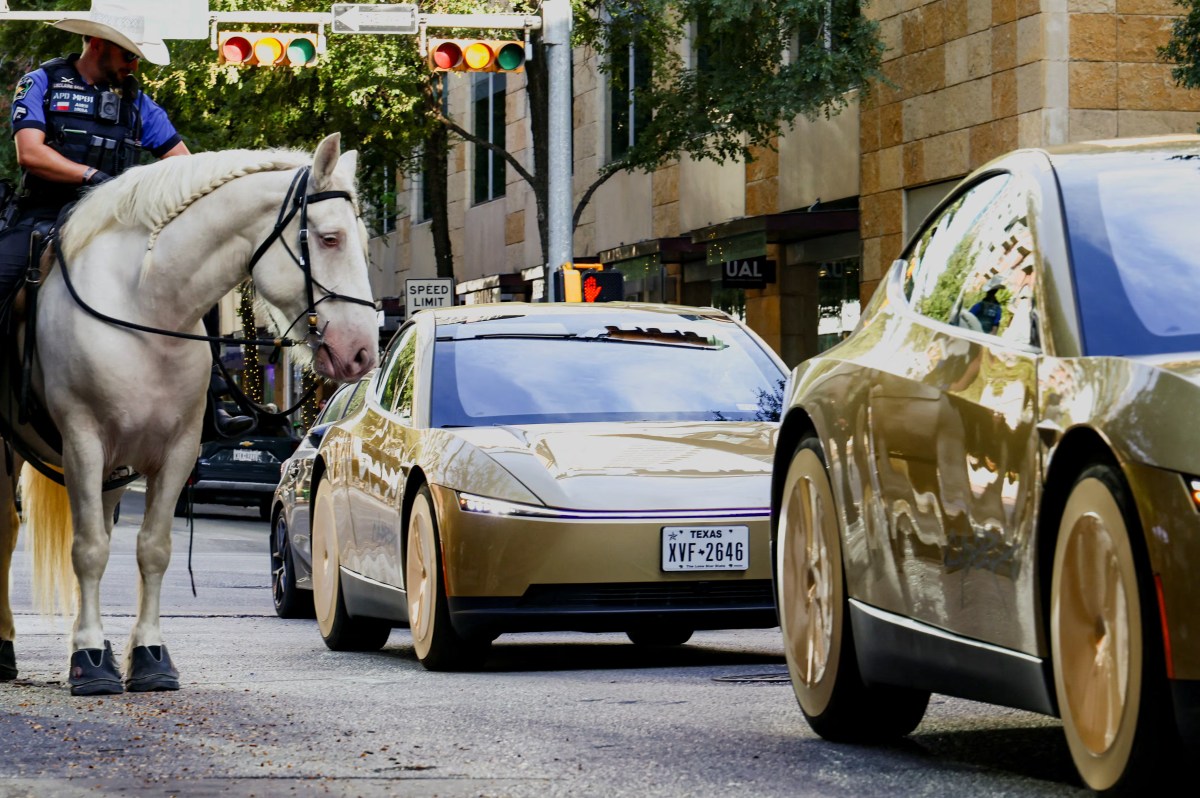
Turning bold manufacturing theory into dependable fleet realities is where Tesla struggles. In the state of Texas, records show Tesla fields 45 Cybercabs out of a total autonomous testing fleet of 420 vehicles. That sounds reasonable until you compare it to Waymo, which already has 988 fully autonomous commercial rigs across the Lone Star State, mainly converted Jaguar I-Pace electric crossovers. Tesla's Austin rollout is tightly geofenced to the same boundaries allocated to its Model Y test fleet, making a mockery of earlier executive claims that driverless Teslas would blanket half the American population by late 2025.
When you ignore the social media fan clips, the actual service reveals plenty of rough edges. Real-world evaluations across Dallas and Houston showed service gaps - no vehicle availability, punishingly long wait times. On many occasions, the autonomous system refused to navigate crowded street corners, instead dumping passengers a 15-minute walk away from their chosen destination. It is tricky to sell the dream of autonomy when your high-tech chariot drops you three blocks short in the midday Texas swelter.
Regulatory barricades loom just as large as software gremlins. The National Highway Traffic Safety Administration wasted no time confirming that its inspectors are still evaluating Tesla's Austin operations. Under Federal Motor Vehicle Safety Standards, manufacturers face strict national statutory caps on how many vehicles without physical steering wheels and pedals they can actually sell to customers. Across the border in California - the electric car heartland that built Tesla's fortune - the company still lacks the commercial permits to operate paid, driverless robotaxis without a human safety driver riding shotgun.
And then we have the mystery of retail pricing. When Musk revealed the Cybercab at a Hollywood studio back in 2024, he tossed out an enticing teaser figure: an MSRP under $30,000. Fast-forward two years, and the company refuses to confirm a retail sticker price, talking instead about dynamic ride-hailing fares that flex with demand. That silence? It matters.
Tesla's Cybercab is a fascinating piece of packaging - a brilliantly engineered, well-proportioned, two-seat electric pod that reminds me so much of my old 1990 Honda CRX. Once you've seen it - you can't unsee the similarities. But it proves the company can still innovate on vehicle architecture and modular assembly. And yet, an EV without physical driver controls cannot survive on swagger and promises alone. Until Tesla proves its cameras-only vision stack can drop riders at their destination without regulatory panic or navigational blunders, this golden two-seater is only an experiment. A brilliant one at that, but an experiment.

From the team behind
GSMArena.com
Facebook
Twitter
Instagram
RSS
Settings
Log in I forgot my password Sign up