Four motors, 838 HP, and one-millisecond brains: the electric BMW M3 is a riot
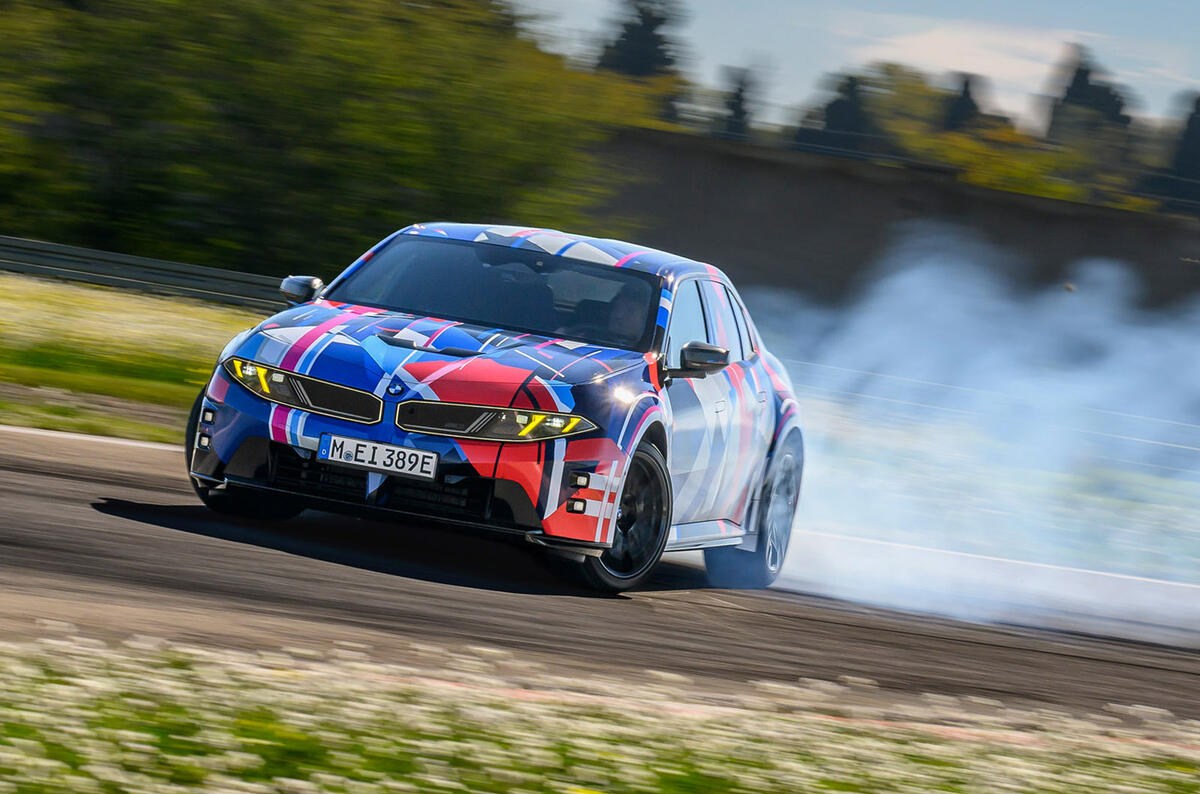
Four electric motors, 838 hp, and 885 lb-ft of combined torque are numbers that not that long ago could be found on a spec sheet of a Le Mans prototype. Definitely not a four-door family sedan out of Munich. Yet here we are, looking at the Neue Klasse BMW M3 - known internally by the chassis code ZA0 - and watching the first batch of prototype drives roll out from the Miramas proving ground in southern France. On paper, it's the most powerful M3 ever built, comfortably eclipsing the 523 hp and 479 lb-ft of the G80 M3 Competition xDrive. For the last five years, many fans have been complaining about the electrification of Garching's sacred cow, assuming it'd be a numb, straight-line battering ram. And just in case, BMW will sell a new gasoline M3 (the G84) alongside it for the die-hards.
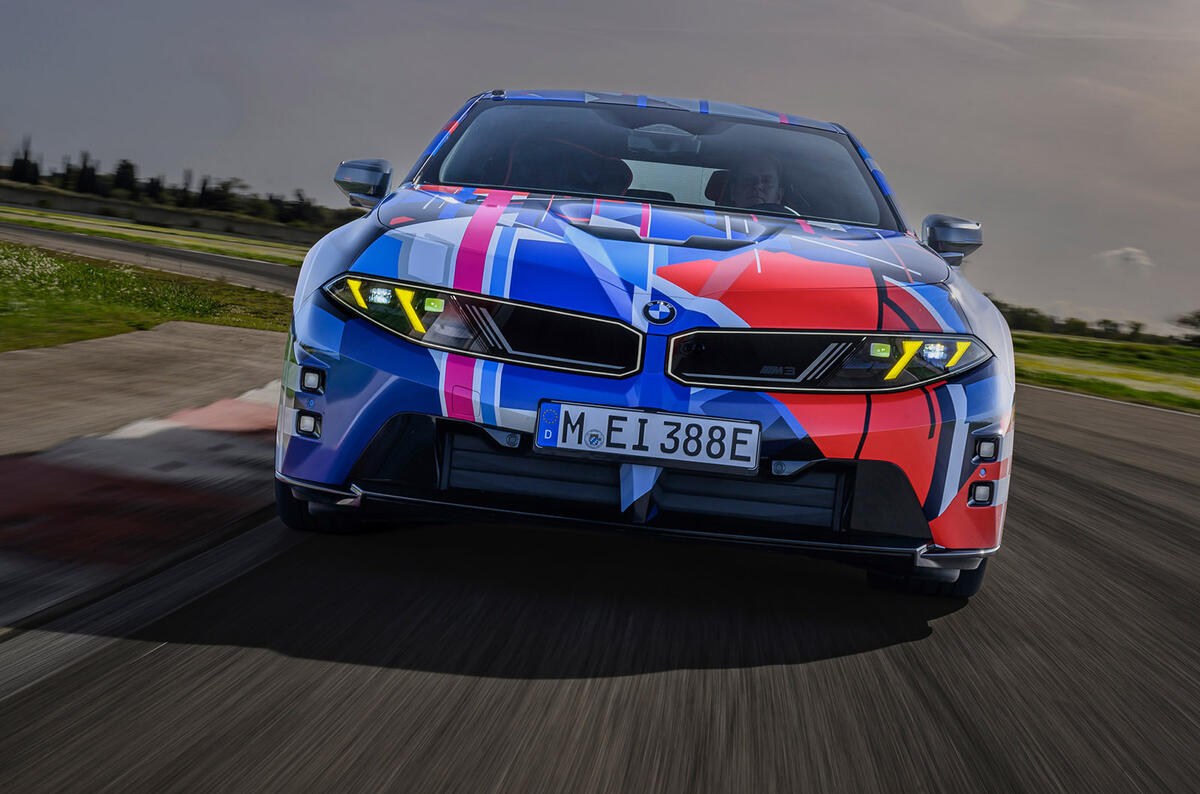
But all that power isn't even the headline here. When project boss Philipp Brunn - the guy who previously oversaw the complete-vehicle concept for the G80 M3 - sat journalists down at Miramas, his team barely mentioned straight-line speed.
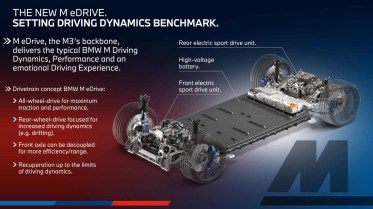
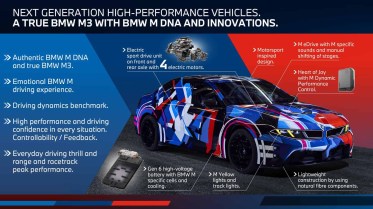
Instead, they obsessed over millisecond response times and structural rigidity. Traditional cars rely on separate control units from various suppliers chatting back and forth over CAN bus networks in 10 to 20 millisecond cycles, constantly reacting to each other after the fact. BMW's new centralized computer - which the marketing department insisted on calling the Heart of Joy (I still can't say it with a straight face) runs M Dynamic Performance Control software in one-millisecond cycles. Because each wheel has its own motor and single-speed gearbox all tucked into compact axle units, the car adjusts torque and handles ABS modulation straight through the electric motors ten to twenty times faster than an old-school hydraulic system ever could. You get on the throttle much earlier mid-corner because the computer isn't cutting power to save you - it's dishing out grip to the tire that can use it before your inner ear even registers a slide.
Of course, this is an EV so there's the weight problem. BMW refused to reveal the curb weight of the ZA0 prototypes at Miramas. "Everyone hates weight," Brunn admitted during the briefing, which tells me we're looking at a machine tipping the scales north of 4,630 lb - a big jump over the 3,924 lb G80 M3, though hopefully undercutting the monstrous 5,368 lb plug-in hybrid M5.
As it turns out, Garching didn't just bolt an M badge onto the Neue Klasse i3 (NA0) platform and call it a day - they turned the 100 kWh sixth-generation battery pack into a stressed structural member. The lower section of the pack housing has a shear plate milled from 0.31 inches aluminum, bolted directly to both the front and rear axle carriers with welded-steel struts connecting the front shock towers straight into the A-pillars. If the body doesn't flex, the suspension doesn't have to fight phantom geometry changes, allowing the engineers to run custom forged-aluminum five-link rear kinematics and progressive springs that don't shatter your spine. Even the bucket seats ditch trendy carbon fiber for a natural fiber composite borrowed from the M4 GT4 race car, cutting production carbon dioxide emissions by 40% and letting you sit deeper in the chassis.
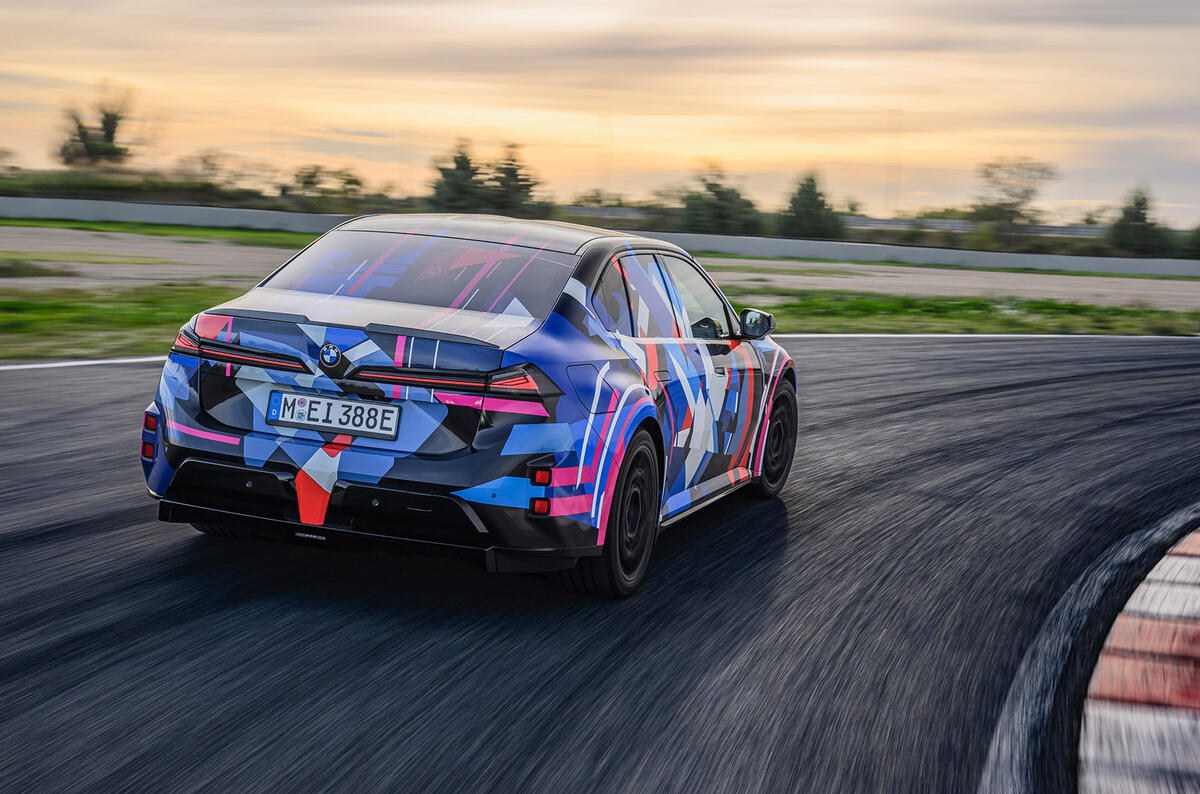
The rival comparisons get messy fast. We are still waiting for final homologation dimensions on the ZA0, but the overall length and wheelbase should be similar to the new i3. That puts it in the crosshairs of some wildly different performance sedans. We've got the Tesla Model S Plaid (no longer in production), a larger 197.7 inches barge that packs 1,020 hp from three motors and weighs 4,766 lb. Over in Affalterbach, the Mercedes-AMG GT 4-door Coupe stretches to 200.6 inches on a 119.7 inches wheelbase. Even China's Xiaomi SU7 Ultra is crashing this party at 199.6 inches long with a ridiculous 1,526 hp tri-motor setup, proving that triple-digit horsepower is cheap in the electric era, whereas proper elastokinematics (the “secret sauce” - the unique feel of every car) and steering feel are still hard to fake.
Looking closer at the drivetrain numbers, we can see how BMW engineered actual character into the layout. The front drive unit can make 644 hp and 398 lb-ft, but the rear unit is rated for 751 hp and 740 lb-ft, capped by the battery amperage at 838 hp combined.
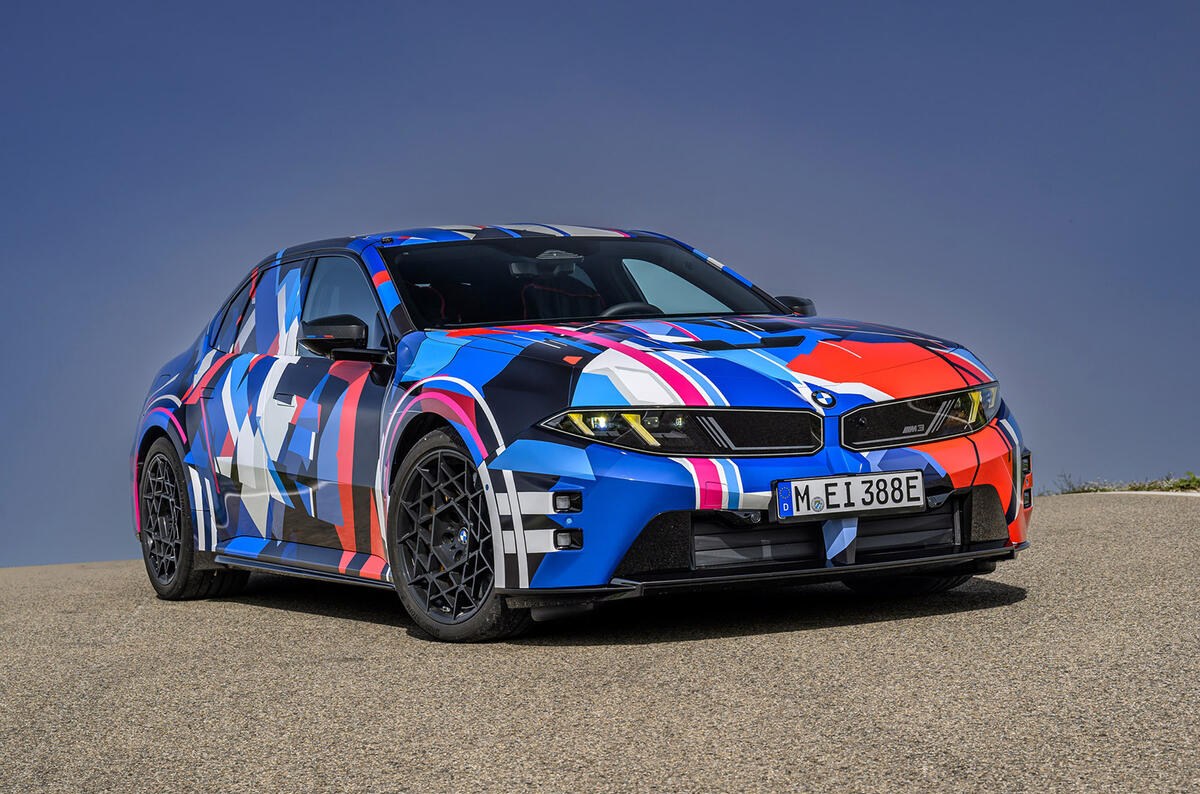
Why put four motors in a car when rivals use two or three? Control, redundancy, and massive energy recuperation. In Comfort mode, a mechanical decoupling unit disconnects the front axle entirely so you can cruise efficiently on the rear motors, covering up to 404 miles on the WLTP cycle (about 300 miles EPA). Flick the car into Sport or Sport Plus and the front axle stays permanently locked in because even a tiny decoupling delay ruins mid-corner precision. If one motor suffers a mechanical failure out on the road, the car can't balance torque across a single wheel without a mechanical differential, so it simply shuts down that entire axle and drives you home on the remaining pair.
Stopping used to be a mechanical affair, but this thing relies more on software than cast iron. The four motors pull up to 540 kW of regenerative braking - hitting 0.4 g of deceleration just by lifting off the throttle - which meant BMW could actually fit a friction brake system that weighs slightly less than the one on the combustion M3. At Miramas, where BMW test mules log over 3,730,000 miles a year across 37 miles of tarmac, engineers proved that regeneration puts so much energy back into the pack that every three hard laps effectively earn you a fourth for free.
Keeping that pace without any thermal throttling is where most electric track cars fall flat on their faces. Standard Neue Klasse i3 battery packs only cool every second row of cylindrical cells, so M engineers doubled the internal cooling plates to chill every row from both sides, fitted bigger water pumps, and tweaked the cell internals with thinner, wider electrodes and extra electrolyte to speed up ion exchange.
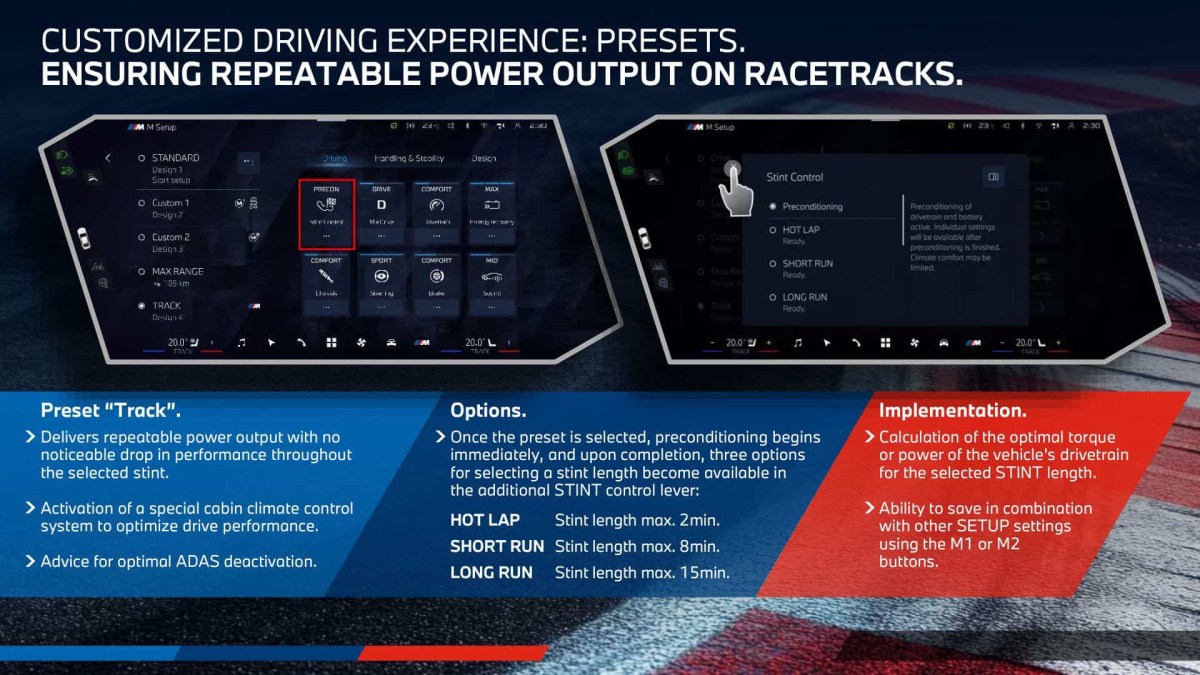
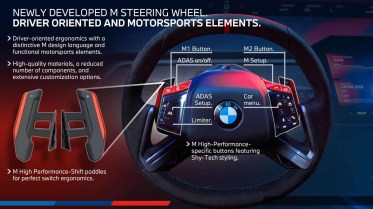
Tap the Track preset on the steering wheel, and you can pick a two-minute Hot Lap, an eight-minute Short Run, or a 15-minute Long Run; the car preconditions the battery and caps output just enough to guarantee zero power fade from the first corner to the checkered flag. When you eventually drain it down to 60% after ten laps of abuse, the 800V architecture drinks DC fast charging at up to 420 kW, throwing roughly 217 miles of range back into the “tank” in about ten minutes.
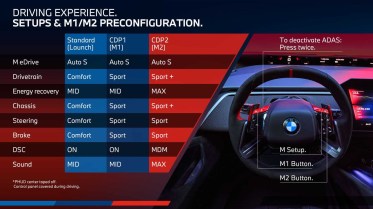
Then we come to the paddle shifters. Unlike Hyundai Ioniq 5 N, which simulates an eight-speed dual-clutch gearbox with intentional torque cuts between shifts, BMW's M eDrive system divides the speed range into six stages without ever interrupting power delivery. Because an electric motor reacts in one millisecond compared to the 150 to 200 milliseconds it takes a V8 throttle butterfly to open, a single linear throttle map makes an 838 hp car nervous and jerky in normal driving. Selecting lower stages steepens the "Agility" curve for hair-trigger throttle response and aggressive lift-off regen on a mountain pass at 50 mph.
Stage 5 and Stage 6 soften the bottom of the pedal for smooth motorway cruising at that exact same speed. Pull a paddle to enter Manual S mode with the synthesized M eSound turned on, and the car will actually bounce off a virtual rev limiter at the top of a stage until you pull the right paddle. It all sounds a little confusing, but watching the reactions of the lucky few journalists - it works rather well.
I appreciate that BMW also fitted a dedicated ADAS button on the steering wheel that lets you double-tap away annoying lane-keep chimes on the move without digging through submenus. And while Brunn hasn't ruled out a lighter, two-motor rear-wheel-drive variant down the line, he's quick to point out that ditching the front motors kills half your regenerative braking and forces you to bolt on heavier friction brakes anyway.
Everything on paper suggests M Division has done its homework to make a 100 kWh computer on wheels behave like a proper hooligan. Now I just need to get my hands on the keys away from a French test track, point that 10.8 inches front rubber down a damp, cambered back road, and see if you can really hide two tons of battery behind one-millisecond software.



From the team behind
GSMArena.com
Facebook
Twitter
Instagram
RSS
Settings
Log in I forgot my password Sign up