ArenaEV.com ArenaEV.com

Facebook

Twitter

Instagram

RSS

Settings
Units
Power
Standard
Consumption
Currency

Log in

Login

I forgot my password
Sign up
ADVERTISEMENTS

Hyundai and Kia unveil Active Air Skirt technology to boost EV range

  • Post your comment

Max McDee, 23 January 2024

Hyundai Kia

Electric vehicles continue to evolve at a rapid pace, with automakers constantly seeking innovative ways to enhance their range and performance. Hyundai Motor Group has unveiled a new solution in the form of Active Air Skirt (AAS) Technology, promising to boost the range of EVs.

AAS is designed to enhance both the top speed and range of electric cars by improving their aerodynamic efficiency. The technology employs adjustable air skirts in front of the front tires, concealed behind the front bumper when not needed, to minimize turbulence generated by the rotating wheels.

The AAS system springs into action when the vehicle surpasses 50 mph, effectively directing airflow around the front wheels. As the vehicle's speed dips below 43 mph, the air skirts automatically retract.

Testing conducted with the Genesis GV60 revealed impressive results of the Active Air Skirt Tech. It managed to reduce the drag coefficient (Cd) by 0.008, translating to a notable 2.8% improvement in overall drag. The implications for electric vehicles are substantial, particularly on the highway, where the air resistance penalty is the highest.

The AAS system added a valuable 3.7 miles to the vehicle's range - hardly a game changer, but still handy. Hyundai estimates its can contribute up to 8 miles to the range under ideal conditions.

Hyundai's AAS system maintains effectiveness at speeds exceeding 124 mph. It contributes to additional downforce, traction, and stability, making it a versatile technology that benefits electric cars across various scenarios, including high-speed driving.
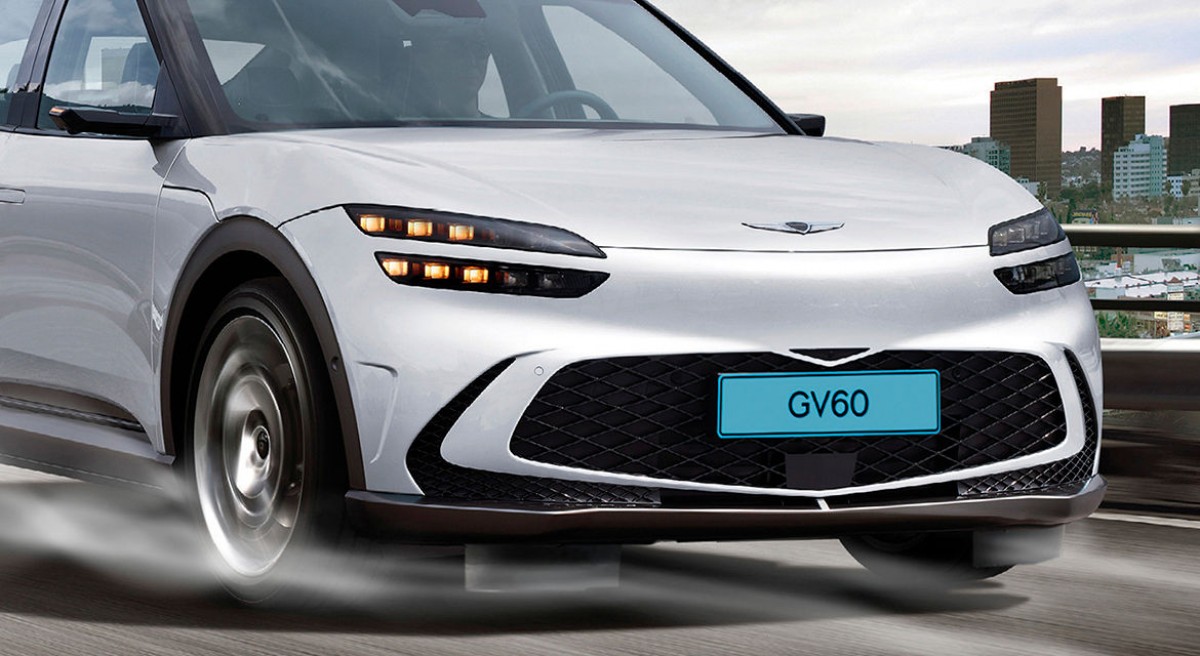
Hyundai and Kia unveil Active Air Skirt technology

The AAS system is currently undergoing durability and performance testing, with Hyundai and Kia evaluating its potential for inclusion in the production vehicles. Sun Hyung Cho, Vice President and Head of the Mobility Body Development Group at Hyundai Motor Group, emphasized the technology's potential impact, particularly on SUVs: "This technology is expected to have a greater effect on models such as SUVs where it is difficult to improve aerodynamic performance."

Existing Hyundai models like the Ioniq 6, already incorporate various active and passive aero features such as active air flaps, wheel air curtains, wheel gap reducers, and rear spoilers, all aimed at reducing drag coefficients and enhancing performance.


Source

This article contains localized units and prices. Change settings.
Your choice
Related articles
  • Hyundai EVs score free FIFA World Cup 2026 infotainment update Hyundai EVs score free FIFA World Cup 2026 infotainment update
  • Hyundai Mobis unveils new simpler drive system Hyundai Mobis unveils new simpler drive system
  • Hyundai reinvents itself in China with the Ioniq V Hyundai reinvents itself in China with the Ioniq V
  • Hyundai Ioniq 3 debuts in Europe Hyundai Ioniq 3 debuts in Europe
  • Post your comment
Total reader comments: 0

  • Home
  • Compare
  • News
  • Terms
  • Reviews
  • About us
  • Tesla
  • Volkswagen
  • Audi
  • Porsche
  • BMW
  • Mercedes
  • Hyundai
  • Kia
  • Renault
  • Nissan
  • Dacia
  • Ford
  • Jeep
  • Volvo
  • Polestar
  • Zeekr
  • Jaguar
  • Mini
  • Toyota
  • Mazda
  • MG
  • Voyah
  • Lucid
  • Rivian
  • Cadillac
  • Chevrolet
  • GMC
  • RAM
  • Subaru
  • Nio
  • Xpeng
  • BYD
  • All brands

EV finder

ADVERTISEMENTS

Latest models

  • ModelAudi
    Q4 e-tron performance
  • ModelAudi
    Q4 Sportback e-tron
  • ModelBMW
    i7 LCI M70 xDrive
  • ModelHyundai
    Ioniq 3 Standard Range
  • ModelMercedes
    C400 4MATIC
  • ModelVolkswagen
    ID.3 Neo 79 kWh

Featured

  • Mirror cameras: The pros and cons Mirror cameras: The pros and cons
  • EV vs ICE - differences and similarities EV vs ICE - differences and similarities
  • NCM, NCA, LFP, solid-state - EV battery chemistry explained NCM, NCA, LFP, solid-state - EV battery chemistry explained
  • Why do modern vehicles beep so much while driving? Why do modern vehicles beep so much while driving?
  • Analyzing the Mercedes-Benz EQXX revolutionary concept Analyzing the Mercedes-Benz EQXX revolutionary concept

Reviews

  • Polestar 2 Long Range AWD review Polestar 2 Long Range AWD review
  • Which Skoda is better - Enyaq iV or Enyaq Coupe RS iV Which Skoda is better - Enyaq iV or Enyaq Coupe RS iV
  • Hyundai Ioniq 5 N review Hyundai Ioniq 5 N review
  • AAWireless Two+ wireless Apple CarPlay and Android Auto adapter review AAWireless Two+ wireless Apple CarPlay and Android Auto adapter review
ADVERTISEMENTS

Home News Compare About us RSS feed Facebook Twitter Instagram

© 2022-2026 ArenaEV.com Mobile version EV Finder Glossary Privacy Terms of use

From the team behind
GSMArena.com