Tesla's record deliveries fail to shield the bottom line from Elon's AI ambitions
We've been watching the automotive landscape go from burning fossil fuels to humming on electrons over the last couple of decades. It has been quite a journey, and you'd think we've seen it all. As it turns out, nothing can prepare you for the financial acrobatics of Tesla's latest quarterly report.
On one hand, Elon Musk is celebrating a record-breaking quarter for sending a huge fleet of vehicles out into the wild. On the other hand, we are staring at a bottom line that looks like it took a hard left into a guardrail. Let's unpack this split because the disconnect between top-line swagger and bottom-line reality is simply mind-boggling.
 Source: Tesla
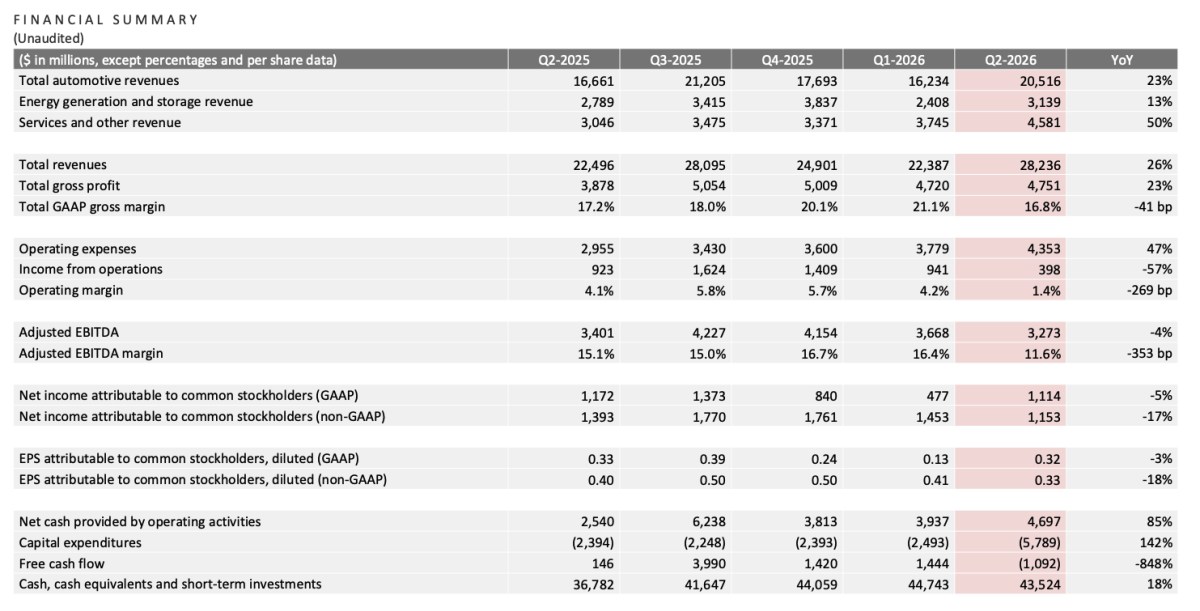
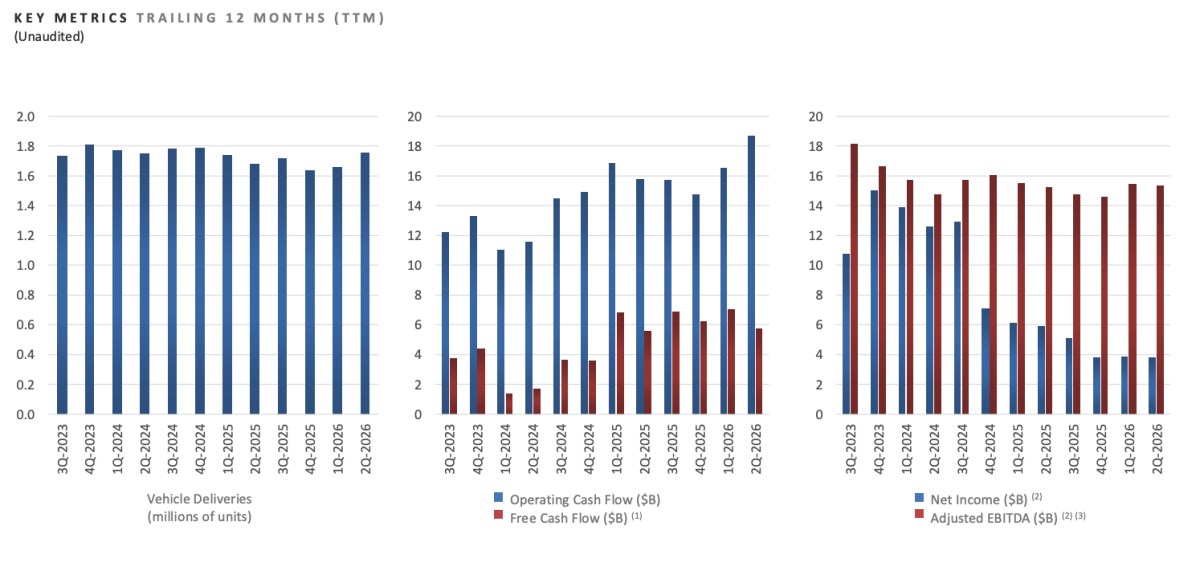
Tesla marched out of the quarter with a historic $28.24 billion in total revenue, clocking a huge 26% growth compared to the same period last year. Wall Street was expecting something closer to $26.4 billion, so the revenue engine was absolutely screaming. Unfortunately, when the time came to count the actual profit, the numbers whimpered - non-GAAP earnings crashed to $0.33 per share, missing the forecasted $0.53 by an embarrassing margin (and 18% drop year-over-year). Operating margins collapsed from a healthy 4.1% last year down to a razor-thin 1.4%.
So, where did all those hard-earned greenbacks vanish? The primary culprit is the shift in the regulatory landscape that has turned off the free-money spigot. Tesla survived and thrived for many years on selling regulatory compliance credits to legacy automakers who couldn't build EVs fast enough to save themselves from government fines.
 Source: Tesla
With the federal tax credit ending back in late 2025 and sweeping policy changes that zeroed out fuel-economy penalties for rivals, that goldmine closed down. Tesla pulled in only $146 million in credit revenue this quarter - a 67% drop from the $439 million they bagged last year. Since these credits have zero production costs, losing them is like watching pure profit walk right out the door.
But the plot thickens when you look at what Elon is actually doing with the cash the auto business manages to generate. Instead of dumping funds into refreshing a maturing vehicle lineup, Tesla is deep in an eye-watering capital expenditure super-cycle, tossing more than $25 billion into the AI and robotics furnace this year alone - nearly triple the investment from last year.
 Source: Tesla
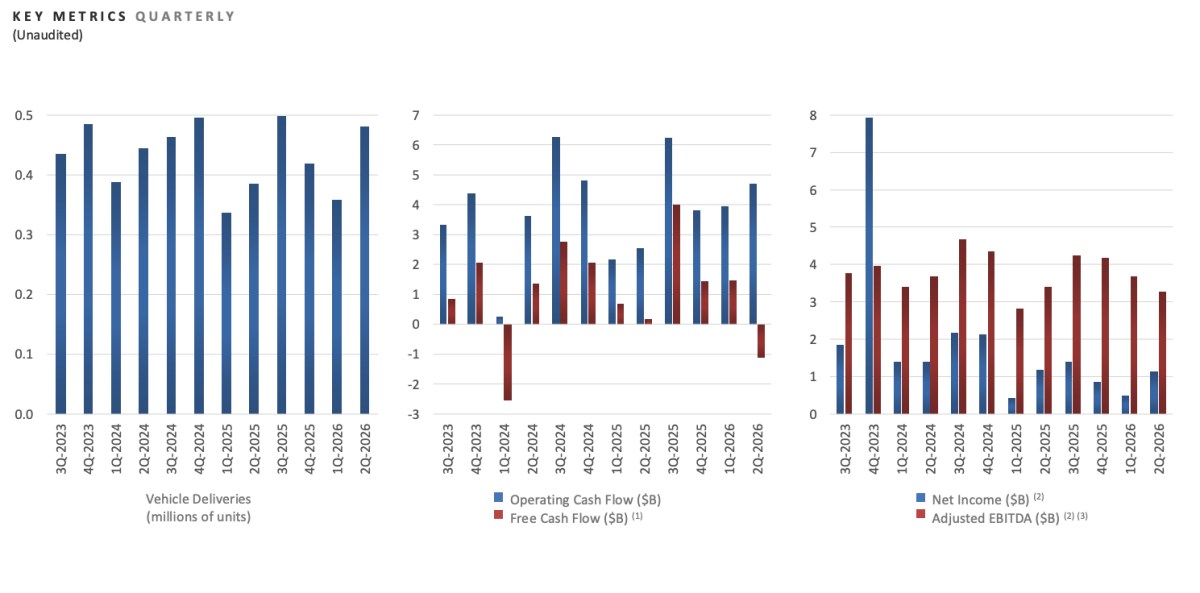
Tesla has reported massive R&D outlays for the Optimus humanoid robot, robotaxi infrastructure, and for securing premium allocations of advanced memory chips from Micron to keep the self-driving dream alive. It is a wild bet that has driven free cash flow into negative territory to the tune of $1.09 billion - the company's first real cash-burning quarter in more than two years.
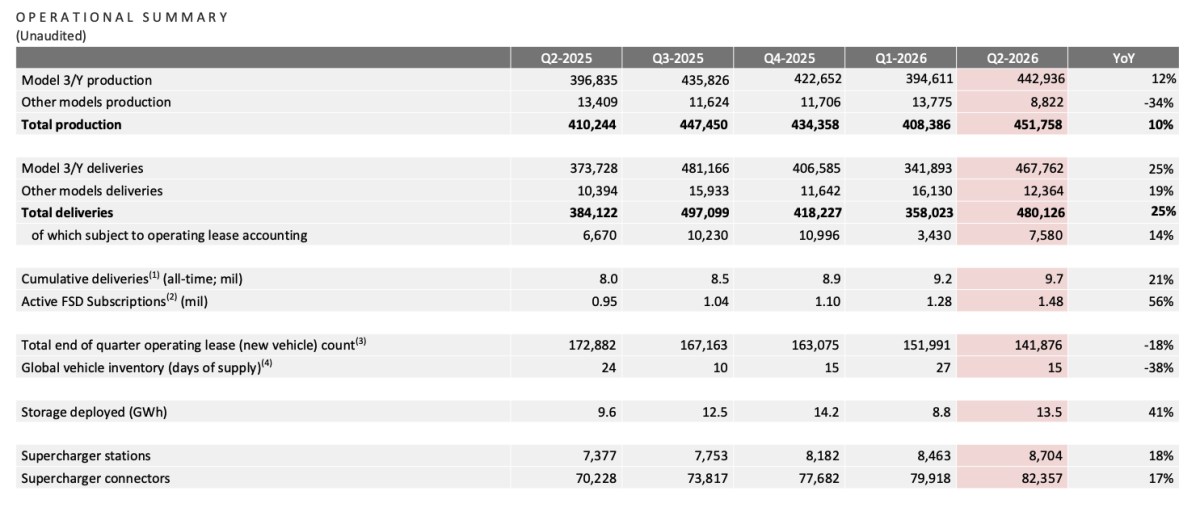
Despite the corporate pivot toward Silicon Valley sci-fi, Tesla's metal on the ground still has to duke it out in a crowded, competitive global market. The 480,126 deliveries prove the demand is alive, but the lack of fresh platforms means their EVs are facing serious pressure from hungry rivals.
 Source: Tesla
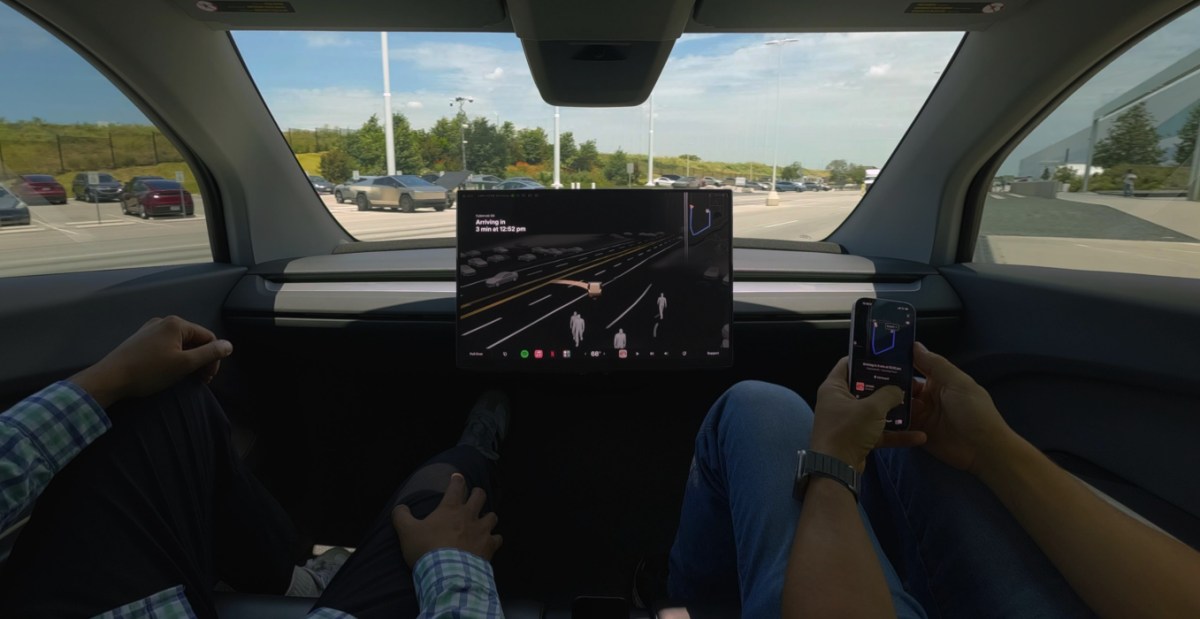
Over in Europe, the ground realities are getting even more complicated. A war-induced surge in fuel prices actually gave EV adoption a shot in the arm across the continent, helping Tesla clear out its growing inventory. But the real friction is about getting Full Self-Driving software approved by stubborn European bureaucrats. Tesla has been pitching its FSD system to regulators in Sweden and the Netherlands, hoping an EU-wide green light will ignite a fresh wave of vehicle sales. Apparently, behind closed doors, the reception has been icy.
Leaked correspondence revealed that authorities in Norway, Finland, Sweden, and the Netherlands are having second thoughts. Regulators are waiving red flags over the system's tendency to ignore speed limits, its questionable stability on frozen Nordic roads, and the ease with which drivers can trick Teslas in order to do things they definitely are not supposed to be doing when driving.
 Source: Tesla
Independent researchers have even labeled Tesla's self-published safety statistics as nothing more than misleading marketing. The Dutch vehicle authority did grant a provisional nod earlier, but an incredibly crucial European Union committee meeting scheduled for October could make or break the system's continental future. If the wider EU approval stalls, those hard-fought local permissions will simply lapse after six months.
Back home, the promise of an autonomous revolution feels a bit overcooked. The robotaxi network, which Elon claimed would cover half the American population by now, is confined to tiny geofenced pockets of Florida and Texas. The rhetoric has shifted from a deploy-anywhere solution to the city-by-city slog that Waymo has been grinding through for many years.
 Source: Tesla
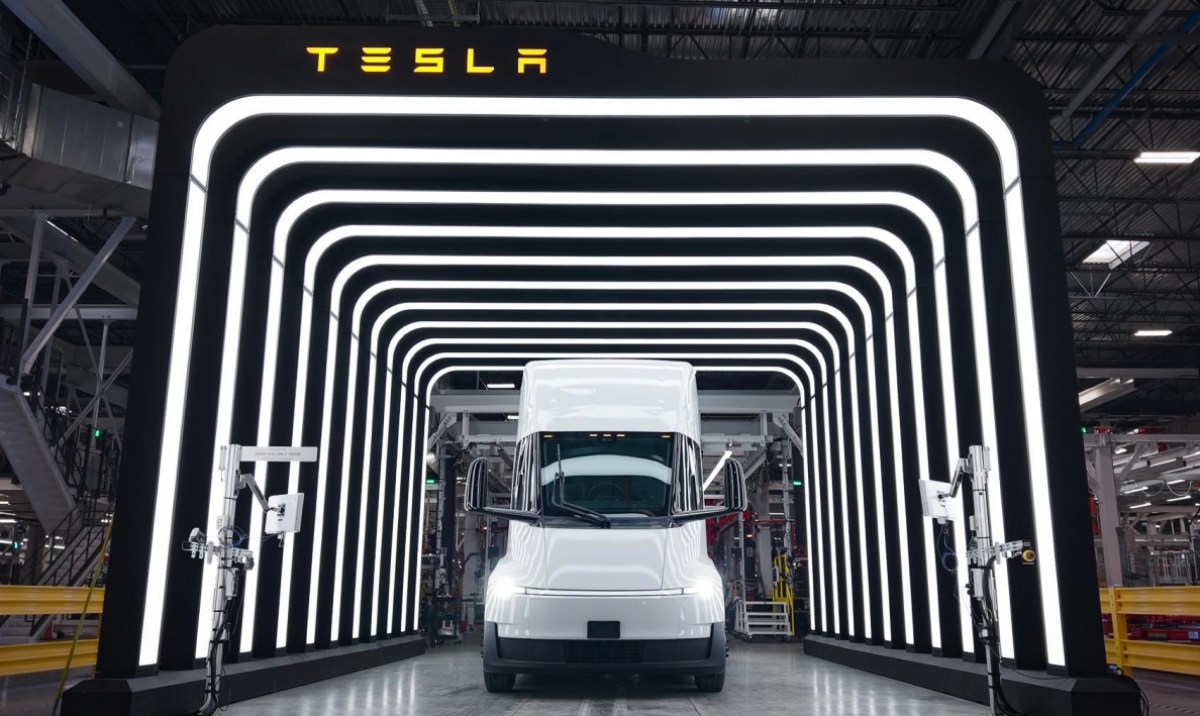
Even the long-awaited Semi truck, which is finally seeing some production traction and is about to receive self-driving capabilities around the turn of the year, will remain a tiny drop in the broader fleet bucket for the foreseeable future.
What we are looking at here is the ultimate corporate identity crisis. Tesla is trying desperately to shed its skin as a high-volume automaker and emerge as an AI powerhouse, using its massive car production machine as a piggy bank to fund tomorrow's robotics. It is nothing but a high-stakes gamble that needs investors to look past shrinking automotive margins and deep cash burn in exchange for a utopian tech harvest.
 Source: Tesla
For those of us who love the simple thrill of a well-engineered car carving up the mountain twisties, it is a ridiculous spectacle - a company building more cars than ever before, yet somehow losing interest in the very vehicles that put it on the map. It's almost painful to watch.

From the team behind
GSMArena.com
Facebook
Twitter
Instagram
RSS
Settings
Log in I forgot my password Sign up