Tesla FSD v15 - an honest patch for half a decade of real-world failures
Tesla dropped the release notes for Full Self-Driving v15 on X, and reading them feels less like a step into the future and more like a brutally honest confession of everything the system got wrong until now. Potholes. Speed limits. School zones. These aren't edge cases in a simulated silicon sandbox - they're the daily realities of commuting, and for years, FSD has treated them with alarming indifference. The update promises a 25x improvement in critical intervention rates and a heavily hyped Reality View interface. But the real story is that Tesla is finally forcing its multi-billion-dollar neural net to look down at the broken roads we drive on.
If it actually delivers on these promises, v15 is the most consequential update since they ripped the radar out of the front bumper. If it doesn't, it's just another glossy software wrapper on a system that still tries to scratch your alloys at every roundabout.
FSD v15 now starting to roll out – upgrading every part of the end-to-end driving network
Safety
25x better handling of safety critical cases
Tesla Reality View
Adds a live visualization of the drive that lets you see & control what FSD is planning to do
Navigation for start & end of the trip now learns end-to-end from fleet route preferences. Later v15 releases will expand this to the entire route.
You also should notice better detection of signs, animals, debris, potholes and standing water, plus more natural speed handling in school zones and inclement weather.
Lastly, FSD can now slow for speed cameras & Bike Rack Mode lets you enable FSD w/ bike racks or similar hitch accessories
— Tesla (@Tesla) November 21, 2026
The core of v15 is a totally rebuilt vision encoder, which Tesla says is now shared across FSD, the Robotaxi fleet, and the Optimus humanoid robot. They've trained it on millions of internet videos to improve generalization, supposedly cutting the critical intervention rate by a factor of 25. That sounds fantastic on an earnings call, but as usual, the company refuses to publish the baseline number being multiplied. Some independent testing data from earlier this year suggested v14 could manage roughly a couple thousand miles between critical disengagements. Multiply that by 25, and you land at 50,000 miles before the car tries to do something fatal. That pushes Tesla well past the 10,000 miles generally accepted for a limited unsupervised service.
Almost every bullet point in the v15 release notes targets a localized failure point owners have complained about for years. Sign detection is a prime example. Back in September, the Brussels-based nonprofit Johanna.be tested FSD through 19 mph zones and found the system breached the limit 55 percent of the time, averaging 27 mph. The center screen stubbornly displayed a 31 mph limit. It simply wasn't reading the signs. The v15 notes claim improved detection of signs, small animals, road debris, and chains. It explicitly mentions better speed handling in school zones. This is incredibly timely given the NHTSA opened a formal investigation in October 2025 into FSD running red lights and speeding through active school zones. But the new speed camera detection logic is deeply cynical. If the system detects a camera, it slows down - suggesting Tesla is perfectly comfortable with the car speeding the rest of the time.
Full release notes below
– – –
v15 upgrades every part of the end-to-end driving network. Includes:
Upgraded vision encoder shared between FSD, Robotaxi, and Optimus, which is trained on millions of internet videos for improved generalization and data efficiency, improving the critical intervention rate by 25x.
Introduced Tesla Reality View, replacing all of the explicit model signals into a single end-to-end visualization using less total compute.
Improved navigation by using an end-to-end learned model based on route preference data from the fleet.
Improved parking location selection by using personalized parking history, and the map will now display multiple parking options at your destination.
Improved driver monitoring by increasing vision-based attention monitoring availability with hats and sunglasses and decreasing strictness in higher speed driver profiles.
Improved detection of road signs, small animals, road debris, and chains.
Improved detection of potholes, road details, and avoidance of deep standing water.
Improved speed handling for each driver profile, school zones and speed limits, and inclement weather.
Improved Autoshift functionality by unifying with FSD-based gear predictions.
— Tesla Super Intelligence (@TeslaSI) November 21, 2026
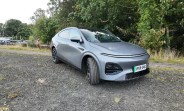
Elon Musk promised pothole avoidance was coming "soon" back in 2019, but FSD still drives straight through them. When you hand over control of a Tesla Model Y, hitting a crater at highway speeds isn't an uncomfortable software glitch - it's blown tires and fractured suspension arms. Put it against the XPeng G6 I tested recently on Scottish B-roads, where its XPILOT ADAS suite manages to actively map and swerve around degraded road surfaces without upsetting the chassis. If a $54,700 Chinese crossover can negotiate a collapsed drain cover, buyers won't accept suspension damage from a $61,780 Model Y running supposedly premium autonomous software.
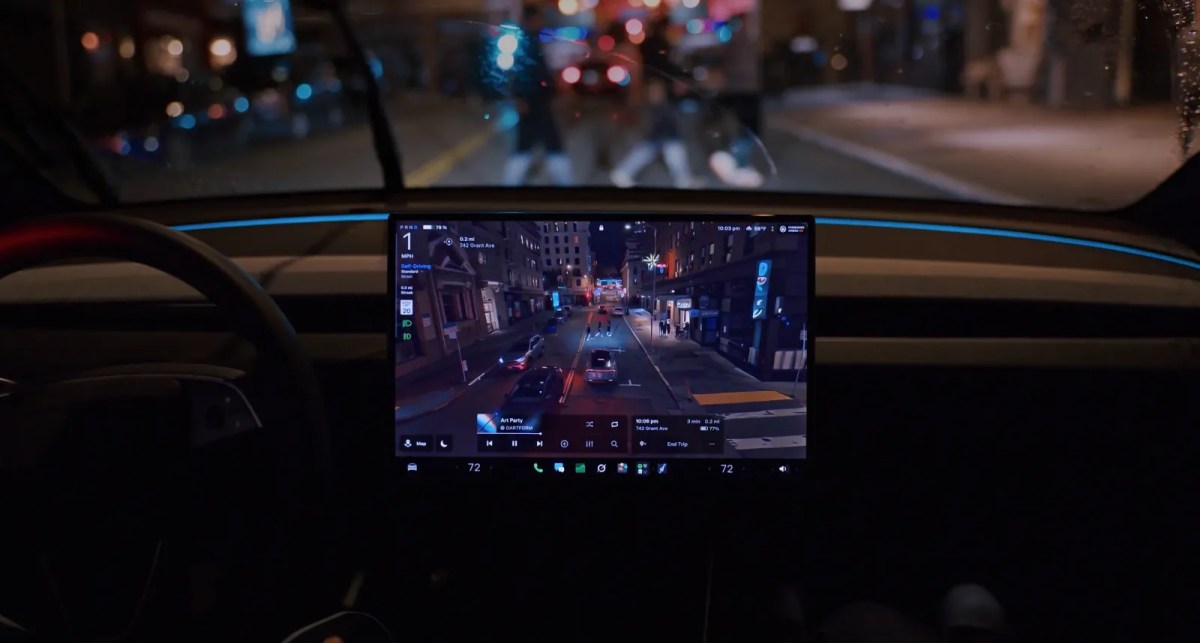
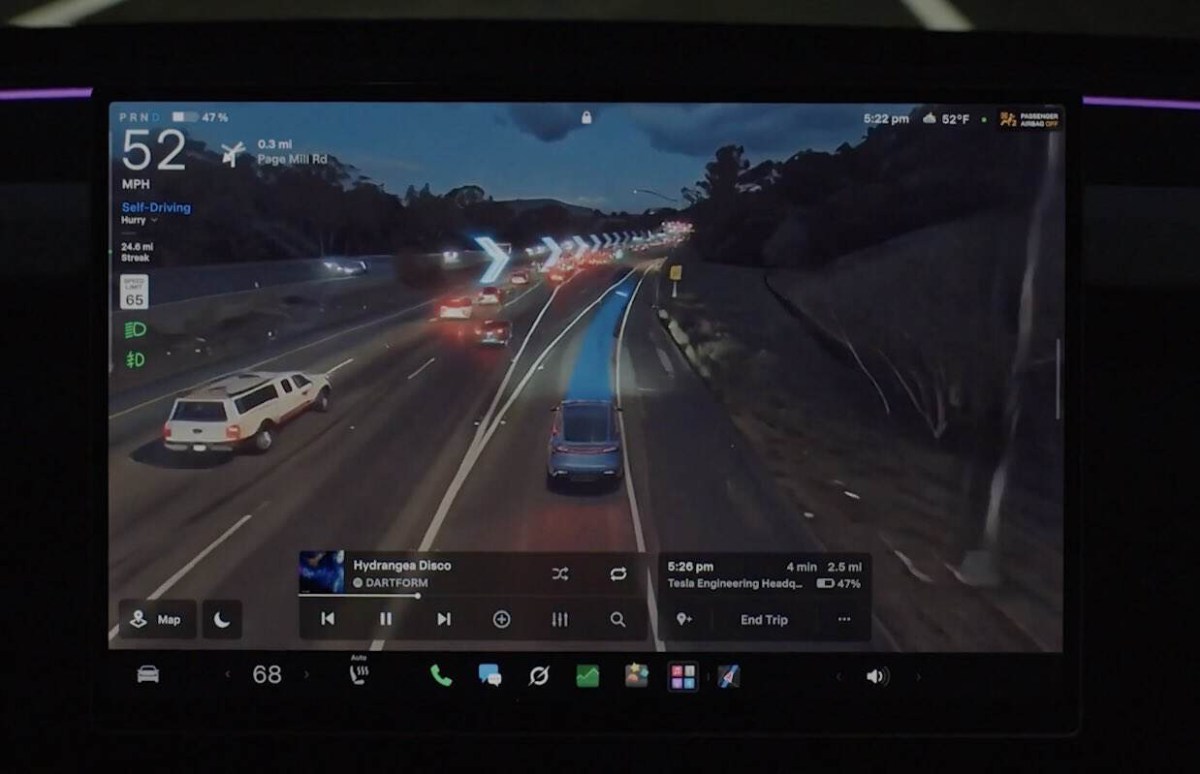
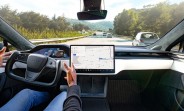
Tesla is trying to mask this long-standing clumsiness with a big visual overhaul called Reality View. The release notes say they've replaced all the model signals with a single end-to-end visualization that uses less total computing power. Based on the preview videos, it's seriously slick. The center screen now renders a detailed, real-time virtual environment mapping the street, pedestrians, and incoming traffic from an arbitrary camera angle floating above the car. It's designed to let the driver see exactly what the neural net is planning to do before it does something. That should make supervising the vehicle less nerve-wracking, provided the rendering engine isn't cannibalizing processing bandwidth needed for actual collision avoidance.
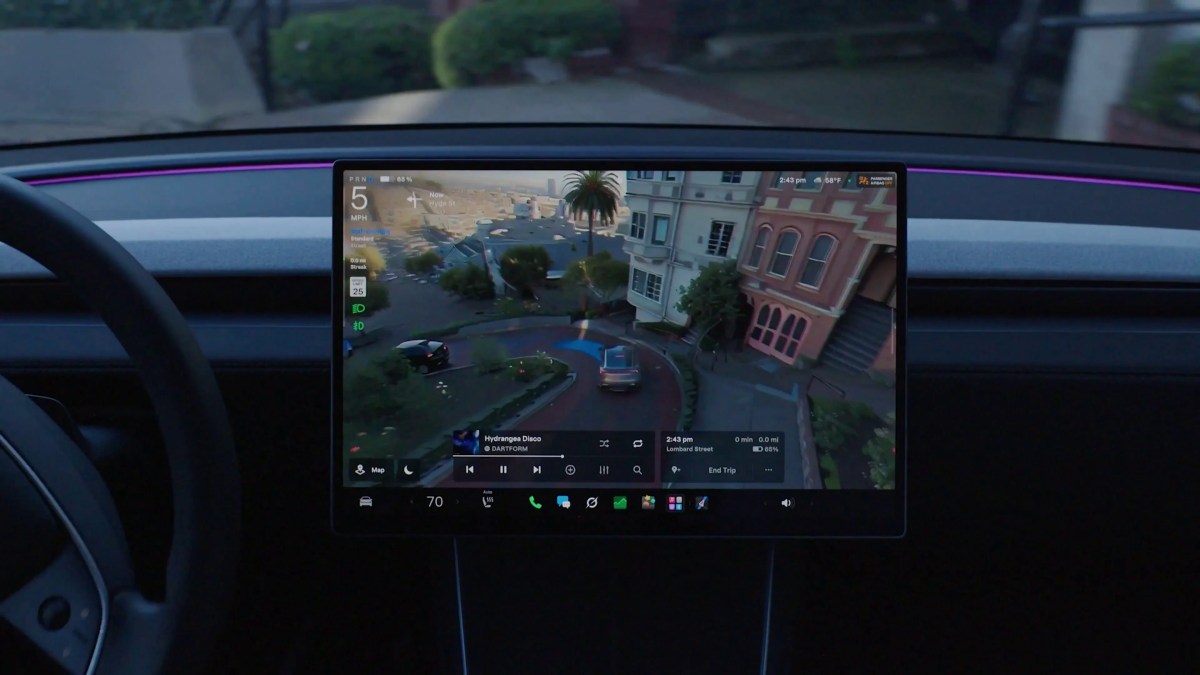
Important detail - the hardware divide is impossible to ignore. Tesla confirmed this sweeping v15 architecture is rolling out to cars only with the newer AI4 - or HW4 - computer hardware. Those clinging to HW3 vehicles are left behind on an older version. We knew this was coming, but it still stings for early adopters who paid thousands for a software package they were promised would eventually appreciate in value and drive them to work while they slept. Processing an end-to-end neural net at 36 frames per second needs serious silicon, and the older chips are simply aging out of the autonomous race.
The next bit is curious to say the least - Tesla's decision to relax driver monitoring is baffling. In the same update where they claim to have improved vision-based attention tracking - it works better with hats and sunglasses - they buried a line about "decreasing strictness" in higher-speed driver profiles. The internet is already overflowing with dashcam footage of Tesla owners asleep at the wheel on highways. European regulators are forcing manufacturers to implement tighter, more aggressive driver monitoring protocols, and Tesla is deliberately choosing to relax the system's nagging at higher speeds. I get it, it's a concession to driver annoyance, but it contradicts the global regulatory push for tighter supervision.
Fleet-learned navigation now dictates the beginning and end of every route. Right now, this only applies to the very start and finish of a given trip, though Tesla says later point releases will expand the behavior to the entire journey. Parking selection has also been overhauled to use your personal parking history and display multiple viable spaces at your destination on the map. This is exactly the kind of mundane, repetitive task where AI adds tangible value to the ownership experience. Nobody buys an autonomous driving package only for highway cruising anymore - they buy it so the car can navigate chaotic city centers and multi-level parking garages. Tesla also threw in Bike Rack Mode, which finally stops the car's ultrasonic sensors from having a nervous breakdown every time you reverse with a bicycle rack attached to a tow hitch.
We've been here before with Tesla software updates. Every major version ships with tons of hype, followed by a period of regression, before eventually settling into genuine improvement. When v14 launched in October 2025, it arrived loaded with hallucinations, erratic brake stabbing, and aggressive speeding. Early crowdsourced data showed it managed a dismal 732 miles between critical disengagements - well below the internal targets. It took seven months and a long string of point releases to get that software to a point where owners weren't fighting the steering wheel. FSD doesn't improve in a straight line. It stumbles backward just as often as it leaps forward - the good old “two steps forward, one step back” scenario.
Musk claimed back in April that v15 would far exceed human levels of safety in completely unsupervised environments. He said the exact same thing about v12, and then again about v14. The truth is that v15 is a desperate attempt to patch the glaring holes in a driving stack that has struggled with the basics of road infrastructure for half a decade. The Reality View interface might be the prettiest piece of UI design in the automotive industry right now. But a beautifully rendered digital pothole on an OLED screen won't soften the impact when the suspension crashes into the real thing at 50 mph. We'll make our own opinion the second this hits the test fleet. Until then, it's just another beta release wrapped in a very pretty wrapper, though I gotta say this - I hope Tesla finally nails it. It’s about time.

From the team behind
GSMArena.com
Facebook
Twitter
Instagram
RSS
Settings
Log in I forgot my password Sign up