Tesla delivers FSD v14 Lite to legacy H3 EVs as the legal pressures grow
Tesla has officially started to release the Full Self-Driving update for older vehicles. The automaker is deploying firmware version 2026.20.5.1, known as FSD v14 Lite, to vehicles with Hardware 3 technology. Tesla AI software executive Ashok Elluswamy confirmed the rollout publicly. He confirmed the software is heading to early-access drivers first - these are drivers with high safety marks - before expanding to a larger audience over the coming weeks.
The release ends a long wait for owners of legacy Tesla electric cars. Nearly 4 million vehicles globally rely on the older Hardware 3 computing chip. These EVs have been frozen on an older version of the software, FSD v12.6, since the early months of 2025. The new update brings immediate feature upgrades, but it does not change the core responsibility of the driver - it still is a Level 2 system that demands full supervision and constant hands-on control.
FSD v14 Lite is now rolling out to AI3 early-access customers. Based on the feedback, will rollout to more customers over the next few weeks.
— Ashok Elluswamy (@aelluswamy) June 29, 2026
This build distills the driving behavior from AI4’s v14 series into both the camera and compute config of AI3. It includes destination…
To make the new software compatible with older electric cars, Tesla engineers used a process called intelligence distillation. The company shrank the advanced behaviors of its newer Hardware 4 system so they could execute on the limited processing power of Hardware 3. According to technical specifications shared by the brand, the older chip has significant constraints, including roughly one-eighth of the memory bandwidth found in the newer Hardware 4 layout. The distillation process forces the older computer to directly study scenarios using the newer software stack as an operational guide.
Despite the hardware limits, the update brings a long list of functional upgrades to older EVs. Drivers get access to some tools that were previously exclusive to newer models. The software integrates advanced offline artificial intelligence models and reinforcement learning to help the car make better real-time choices.
The new firmware build includes the Enhanced Navigation, where the system offers smoother paths through complex highway splits, merges, and road forks. Pedestrian Safety features improved logic for detecting and interacting with pedestrians and unexpected obstacles. Custom Speed Profiles let the drivers select speed profiles (like a conservative mode) directly on city roads. The update brings automatic parking, unparking, and reversing capabilities, and owners can now tell the vehicle exactly where to drop them off, selecting from options like driveways, curbsides, streets, or parking lots.
Congratulations to all HW3 Tesla owners!
— Teslaconomics (@Teslaconomics) June 29, 2026
Today marks the end of a journey that began back in 2019.
Tesla sold HW3 with the promise that it had the hardware needed for Full Self-Driving. Many owners believed in that vision early, purchasing FSD outright for $8,000-$15,000,… pic.twitter.com/uFEuSmBo4N
The rollout attempts to soothe a multi-year conflict between the American car manufacturer and its early adopters. Starting in 2019, Tesla marketed millions of its electric cars with the explicit claim that every vehicle had all the necessary physical equipment for total autonomy. Based on this commitment, the brand collected up to $15,000 from individual buyers who added the premium software option to their vehicles.
That core product promise officially shifted during Tesla's Q1 2026 earnings conference call. Elon Musk openly acknowledged that Hardware 3 electric cars lack the computing performance to safely manage completely unsupervised autonomous driving. Following this announcement, the automaker introduced the word "supervised" into older owner contracts and discussed creating special repair factories to perform extensive physical retrofits on the aging vehicle fleet.
As a result of the hardware limitations, the company introduced the "Lite" version of the software as a compromise for international markets. The update hits the road right at the end of its projected June target window, but legal pressure continues to mount against the EV brand. In the Netherlands, a consumer group lawsuit has expanded to include 7,000 vehicle owners. The legal team at law firm Kennedy Van der Laan leads the formal challenge, which could ultimately force the automaker to replace the internal computers in millions of cars or provide financial compensation to buyers.
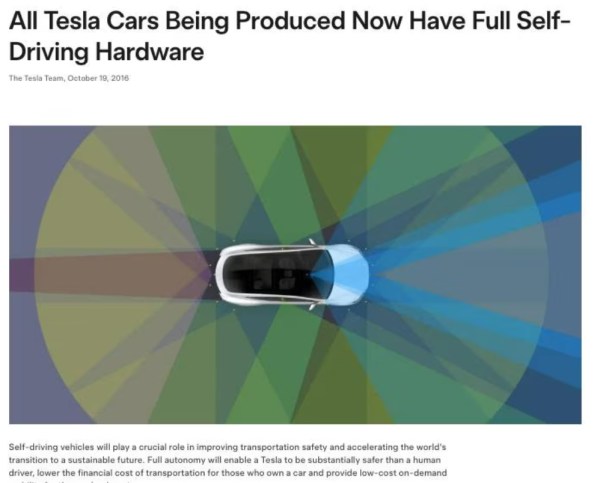 Tesla's original promise from 2016
Squeezing modern autonomous driving algorithms onto a chip configuration that is roughly seven years old is a victory - kudos for Tesla's software engineers. The update genuinely improves overall safety, smooths out steering mechanics, and minimizes sudden braking incidents. Once the software completes its rollout in North America, the company expects to launch the package for H3 owners in Europe and Australia, where the standard version 14 is already live.
This is a huge progress by all means, but it does not fix the underlying issue. Buyers spent up to $15,000 under the impression that their EVs would eventually operate autonomously. Delivering a highly optimized driver-assistance package improves the daily commute for sure, but it also moves the goalposts. Until the automaker delivers a concrete remedy, such as a hardware upgrade or a direct financial refund, each software patch is only a minor feature update rather than a true resolution.

From the team behind
GSMArena.com
Facebook
Twitter
Instagram
RSS
Settings
Log in I forgot my password Sign up